
Complete Introduction to Grinding, Drilling & Jig Grinding Process
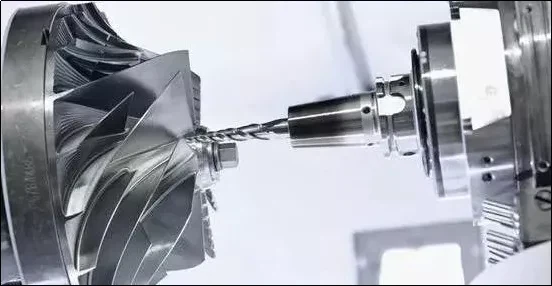
After die casting or rough CNC milling, most precision metal parts still need secondary finishing processes to achieve ultra-smooth surface finish, micron-level dimensional tolerance and precise hole positioning. Grinding, drilling and jig grinding are three core post-processing procedures widely used in mold manufacturing, 5G RF cavity, automotive and medical component production.
Many buyers confuse ordinary grinding with professional jig grinding, and underestimate the impact of precision drilling technology on product assembly yield. We have encountered multiple project cases affected by improper secondary processing: A mold client only used surface grinding without jig grinding for complex mold inserts, resulting in hole position deviation over 0.02mm and assembly jamming; another telecom supplier adopted ordinary bench drilling for antenna cavity threaded holes, causing inconsistent thread depth and poor sealing performance. These cases prove that matching correct grinding and drilling processes based on tolerance requirements is critical to finished product quality.
In summary, drilling is used for basic hole forming, general grinding optimizes surface flatness and roughness, while jig grinding serves ultra-high-precision hole and contour finishing that cannot be completed by standard CNC milling. Below we break down the process principle, accuracy range, processing advantages and typical application of each technology in detail.
1. Precision Drilling Process

Drilling is the fundamental secondary machining process to fabricate through holes, blind holes, threaded holes, counterbores and positioning holes on cast or milled metal blanks.
Core Process Features
- Flexible processing range: Support aluminum, zinc alloy, stainless steel and mold steel, can process hole diameters from 0.3mm to 50mm;
- Multiple drilling equipment options: Bench drill, CNC vertical drill and high-speed compound drilling machine for different batch sizes;
- Combined one-step machining: Integrate drilling, tapping, chamfering and counterboring in one clamping to reduce repeated positioning error.
Accuracy Standard
Ordinary drilling tolerance ±0.05mm; precision CNC drilling tolerance controlled within ±0.015mm, surface roughness Ra 1.6–Ra 3.2.
Main Application Scenarios
- Threaded sealing holes of 5G antenna RF cavities
- Assembly positioning holes of automotive die cast housings
- Mounting holes and wire through holes of medical equipment brackets
- Mold cooling water holes and ejector pin holes
2. General Grinding Process (Surface Grinding)

Grinding refers to abrasive wheel surface grinding, mainly applied to flat planes after rough machining to remove tool marks, deformation and uneven allowance.
Core Process Features
- Excellent surface polishing effect: Eliminate CNC milling lines, achieve mirror-smooth flat surface;
- Stable flatness correction: Correct tiny warpage of thin-wall aluminum alloy and die casting blanks;
- Wide material compatibility: Process soft aluminum alloy and hard quenched mold steel without surface scratch.
Accuracy Standard
Flatness tolerance up to 0.003mm per 100mm area, surface roughness Ra 0.2–Ra 0.8 after fine grinding.
Main Application Scenarios
- Sealing mating surface of RF filter cavities (to guarantee air tightness)
- Base mounting plane of automation fixture jigs
- Outer flat surface of automotive heat sinks
- Mold parting surfaces to eliminate flash gap
3. Jig Grinding Process (Coordinate Grinding)
Jig grinding is the highest precision finishing process among the three technologies, specially designed for high-precision hole groups, complex inner contours and hard mold components after heat treatment. It is irreplaceable for mold and ultra-precision communication parts.
Core Process Features
- Ultra-high positioning accuracy: Equipped with precise coordinate system, synchronously control X/Y/Z three-axis linkage;
- Process quenched hard steel: Complete finishing after mold heat treatment without secondary deformation;
- Simultaneously finish holes and inner profiles: Solve position tolerance and roundness requirements of multi-hole array parts.
Accuracy Standard
Hole position tolerance ≤0.002mm, hole roundness within 0.001mm, dimensional tolerance ±0.001mm, the highest precision of all conventional metal cutting processes.
Main Application Scenarios
- Precision mold core pin holes, cavity inner contour finishing
- Multi-hole array positioning plate of 5G communication equipment
- High-precision stainless steel medical fixture components
- Automotive sensor mold inserts with tight hole position tolerance
Process Selection Quick Reference Checklist
- Only need simple through holes / threaded assembly holes → Precision Drilling
- Need smooth flat sealing surface & correct minor workpiece warpage → Surface Grinding
- Hardened mold parts, multi-hole array with strict position tolerance, ultra-precision inner contour → Jig Grinding
End CTA Conversion Block
If your custom mold, communication or automotive parts require ultra-precision secondary finishing including drilling, surface grinding or jig grinding, send your drawings and tolerance standards to our engineering team. We will arrange the most cost-effective secondary machining flow to balance precision requirement and production cost, and provide free technical evaluation and quotation.
Blog Tags
#JigGrinding #SurfaceGrinding #PrecisionDrilling #MoldMachining #CNCSecondaryFinishing #RFCommunicationParts
Steel Heat Treatment: Quenching, Tempering, Normalizing & Annealing | Metal Heat Treatment Process


For more questions please
contact us

+86 755 28280203


315 PING 'AN AVENUE, PINGHU STREET, LONGGANG DISTRICT, SHENZHEN CITY, GUANGDONG PROVINCE