
Steel Heat Treatment: Quenching, Tempering, Normalizing & Annealing | Metal Heat Treatment Process

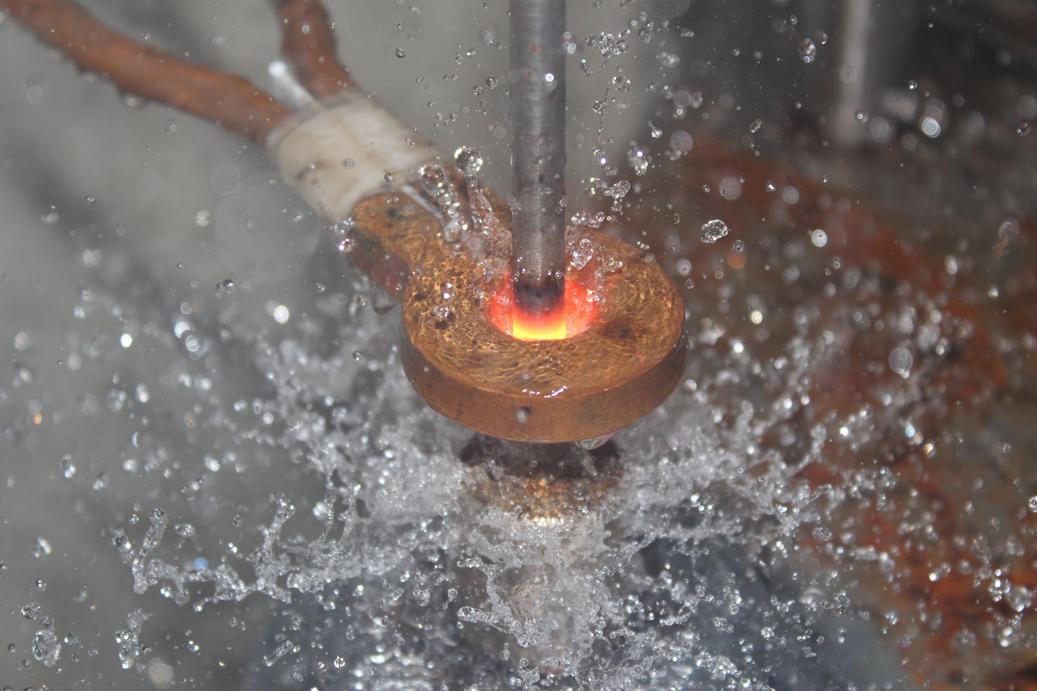
Heat treatment is a critical manufacturing process used to modify the microstructure and mechanical properties of metals, including steel, aluminum alloy, copper alloy, titanium alloy and ductile iron. The four primary steel heat treatment methods are quenching, tempering, normalizing and annealing.
1. Quenching
What is Quenching?
Quenching is a rapid-cooling heat treatment process. For steel: Heat hypoeutectoid steel above Ac₃ temperature or hypereutectoid steel above Ac₁ temperature. Hold the temperature long enough for full or partial austenitization. Cool the workpiece at a rate higher than the critical cooling rate, rapidly cooling below Ms temperature (or isothermal cooling near Ms) to trigger martensite or bainite transformation.
The term “quenching” also covers solid solution treatment with fast cooling for aluminum, copper, titanium alloys and tempered glass.

Purposes of Quenching
- Improve mechanical performance of metal components. Increase hardness and wear resistance for cutting tools and bearings; raise elastic limit for springs; enhance comprehensive mechanical properties of shaft parts.
- Optimize chemical and material characteristics for special steel grades, such as improving corrosion resistance of stainless steel and permanent magnetism of magnetic steel.
Common quenching techniques: single-liquid quenching, double-liquid quenching, marquenching (graded quenching), isothermal quenching, local quenching.
Features of Steel After Quenching
- Produce unstable microstructures: martensite, bainite and retained austenite.
- Generate high internal residual stress.
- Mechanical properties cannot meet final service requirements.
For this reason, quenched steel parts almost always require subsequent tempering.
2. Tempering
What is Tempering?
Tempering is performed immediately after quenching, normally the final heat treatment step for steel workpieces. Process: Heat quenched metal parts to a target temperature, hold for a set duration, then cool under controlled conditions. The combined process of quenching plus high-temperature tempering is known as quenching and tempering (Q&T).
Key Objectives of Tempering
- Reduce internal stress and brittleness. Untempered quenched parts are prone to distortion and cracking.
- Adjust mechanical properties: hardness, strength, plasticity and toughness to satisfy different application requirements.
- Stabilize workpiece dimensions and metallurgical structure to prevent deformation during long-term use.
- Improve machinability for certain alloy steels.
How Tempering Works
Elevated temperature increases atomic mobility. Iron, carbon and alloying elements diffuse and rearrange atoms, transforming unstable quenched microstructures into stable equilibrium structures. Internal stress is relieved as metal yield strength drops at higher temperatures.
For most steel: Hardness and strength decrease while plasticity rises with higher tempering temperature. Some high-alloy steels show secondary hardening: fine metallic precipitates form within a specific temperature range, increasing strength and hardness.
Three Tempering Categories by Temperature
- Low-temperature tempering (150–250°C) Minor hardness reduction, lower residual stress and slightly improved toughness. Applications: measuring tools, cutting knives, rolling bearings.
- Medium-temperature tempering (350–500°C) Delivers high elasticity plus balanced plasticity and hardness. Applications: springs, forging dies.
- High-temperature tempering (500–650°C) Excellent comprehensive mechanical properties (high strength + good toughness). Applications: gears, crankshafts.
Temper Brittleness
- 1st type temper brittleness: Steel becomes brittle around 300°C. Avoid tempering within this temperature range.
- 2nd type temper brittleness: Certain medium-carbon alloy structural steels turn brittle when slowly cooled after high-temperature tempering. Add molybdenum to steel, or use oil/water cooling after tempering to prevent this brittleness. It can be eliminated by re-heating to the original tempering temperature.
3. Normalizing
What is Normalizing?
Normalizing is an air-cooling heat treatment process to refine grains and boost steel toughness. Heat steel components to 30–50°C above Ac₃ temperature, hold, then cool freely in open air. Cooling rate: faster than annealing, slower than quenching. The moderately fast cooling refines grain structure, improves impact toughness (AKV value) and reduces cracking risk. Low-alloy steel castings, forgings and hot-rolled plates gain better mechanical properties and machinability after normalizing.
Applications & Benefits of Normalizing
- Hypoeutectoid steel: Remove overheated coarse grains, Widmanstätten structure and banded structure in castings, forgings and weldments. Refine grains; used as pre-heat treatment before quenching.
- Hypereutectoid steel: Eliminate network secondary cementite and refine pearlite. Improve mechanical performance and prepare material for subsequent spheroidizing annealing.
- Low-carbon deep-drawing steel sheet: Remove free cementite at grain boundaries to enhance deep drawability.
- Low carbon / low-alloy steel: Produce fine lamellar pearlite, raise hardness to HB 140–190, prevent built-up edge (sticking knife) during machining. More cost-effective than annealing for medium carbon steel when either process works.
- Medium carbon structural steel: Replace Q&T for low mechanical requirement scenarios, simpler operation and stable structure & dimensions.
- High-temperature normalizing (150–200°C above Ac₃): Reduce chemical segregation in castings and forgings. Coarse grains from high-temperature normalizing can be refined by secondary low-temperature normalizing.
- Boiler & turbine low/medium carbon alloy steel: Generate bainite microstructure followed by high-temperature tempering, offering good creep resistance at 400–550°C.
- Ductile iron: Widely applied to obtain pearlite matrix and increase tensile strength.
Normalizing results are affected by ambient temperature, stacking method, air flow and workpiece size. Alloy steels can be classified by microstructure after normalizing (25 mm sample heated to 900°C then air-cooled): pearlitic steel, bainitic steel, martensitic steel and austenitic steel.
4. Annealing
What is Annealing?
Annealing is a softening heat treatment. Heat metal slowly to target temperature, hold sufficiently long, then cool at a controlled low rate. Common annealing types: full annealing, spheroidizing annealing, isothermal annealing, recrystallization annealing, graphitization annealing, diffusion annealing, stress relief annealing. Mechanical properties can be verified by tensile test or hardness test. Many steel products are supplied in annealed condition. Rockwell hardness tester and surface Rockwell tester (HRT) are used for hardness inspection.
Purposes of Annealing
- Eliminate structural defects and residual stress generated during casting, forging, rolling and welding to avoid workpiece distortion and cracking.
- Softening raw material for easier machining.
- Refine grains and optimize microstructure to upgrade mechanical performance.
- Prepare ideal metallurgical structure for subsequent final heat treatment (quenching & tempering).
Common Annealing Processes
- Full Annealing Refine coarse overheated microstructure in low & medium carbon steel castings, forgings and weldments. Heat to 30–50°C above full ferrite-to-austenite transformation temperature, hold, then furnace slow cooling. Austenite re-transforms during cooling to refine steel grains.
- Spheroidizing Annealing Reduce high hardness of forged tool steel and bearing steel. Heat 20–40°C above austenite initiation temperature, hold then slow cool. Lamellar cementite inside pearlite turns spherical, lowering hardness.
- Isothermal Annealing Lower hardness of high Ni-Cr alloy structural steel for machining. Cool rapidly to austenite unstable temperature, hold until austenite transforms to troostite or sorbite.
- Recrystallization Annealing Remove work hardening (higher hardness, lower plasticity) in cold-drawn wire and cold-rolled thin sheets. Heat 50–150°C below austenite start temperature to recover metal plasticity.
- Graphitization Annealing Convert high-cementite cast iron into malleable cast iron with good ductility. Heat casting to ~950°C, hold and cool properly to decompose cementite into flocculent graphite.
- Diffusion Annealing (Homogenization Annealing) Homogenize chemical composition of alloy castings. Heat near melting point without melting, long soaking time for element diffusion, then slow cooling.
- Stress Relief Annealing Remove residual stress in steel castings and weldments. Heat steel parts 100–200°C below austenite start temperature, hold then air cool to release internal stress.

FAQ
Q: What is the difference between annealing and normalizing?
A: Annealing uses furnace slow cooling while normalizing uses air cooling. Normalizing has faster cooling rate, finer grains and higher hardness compared to annealing.
Q: What is quenching and tempering used for?
A: Quenching and tempering (Q&T) offers balanced strength and toughness, widely used for gears, crankshafts and heavy-load mechanical components.
Q: What is stress relief annealing?
A: Stress relief annealing is a heat treatment process to eliminate residual stress generated in casting, forging and welding, preventing part deformation and cracking.
Complete Introduction to Grinding, Drilling & Jig Grinding Process


For more questions please
contact us

+86 755 28280203


315 PING 'AN AVENUE, PINGHU STREET, LONGGANG DISTRICT, SHENZHEN CITY, GUANGDONG PROVINCE