
EXTRUDED PARTS
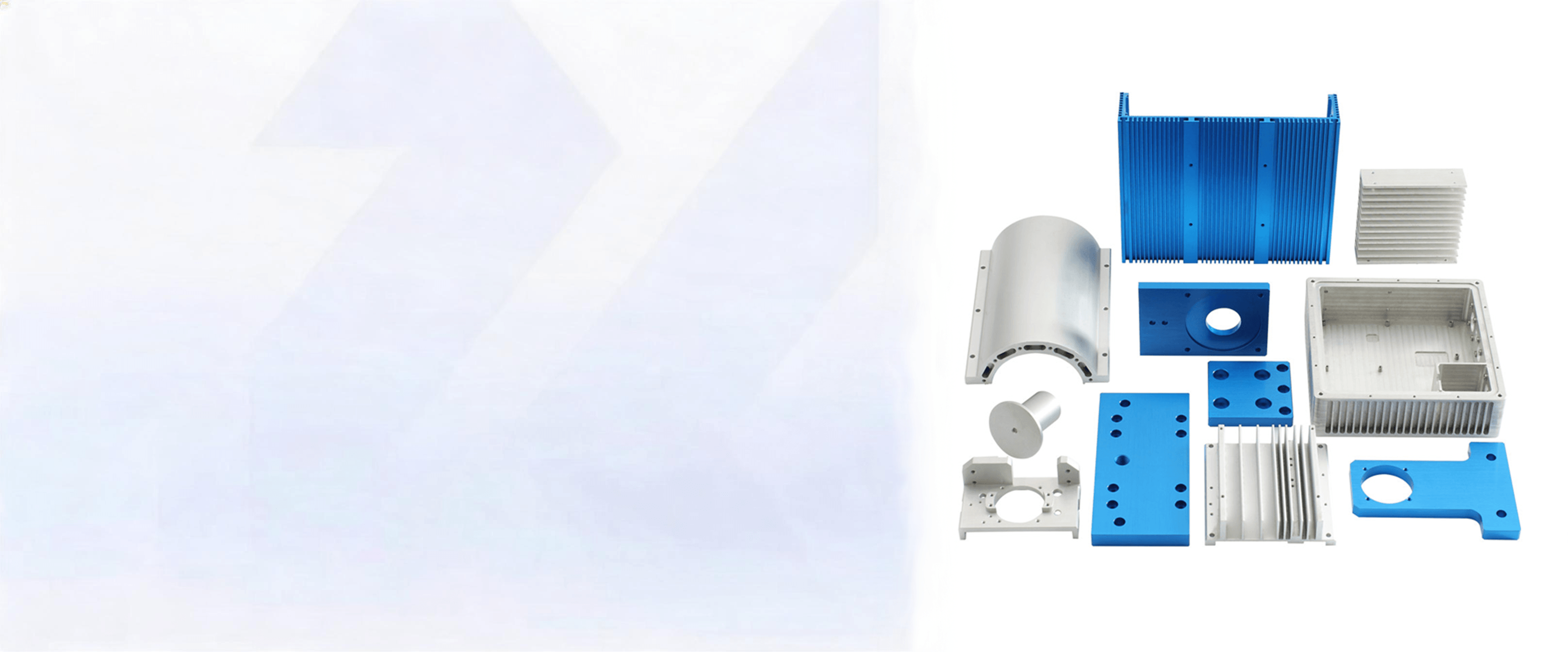
Aluminum Extrusion Services
If you need extrusion profiles cut to custom fixed lengths with large order volumes, sourcing directly from an extrusion manufacturer is your best choice. Many extrusion factories specialize in mass high-volume production. However, most of these manufacturers decline small-batch aluminum and plastic extrusion orders unless you are their long-term VIP client, making it quite challenging to source aluminum extrusion prototypes and plastic extrusion prototypes.
At Zhongzhu, we maintain stable cooperative suppliers that support short-run custom aluminum and plastic extrusion services. Our partners guarantee consistent product quality and controlled lead times for all our orders. We also conduct full pre-shipment quality inspections on every customized project before delivery.

Applications of Aluminum Extrusion
Aluminum extrusions are used in heavy industry, aerospace, the food industry, and elsewhere. Common aluminum extrusions include extruded aluminum heatsinks and profiles for tracks, frames, and rails.
●Industrial: Extruded aluminum can be used to make industrial equipment like workbenches and carts, as well as extruded aluminum frames / extruded aluminum framing. Standard framing systems include extruded aluminum T-slot structural framing (80/20 extruded aluminum framing).
●Construction: Architecture and construction provide several uses for aluminum extrusion such as extruded aluminum rails, balustrades, and ladders.
●Electrical: Aluminum is electrically conductive and is therefore useful in its extruded form for lighting components such as LED aluminum extrusions, solar panel support structures, and more.
●Transport: Extruded aluminum is good for fabricating items like automotive, horse, and boat trailers.
Compared with traditional extrusion companies, we have a large amount of CNC machines, so we can do precision post-machining in house.
Customization
We offer custom aluminum extrusion profiles, and we can combine extrusion with other manufacturing methods such as CNC milling, turning, and bending to make the final parts.
Low Volume
Most extrusion companies set very high MOQs. Zhongzhu doesn’t, so we are the best choice for lower volumes. One-off prototype extrusions or a few hundred units? No problem.
Fast Delivery
If you don’t want to wait 30+ days to get your extrusion mold and profiles manufactured, come to us! We can finish everything in half the industry-standard time or even less.
Aluminum Extrusion
Aluminum extrusion is defined as the process of shaping aluminum material by forcing it to flow through a shaped opening in a die. Aluminum material emerges as an elongated piece with the same profile. Alloys we commonly work with include: 6061, 6063
Plastic Extrusion
Plastic materials include polystyrene, nylon, polypropylene, and polythene. These are thermoplastics: they are heated and then pressured in a mold which can form them into different shapes and sections.

What is Aluminum Extrusion?
Aluminum extrusion refers to the process of forming aluminum by pressing aluminum billet to extrude through a contoured opening within a die. Under extrusion pressure, aluminum exits the die as an elongated workpiece featuring a consistent, continuous cross-sectional profile, which can be engineered into intricate, highly detailed geometries.
For easier comprehension by non-professional readers, aluminum extrusion can be simply analogized to manufacturing pasta or modeling clay. In both scenarios, raw material is loaded into a cavity, pressure is generated via a crank or lever mechanism, and long strips are forced out through a shaped aperture. Swapping the aperture’s shaping die alters the cross-section of the extruded strips, allowing you to produce different forms such as tagliatelle and penne pasta.
Of course, aluminum billets aren’t quite as malleable as pasta dough, so the aluminum extrusion process requires a lot of force — typically via huge amounts of hydraulic pressure — and, in some cases, the application of heat.
How Does Aluminum Extrusion Work?
Aluminum extrusion falls into two primary categories: hot extrusion and cold extrusion, each with distinct application advantages.
Hot extrusion enables high-volume aluminum production with fast throughput under relatively low forming pressure. In contrast, cold extrusion delivers components with enhanced mechanical performance, superior surface finish and excellent oxidation resistance.
For hot aluminum extrusion, aluminum billets are first cut to specified dimensions, then heated in furnaces to a temperature range of 300°C to 600°C. This heating softens the metal to a malleable state without melting it.
Once the billets reach target temperature, a hydraulically driven ram pushes them through an extrusion die. Dies feature either standard circular/square apertures or fully custom contoured profiles. Enormous pressure — approximately 10,000,000 pounds of force — is required to squeeze the heated aluminum through the die cavity.
After extrusion, the profiles travel to cooling tables for cooling, followed by cutting to customized lengths per customer requirements. Optional post-extrusion heat treatment can be implemented to boost the aluminum’s hardness.
Aluminum extrusion falls into two primary categories: hot extrusion and cold extrusion, each with distinct application advantages.
Hot extrusion enables high-volume aluminum production with fast throughput under relatively low forming pressure. In contrast, cold extrusion delivers components with enhanced mechanical performance, superior surface finish and excellent oxidation resistance.
For hot aluminum extrusion, aluminum billets are first cut to specified dimensions, then heated in furnaces to a temperature range of 300°C to 600°C. This heating softens the metal to a malleable state without melting it.
Once the billets reach target temperature, a hydraulically driven ram pushes them through an extrusion die. Dies feature either standard circular/square apertures or fully custom contoured profiles. Enormous pressure — approximately 10,000,000 pounds of force — is required to squeeze the heated aluminum through the die cavity.
After extrusion, the profiles travel to cooling tables for cooling, followed by cutting to customized lengths per customer requirements. Optional post-extrusion heat treatment can be implemented to boost the aluminum’s hardness.
Aluminum extrusion falls into two primary categories: hot extrusion and cold extrusion, each with distinct application advantages.
Hot extrusion enables high-volume aluminum production with fast throughput under relatively low forming pressure. In contrast, cold extrusion delivers components with enhanced mechanical performance, superior surface finish and excellent oxidation resistance.
For hot aluminum extrusion, aluminum billets are first cut to specified dimensions, then heated in furnaces to a temperature range of 300°C to 600°C. This heating softens the metal to a malleable state without melting it.
Once the billets reach target temperature, a hydraulically driven ram pushes them through an extrusion die. Dies feature either standard circular/square apertures or fully custom contoured profiles. Enormous pressure — approximately 10,000,000 pounds of force — is required to squeeze the heated aluminum through the die cavity.
After extrusion, the profiles travel to cooling tables for cooling, followed by cutting to customized lengths per customer requirements. Optional post-extrusion heat treatment can be implemented to boost the aluminum’s hardness.
Common Extrusion Applications
●Aerospace
●Automotive
●Trains
●Ships
●Construction Industry
●Medical Devices
●Display Industry
●Heatsink
●Electronics
●Automation
Standard Aluminum Extrusion Profiles
Custom aluminum extrusion profiles can be cut to any 2D cross-sectional shape. However, there are several standard aluminum extrusion profiles suitable for many projects, including extruded aluminum bar and extruded aluminum channel of various forms.
Standard profiles include:
●Circular bar
●Square bar
●Circular tube
●Square tube
●L-shape
●U-shape
●T-shape
●C-shape
●J-shape
●F-shape
Profiles also come in standard sizes and series. These include:
●2020 aluminum extrusion (20 mm x 20 mm)
●80/20 aluminum extrusion (T-slot aluminum extrusion)
●2040 aluminum extrusion (20 mm x 40 mm)
●3030 aluminum extrusion (30 mm x 30 mm)
Custom Aluminum Extrusion Profiles
Standard aluminum extrusion profiles, such as aluminum channels and solid aluminum bars, are generally mass-produced by professional extrusion manufacturers. If you require large volumes of standard extrusion profiles, cooperating directly with these specialized factories will be more cost-effective.
However, Zhongzhu is your ideal supplier for custom aluminum extrusions with non-standard cross-sectional shapes. We support low-volume extrusion orders for prototype validation and small-batch manufacturing, so you can freely test and iterate your custom profile designs.
Apart from developing custom dies for exclusive aluminum extrusion profiles, we integrate extrusion with secondary processes including CNC machining to deliver finished custom components. This integrated workflow shortens lead time and cuts overall production costs, especially for parts with a uniform main cross-section.
Finishing Options for Aluminum Extrusions
Aluminum extrusion is used to mass produce lots of non-cosmetic parts like tubing and frames, where finishing may not be especially important. However, custom aluminum extrusion is also used to produce high-value products which may benefits from the addition of color, text, logos, and other finishing procedures.
Suitable surface finishing procedures for aluminum extrusion include:
●Basic mechanical finishing: Treatments like buffing, bead blasting, and grinding can be carried out to adjust the surface quality of aluminum extrusions, sometimes in preparation for other surface finishes.
●Anodization: Aluminum extrusions can be anodized to give them a scratch-resistant and oxidization-resistant coating with an excellent cosmetic appearance.
●Painting: Whether the part needs a matte, gloss, or textured finish, painting is an effective way to alter the color and surface appearance of an aluminum extrusion.
●Powder coating: Powder coating is a suitable alternative to anodizing, giving excellent chemical resistance and consistency of tone.
●Silk-screen printing: One of the simplest ways to add text and logos to aluminum extrusions, silk-screen printing is cheaper than machine-based finishing procedures.
●Laser engraving: Laser engraving can be used to add detail, including text, to an extrusion, and it will not rub off over time. It is therefore useful for essential features like part serial numbers.

Why should I use Zhongzhu over a dedicated extrusion company?
We focus on small & medium-batch manufacturing. Many manufacturers are unable to accommodate your requirements if you only place small or medium-volume orders.
FAQ 1: Can I select a specific aluminum alloy grade?
Our primary standard extrusion alloys are 6061 and 6063, both rich in magnesium and silicon with outstanding corrosion resistance.
You are welcome to specify alternative aluminum alloys. Our engineering team will assess production feasibility before issuing your formal quotation.
FAQ 2: Who produces the extruded profiles?
We cooperate with a roster of reliable, certified extrusion suppliers to complete extrusion production. All secondary CNC machining and full pre-shipment quality inspection procedures are handled in-house by Zhongzhu.