
Several Ways To Achieve Mirror Processing
Author: SZTC
2024-07-05
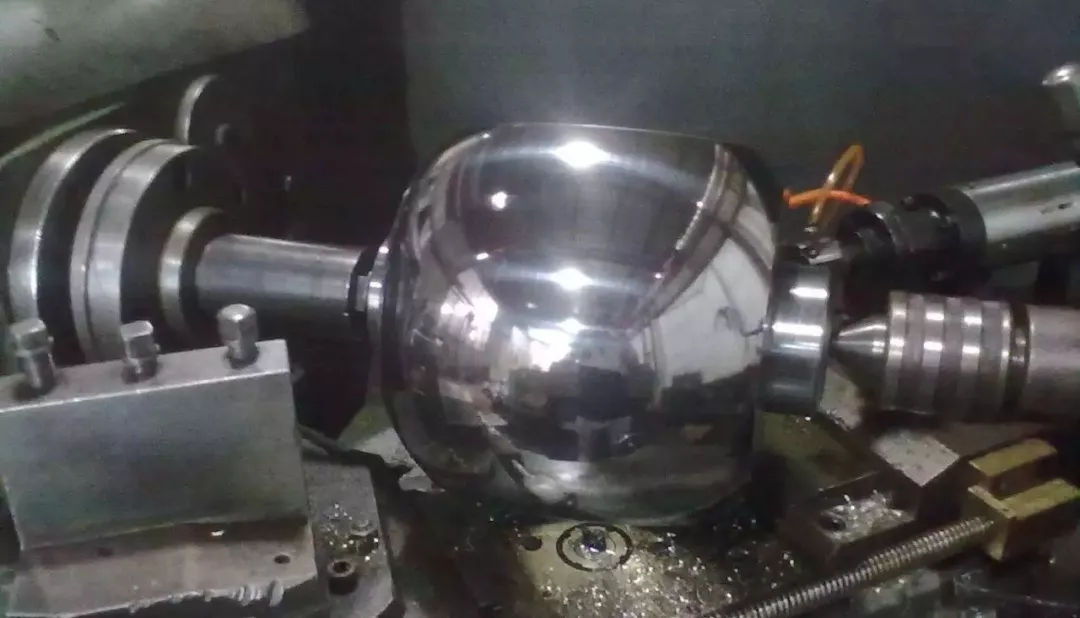
The mirror process involves creating highly reflective surfaces through polishing and coating techniques. Ideal for applications requiring precision and clarity, such as optics and decorative finishes.
Mirror processing means that the processed surface can reflect the image like a mirror. This level has achieved very good workpiece surface quality. Mirror processing can not only create a high "appearance" for the product, but also reduce the notch effect and extend the fatigue life of the workpiece; it is of great significance in many assembly and sealing structures. The polishing mirror processing technology is mainly used to reduce the surface roughness of the workpiece. When selecting the polishing process method for metal workpieces, different methods can be selected according to different needs. The following are several common methods of polishing mirror processing technology.
Picture
1. Mechanical polishing Mechanical polishing is a polishing method that relies on cutting and plastic deformation of the material surface to remove the polished convex part to obtain a smooth surface. Generally, oilstone strips, wool wheels, sandpaper, etc. are used, and manual operation is the main method. Special parts such as the surface of a rotating body can use auxiliary tools such as a turntable. For high surface quality requirements, super-fine grinding and polishing can be used. Super-fine grinding and polishing uses a special grinding tool, which is pressed tightly on the processed surface of the workpiece in a grinding and polishing liquid containing abrasives and rotates at high speed. This technology can achieve a surface roughness of Ra0.008μm, which is the highest among various polishing methods. Optical lens molds often use this method.
2. Chemical polishing Chemical polishing is to make the microscopic protruding parts of the material surface dissolve preferentially in the chemical medium over the concave parts, thereby obtaining a smooth surface. The main advantage of this method is that it does not require complex equipment, can polish workpieces with complex shapes, can polish many workpieces at the same time, and is highly efficient. The core issue of chemical polishing is the preparation of the polishing liquid. The surface roughness obtained by chemical polishing is generally several 10μm.
3. Electrolytic polishing The basic principle of electrolytic polishing is the same as that of chemical polishing, that is, it relies on selectively dissolving the tiny protruding parts on the surface of the material to make the surface smooth. Compared with chemical polishing, it can eliminate the influence of the cathode reaction and has a better effect. The electrochemical polishing process is divided into two steps: (1) Macroscopic leveling The dissolved product diffuses into the electrolyte, and the geometric roughness of the material surface decreases, Ra>1μm. (2) Micro-brightness leveling Anode polarization increases the surface brightness, Ra<1μm.
4. Hawken mirror processing equipment
As a new polishing process, it has unique advantages in the processing of many types of metal parts. It can replace traditional grinding machines, rolling, boring, honing, polishing machines, belt machines and other metal surface finishing equipment and processes; making it easy to process metal workpieces with high finish. Hawken can not only polish, but also bring many additional benefits: it can improve the surface finish of the processed workpiece by more than 3 levels (the roughness Ra value can easily reach below 0.2); and the surface microhardness of the workpiece is increased by more than 20%; and the surface wear resistance and corrosion resistance of the workpiece are greatly improved. Hawken can be used to process various stainless steels and other metal workpieces.
5. Ultrasonic polishing puts the workpiece into an abrasive suspension and places it in an ultrasonic field together. Relying on the oscillation of the ultrasonic wave, the abrasive is ground and polished on the surface of the workpiece. Ultrasonic processing has a small macroscopic force and will not cause deformation of the workpiece, but it is difficult to make and install the tooling. Ultrasonic processing can be combined with chemical or electrochemical methods. On the basis of solution corrosion and electrolysis, ultrasonic vibration is applied to stir the solution to separate the dissolved products on the workpiece surface, and the corrosion or electrolyte near the surface is uniform; the cavitation effect of ultrasonic waves in the liquid can also inhibit the corrosion process and facilitate surface brightening.
6. Fluid polishing Fluid polishing relies on high-speed flowing liquid and the abrasive particles it carries to flush the surface of the workpiece to achieve the purpose of polishing. Common methods include: abrasive jet processing, liquid jet processing, fluid dynamic grinding, etc. Fluid dynamic grinding is driven by hydraulic pressure to make the liquid medium carrying abrasive particles flow back and forth at high speed over the surface of the workpiece. The medium is mainly made of special compounds (polymer-like substances) with good flowability under low pressure and mixed with abrasives. The abrasive can be made of silicon carbide powder.
7. Mirror polishing Mirror, magnetic grinding and polishing Magnetic grinding and polishing uses magnetic abrasives to form abrasive brushes under the action of a magnetic field to grind the workpiece. This method has high processing efficiency, good quality, easy control of processing conditions, and good working conditions. With suitable abrasives, the surface roughness can reach Ra0.1μm. The polishing mentioned in plastic mold processing is very different from the surface polishing required in other industries. Strictly speaking, mold polishing should be called mirror processing. It not only has high requirements for polishing itself, but also has high standards for surface flatness, smoothness and geometric accuracy. Surface polishing generally only requires a bright surface. The standards for mirror processing are divided into four levels: AO=Ra0.008μm, A1=Ra0.016μm, A3=Ra0.032μm, A4=Ra0.063μm. Since it is difficult to accurately control the geometric accuracy of parts by methods such as electrolytic polishing and fluid polishing, and the surface quality of methods such as chemical polishing, ultrasonic polishing, and magnetic grinding polishing cannot meet the requirements, the mirror processing of precision molds is still mainly mechanical polishing.
Key Points Of Mold Design And Troubleshooting In Production
Trial and error and experience summary of fixture design
Related Article

Fast sampling is the fastest way to win business in the hardware machining and plastic mold industries. Customers want a working sample in days, and a 3D printer delivers it, but only when you know how to print in 3d correctly.
how to print in 3d

Fast sampling is the fastest way to win business in the hardware machining and plastic mold industries. Customers often send an STL file and expect a working sample in days.
how to print an stl file

