
Analysis and Improvement of Die-casting Defects of Aluminum Alloy Automotive Differential Case
Author: ZHONGZHU
2023-08-31
Aluminum alloys are widely used in the production of auto parts due to their low density, high strength and corrosion resistance. The strength of aluminum alloy is significantly improved through alloy strengthening, which meets the requirements of clutch housing, oil pan and differential housing working in harsh environments. At the same time, with the demand for energy conservation and emission reduction, expanding the application of aluminum alloys can significantly reduce the weight of automobiles. As an important part of the automobile rotation system, the differential case has more and more demands for automobile manufacturing and higher quality requirements. Therefore, under the condition of ensuring high product quality, how to reduce the scrap rate needs to be solved. subject.
The aluminum alloy differential housing is one of the key components of the automobile transmission system. Its structure is relatively complex and its internal quality requirements are high. During the production process, large-area processing is required, so the number of exposed internal defects increases greatly, especially slag inclusions and pores. In order to solve the problem of high scrap rate caused by defects, numerical simulation is used to compare the aluminum alloy liquid filling state with the actual distribution of defects in castings, and then dissect and analyze the casting structure to optimize the gating system. Reduce defects and reduce scrap rate through a properly designed gating system.
Graphical results
The automotive differential housing die casting is shown in Figure 1. The outline size of the part is 236.91mm×191.23mm×187.41mm, the die casting mass is 3.35kg, the average wall thickness is 6.2mm, the projected area is 97532.21mm2, and the casting material is ADC12 alloy. The overall wall thickness of the casting is relatively thick, and the wall thickness is not uniform, so the position of the hot joint is easy to cause shrinkage cavity during the die-casting process, and the processing area is large. The design of the gating system is shown in Figure 2. Each part is required to be free of burrs, scars, and flash defects; tensile specimens are taken at the bearing position, and the tensile strength obtained by the test is greater than 177MPa. There must be no defects such as pores and shrinkage, and air tightness inspection is required. , the leak test pressure is 200kPa, and the allowable leakage is <3mL/min.

Figure 1 Die-cast parts of differential case

Figure 2 Pouring and overflow system

Figure 3 Differential case filling simulation
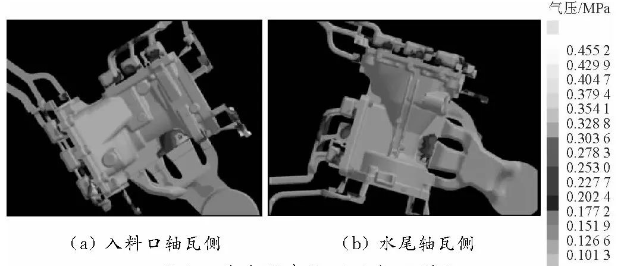
Figure 4 Air pressure simulation of differential housing cavity

Fig.5 Simulation of solidification process of differential case
According to the simulation results, it can be seen that the pouring system can basically realize the smooth filling of aluminum materials, and the entrained gas is mainly concentrated in the slag ladle and some local non-processing dead corner areas of the product. According to the simulation analysis, it is found that there are two problems: ①The flow rate of molten aluminum on the fixed mold side is faster, but there are two thicker bosses on the fixed mold side that require more aluminum material; ②The amount of pouring on the right side is obviously stronger than that on the left side , but the processing area on the left side is more, and the internal quality requirements are higher, so the quality of the processing area needs to be guaranteed. Comprehensive consideration, the program is feasible. Due to the uneven wall thickness of the shell, the local cooling rate is not uniform, so a more reasonable cooling system can be designed.
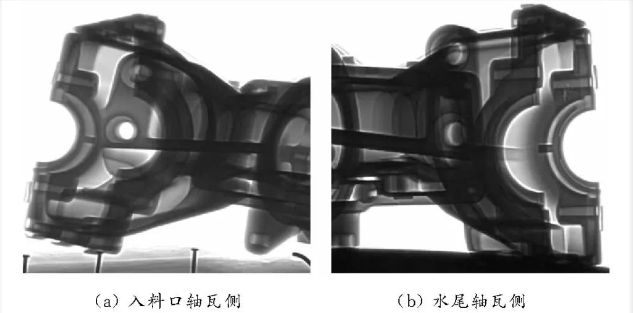
Figure 6 X-ray detection results when the high-speed switching point is 370mm

Figure 7 X-ray detection results when the high-speed switching point is 390mm

Figure 8 X-ray results when the high-speed switching point is 420mm
Table 1 Production data statistics


Fig.9 Location and appearance of slag inclusions

Figure 10 Shrinkage hole next to the left core-pulling needle and right and upper core-pulling
pore bottom

Figure 11 Leakage location and pore morphology
According to the distribution of defects, there are 4 problems that need to be improved: ① The core-pulling bearing on the left side shrinks and loosens, and after processing, it communicates with the threaded holes on the side and leaks; ② The pinholes on both sides of the bearing bush are shrunk and exposed; ③ The core-pulling deep cavity on the right side is processed Leakage of the rear interlayer; ④The air hole at the bottom of the core-pulling pinhole on the right side.

Figure 12 Comparison before and after gate improvement

Figure 13 Position and structure of needle shrinkage hole

Figure 14 Initial rough needle and processed pinhole
Figure 15 Internal wrapping and gate changes
Through the trial production analysis of the differential housing, it can be concluded that numerical simulation can provide a reference for early quality control and defect analysis of aluminum alloy die-casting parts, thereby designing a more reasonable gating system and shortening the development cycle; and then based on the actual production process The problems that arise are compared with the simulated state, so as to further optimize the gating system of the product, improve the forming process conditions, and improve the quality of the casting. In addition, modifying the casting structure also has positive significance for improving the quality of die casting.
Automobile engine housing hand plate precision CNC production
Development And Production Of Extrusion Cast Aluminum Alloy Control Arms
Related Article

Fast sampling is the fastest way to win business in the hardware machining and plastic mold industries. Customers want a working sample in days, and a 3D printer delivers it, but only when you know how to print in 3d correctly.
how to print in 3d

Fast sampling is the fastest way to win business in the hardware machining and plastic mold industries. Customers often send an STL file and expect a working sample in days.
how to print an stl file

