There Are 16 Types Of Stamping And Drawing Processing, And Experts May Not Understand All Of Them!
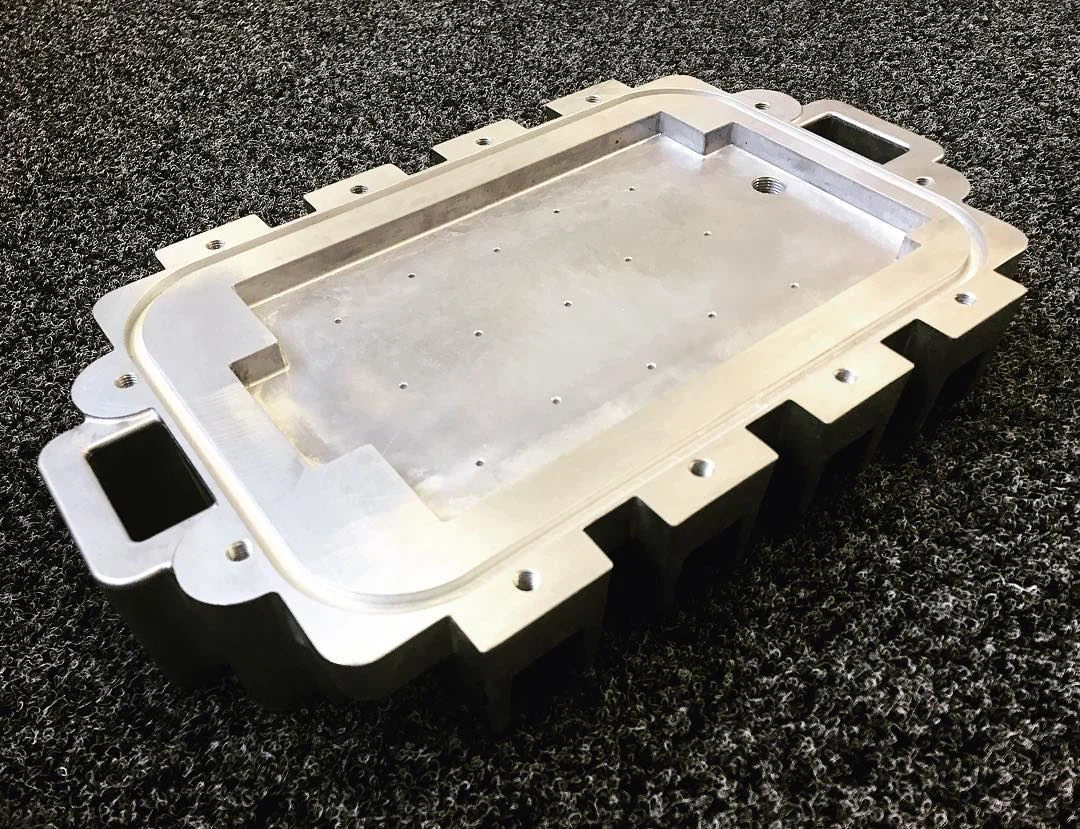
Stretch forming is a stamping method that uses a die to form a flat blank into an open hollow part. As one of the main stamping processes, drawing is widely used. The drawing process can be used to make thin-walled parts of cylindrical, rectangular, stepped, spherical, conical, parabolic and other irregular shapes. If combined with other stamping forming processes, parts with more complex shapes can also be produced. . picture

Stamping equipment is used to stretch and form products, including: stretching, re-stretching, reverse stretching, and thinning stretching.
Drawing processing: Using a platen device, using the punching force of the punch, a part or all of the flat plate is pulled into the cavity of the concave mold to form a container with a bottom. The processing of the side wall of the container parallel to the drawing direction is a simple drawing processing, and the drawing processing of conical (or pyramidal) containers, hemispherical containers and parabolic containers, etc., also includes expansion processing.
Re-stretching: that is, for deep-drawn products that cannot be completed by one-time stretching, the stretched shaped products need to be stretched again to increase the depth of the shaped container. picture

Reverse drawing processing: Reverse drawing of the drawn workpiece in the previous process, the inner side of the workpiece becomes the outer side, and the outer diameter of the workpiece is reduced.
Thinning and drawing processing: Use a punch to squeeze the formed container into a concave mold cavity slightly smaller than the outer diameter of the container, so that the outer diameter of the container with the bottom becomes smaller, and the wall thickness becomes thinner, which not only eliminates the wall thickness deviation, but also reduces the thickness of the container. Smooth the surface of the container.
When using stamping equipment for metal stamping and drawing, it includes the following 16 types:
1. Round drawing:
Stretching of flanged (flanged) cylindrical products. The flange and the bottom are both plane shapes, the side wall of the cylinder is axisymmetric, the deformation is evenly distributed on the same circumference, and the blank on the flange is deep-drawing deformation.

2. Ellipse drawing:
The deformation of the blank on the flange is tensile deformation, but the deformation amount and the deformation ratio change correspondingly along the contour shape. The larger the curvature, the greater the plastic deformation of the blank; on the contrary, the smaller the curvature, the smaller the plastic deformation of the blank.

3. Rectangular drawing:
A low rectangular piece formed by one stretch. During stretching, the tensile resistance at the rounded corners of the flange deformation zone is greater than that at the straight edge, and the degree of deformation at the rounded corner is greater than that at the straight edge.

4. Hill drawing:
When the side wall of the stamping part is inclined, the side wall is suspended during the stamping process, and the mold is not attached until the end of forming. The deformation characteristics of different parts of the side wall during forming are not exactly the same.

5. Hill drawing:
The blank deformation of the dome-shaped cover plate during the forming process is not a simple stretching deformation, but a composite forming with the simultaneous existence of stretching and bulging deformation. The deformation of the blank on the pressing surface is tensile deformation (the radial direction is tensile stress, and the tangential direction is compressive stress), while the deformation of the blank inside the contour (especially the central area) is bulging deformation (both radial and tangential direction). is tensile stress).

6. With flange hemisphere drawing:
When the spherical part is stretched, the blank is partially in contact with the spherical top of the punch, and most of the rest are in a suspended and unconstrained free state. Therefore, the main process problem of the drawing of such spherical parts is the severe thinning of the local contact part, or the instability and wrinkling of the curved part.

7. Flange drawing:
The flange part of the drawn product is subjected to shallow drawing processing. The stress-strain situation is similar to compression flanges. Due to tangential compressive stress, it is easy to wrinkle, so the forming limit is mainly limited by compression wrinkling.

8. Flange drawing: Angular re-drawing is performed on the flange part of the stretched product in the previous process. This kind of processing requires the material to have good plasticity.
9. Deep drawing:
A stretched product that exceeds the stretch processing limit needs to be stretched more than twice before it can be completed. Products that have been stretched in the depth direction of the previous station are re-stretched in the depth direction. The wide flange stretched part is stretched to the required flange diameter when it is first stretched, and the flange diameter remains unchanged when it is stretched again.

10. Taper drawing:
For deep conical parts with h/d>0.8 and α = 10°~30°, due to the large depth, the deformation of the blank is large, and the forming force is transmitted only by the local area where the blank is in contact with the punch, which is very easy to cause the local blank of the blank. Excessive thinning or even cracking requires gradual formation through multiple transitions. The step drawing method is to first stretch the blank into a step-shaped transition piece, the step shape of which is tangent to the inner shape of the tapered part, and finally expand to form a cone. The stretching times, process, etc. of the stepped transition piece are the same as those of the stepped cylindrical piece.

11. Rectangular redrawing:
The deformation of the high rectangular part that is formed by multiple stretching is not only different from the stretching of the deep cylindrical part, but also greatly different from the deformation of the low box-shaped part. Figure 1-46 shows the change of the shape and size of the workpiece along with the stretching height during the multiple stretching process when the multi-station automatic transfer press is used to process the high rectangular box.

12. Surface forming:
Curved surface stretch forming, which shrinks the outer flange part of the metal flat blank and elongates the inner flange part, and becomes a stamping forming method for a hollow product with a curved surface shape of non-straight wall and non-flat bottom.
13. Step drawing:
The left-side pre-stretched product is redrawn to form the right-side stepped bottom. The deep part is deformed in the early stage of stretching, and the shallow part is deformed in the later stage of stretching. Shear stress is easily induced in the side wall of the step changing part to cause deformation.

14. Reverse drawing:
It is a kind of re-stretching that the workpiece that has been stretched in the previous process is reversely stretched. The reverse stretching method can increase the radial tensile stress, and can achieve better results in preventing wrinkling. It is also possible to increase the stretch factor for redrawing.

15. Thinning and drawing (Ironing):
Different from ordinary stretching, thinning stretching mainly changes the thickness of the barrel wall of the stretching part during the stretching process. The gap between the convex and concave dies is less than the thickness of the blank. When the straight wall part of the blank passes through the gap, it is under a large uniform compressive stress. During the stretching process, the wall thickness becomes thinner, and the deviation of the container wall thickness is eliminated, and the surface of the container is increased. Smoothness, increased precision and strength.

16. Panel drawing:
Panel products are sheet stampings with complex surface shapes. In the drawing process, the deformation of the blank is complex, and its forming properties are not simple drawing forming, but a composite forming in which deep drawing and bulging exist at the same time.

Composite Heat Treatment Of AZ Series Magnesium Alloys And Its Strengthening And Toughening Mechanism
Nine Major Errors in Machining, How Many Do You Know?
Related Article