
Machining technology and quotation
Author: SZTC
2024-09-23
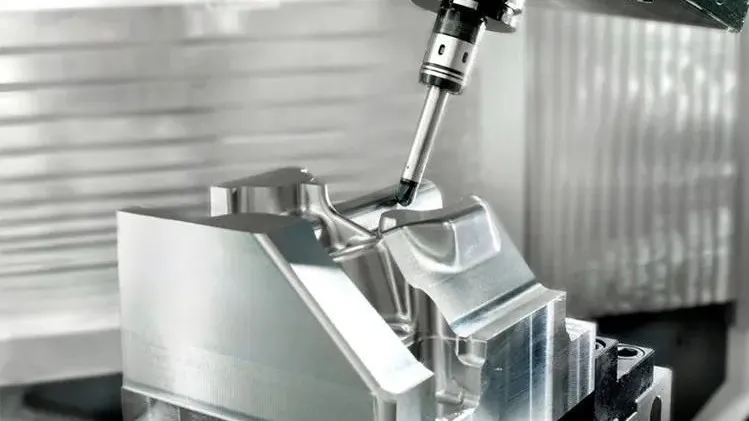
Processing equipment
1. Ordinary lathe:
Lathes are mainly used to process shafts, discs, sleeves and other workpieces with rotating surfaces. They are the most widely used type of machine tool processing in mechanical manufacturing. (Achieves an accuracy of 0.01mm)
2. Ordinary milling machine:
It can process planes, grooves, various curved surfaces, gears, etc., and can also process more complex surfaces. (Achieves an accuracy of 0.05mm)
3. Grinder
Grinding machine is a machine tool that grinds the surface of workpieces. Most grinders use high-speed rotating grinding wheels for grinding, and a few use other grinding tools such as oilstones and abrasive belts and free abrasives for processing, such as superfinishing machines, abrasive belt grinders, grinders and polishers. (Achieves an accuracy of 0.005mm, and small pieces can achieve 0.002mm)
4. Benchwork
Benchwork mainly includes filing, sawing, marking, drilling, reaming, tapping and threading, scraping, grinding, straightening, bending and riveting, etc.
5. CNC lathe
Mainly processes batch products, high-precision parts, etc. (can achieve precision of 0.01mm)
6. CNC milling machine
Mainly processes batch products, high-precision parts, complex parts, large workpieces, etc. (can achieve precision of 0.01mm)
7. Wire cutting
The electrode used for slow wire cutting is brass wire, and the electrode used for medium wire cutting is molybdenum wire. The slow wire cutting has high processing precision and good surface finish. Process some fine holes, fine grooves, etc. (Slow wire cutting can achieve precision of 0.003mm, medium wire cutting can achieve precision of 0.02mm)
8. Spark machine
Electro-spark machining can process materials and complex-shaped workpieces that are difficult to cut by ordinary cutting methods (such as groove corners, small holes, deformed holes, and processing on cemented carbide). There is no cutting force during processing, and no defects such as burrs and knife marks and grooves are generated. It is not affected by the hardness of the material or the heat treatment condition. (can achieve precision of 0.005mm)
Process flow
The machining process specification is one of the process documents that stipulates the machining process and operation methods of parts. It is to write the more reasonable process and operation methods into a process document in a prescribed form under specific production conditions to guide production.
The machining process of parts is composed of many processes, and each process can be divided into several installations, stations, steps and tool paths.
Which processes a process needs to include is determined by the structural complexity of the processed parts, the machining accuracy requirements and the production type.
Different production quantities have different processing technologies.
Process knowledge
1) Holes with an accuracy of less than 0.05 cannot be made by general milling and require CNC processing; if it is a through hole, it can also be wire cut.
2) Fine holes (through holes) after quenching require wire cutting; blind holes require rough machining before quenching and fine machining after quenching. Non-fine holes can be done before quenching (leave a quenching allowance of 0.2 on one side).
3) Slots with a width of less than 2MM require wire cutting, and 3-4MM slots with a very deep depth also require wire cutting.
4) The minimum allowance for rough machining of quenched parts is 0.4, and the allowance for rough machining of non-quenched parts is 0.2.
5) The thickness of the coating is generally 0.005-0.008, and the processing should be based on the pre-plating size.
Processing time
The time quota is the time required to complete a process, which is an indicator of labor productivity. According to the time quota, production operation plans can be arranged, cost accounting can be carried out, the number of equipment and staffing can be determined, and the production area can be planned. Therefore, the time quota is an important part of the process specification.
The time quota should be determined based on the production and technical conditions of the enterprise, so that most workers can achieve it through hard work, some advanced workers can exceed it, and a few workers can reach or approach the average advanced level through hard work.
With the continuous improvement of the production and technical conditions of the enterprise, the time quota is revised regularly to maintain the average advanced level of the quota.
The time quota is usually directly estimated and determined by combining process personnel and workers by summarizing past experience and referring to relevant technical data. Or it can be calculated by comparing and analyzing the time quota of workpieces or processes of similar products, or it can be determined by measuring and analyzing the actual operation time.
Process time = preparation time + basic time
Preparation time is the time consumed by workers to familiarize themselves with process documents, receive blanks, install fixtures, adjust machine tools, disassemble fixtures, etc. Calculation method: estimate based on experience.
Basic time is the time consumed to cut metal.
Quotation cost calculation method
Processing cost = (material cost + processing fee) * 1.2
[The coefficient of 1.2 includes management fees]
Equipment cost = (processing material cost + processing fee + purchased product cost + assembly and debugging fee + design fee) * 1.2
[The coefficient of 1.2 includes management fees]
Material cost = weight (density * volume) * unit price (yuan/kg)
Processing fee = process hours * unit price (yuan/hour)
Japanese purchase cost (yuan) = purchase price (yen) / exchange rate
Domestic purchase cost is based on the supplier's quotation
Design fee = work hours * unit price (yuan/hour)
Quotation information:
1) Lathe: 60 yuan/hour
2) Milling machine: 60 yuan/hour
3) Grinding machine: 60 yuan/hour
4) Fitter: 80 yuan/hour
5) Machining center : 60-120 yuan/hour
6) CNC lathe: 60-120 yuan/hour
7) Spark machine: 80-150 yuan/hour
8) Wire cutting: 60-150 yuan/hour; small parts start at 80 yuan, large parts according to area: 0.06-0.08 yuan/mm2
9) Fine hole discharge: carbon steel, tungsten steel, Ф0.3 and above 1 yuan/mm, Ф0.3 below 2-3 yuan/mm; Ф0.3 and above 1.8-2 yuan/mm
10) Management fee: cost price * 0.2
Analysis of basic knowledge in the mold design process
What steel is used for aluminum extrusion dies?
Related Article
Fast sampling is the fastest way to win business in the hardware machining and plastic mold industries.
how to print things

Fast sampling is the fastest way to win business in the hardware machining and plastic mold industries.
how to print on a 3d printer

