
Why is the roughness 0.8, 1.6, 3.2, 6.3, 12.5?
Author: SZTC
2024-08-19
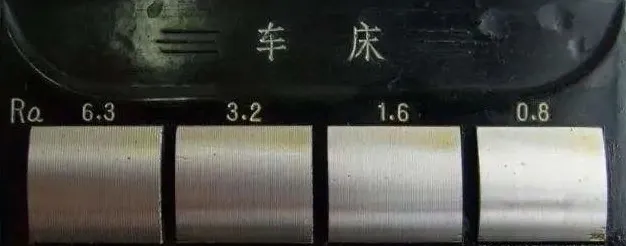
Do you know why the roughness is 0.8, 1.6, 3.2, 6.3, 12.5?
Do you know why the cylinder diameter is 63, 80, 100, 125?
Do you know why the cylinder pressure is 6.3, 16, 25, 31.5?
Do you know why the thread specifications are 6, 8, 10, 12, 14, 16?
Do you know where the countless tables in the mechanical design manual and the parameter tables on all product samples come from?
Everything comes from the great priority number system.
French engineer Renault saw that the steel wire ropes on the hot air balloon had many specifications, so he came up with a solution. He raised 10 to the fifth power and got a number 1.6. Then he multiplied them and got the following five priority numbers:
1.0
1.6
2.5
4.0
6.3
This is a geometric progression, and the latter number is 1.6 times the former number. So there are only 5 types of steel wire ropes below 10, and there are only 5 types of steel wire ropes from 10 to 100, namely 10, 16, 25, 40, 63.
But this method of division is too sparse, so Mr. Lei continued to work hard and raised 10 to the 10th power, and obtained the R10 priority number system as follows:
1.0
1.25
1.6
2.0
2.5
3.15
4.0
5.0
6.3
8.0
The common ratio is 1.25, so there are only 10 kinds of wire ropes within 10, and there are only 10 kinds from 10 to 100, which is more reasonable. At this time, someone must say that the numbers in this series seem to be not much different, such as 1.0 and 1.25, there is almost no difference, I usually round it off, but the interval between 6.3 and 8.0 is large, is this reasonable?
Reasonable or not, let's take an example. For example, the natural numbers 1, 2, 3, 4, 5, 6, 7, 8, 9, look very smooth, we use this series to pay wages, give Zhang San 1000, give Li Si 2000, and both are convinced. Suddenly inflation occurs, Zhang San is paid 8,000, and Li Si is paid 9,000. Li Si's salary used to be twice that of Zhang San, but now it has become 1.12 times. Do you think Li Si would be willing? He is a supervisor, and it is not bad to pay him 16,000. Zhang San will not complain that his supervisor earns 8,000 more than him.
There are two ways to compare things in nature, "relative" and "absolute"! The priority number system is relative.
Some people say that their product specifications are 10 tons, 20 tons, 30 tons, and 40 tons. Now it seems unreasonable, right? If you take twice, it should be 10 tons, 20 tons, 40 tons, 80 tons, or keep the head and tail, it should also be 10 tons, 16 tons, 25 tons, 40 tons, and the common ratio is 1.6 to be reasonable.
This is "standardization". People often say "standardization" on the forum, but they actually say "standard parts". The work they do is just to sort out the standard parts of the whole machine, and it is called standardization, but it is not the case in reality. For true standardization, you need to serialize all the parameters of your products according to the priority number system, and then serialize the functional parameters and dimensions of all parts using the priority number system.
Natural numbers are infinite, but in the eyes of mechanical designers, there are only 10 numbers in the world, which are the R10 priority numbers. Moreover, when these 10 numbers are multiplied, divided, squared, and squared, the results are still in these 10 numbers. How wonderful! When you are designing and don’t know what size to choose, just choose from these 10 numbers. How convenient is that!
1.0 N0 1.12 N2 1.25 N4 1.4 N6 1.6 N8 1.8 N10 2.0 N12 2.24 N14 2.5 N16 2.8 N18 3.15 N20 3.55 N22 4.0 N24 4.5 N26 5.0 N28 5.6 N30 6.3 N32 7.1 N34 8.0 N36 9.0 N38
Two priority numbers, such as 4 and 2, whose serial numbers are N24 and N12 respectively, multiply them, add their serial numbers, and the result is equal to N36, that is, 8;
Divide them, subtract the serial numbers, and it is equal to N12, that is, 2;
The cube of 2, multiply its serial number N12 by 3 to get N36, that is, 8;
The square root of 4, divide its serial number N24 by 2 to get N12, that is, 2. What if we want to find the fourth power of 2? N12*4=N48, there is no number here, what should we do? In the list above, there is no number written, that is, 10, its serial number is N40. For any serial number greater than 40, only look at the part greater than 40, such as N48, look at N8, that is, 1.6, and then multiply it by 10 to get 16. If the serial number is N88, look at N8 to get 1.6, then multiply by 100 to get 160, because the serial number of 100 is N80, the serial number of 1000 is N120, and so on.
For mechanical design, these 20 numbers are enough for a lifetime. But sometimes you need to use the R40 number system, which is more complete with 40 numbers. If it is not enough, there is also the R80 system. I have memorized the R40 number system by heart, and I don’t need a calculator to handle general calculations.
Simply put, to calculate the torsion resistance of 45 steel with a diameter of 40, its torsion coefficient is 0.5*π*R^3, the torsion stress is half of the yield point 360, that is, 180MPa, and the pi is 3.15. Pinch the decimal point with your left and right hands, and mentally add and subtract the serial number, and it will come out in a while. Someone said you don’t add a safety factor? Tell me, is it 1.25, 1.5, or 2? Haha.
The golden section is 0.618, which is 1.618. There is also 1.6 here. The square root sequence is the square root of 1, square root of 2, and square root of 3. It is easy to find, right? (The serial number of 3 is N19)
What is the square of π? It is equal to 10. It is convenient for you to calculate the stability of the pressure rod, right? The torsion coefficient of the round rod is about 0.1*D^3. Now you can calculate the torsion coefficient orally, right?
Why does the large screw jump directly from M36 to M40?
Why is there a 6.3 or 7.1 transmission ratio for the gear?
Why does the channel steel have a number of 12.6 that is rarely seen in the market?
Why did the outsourcing factory call and say that there is no 140 square tube, but there are 120 and 160?
Because the R5 number system takes precedence over the R20 number system.
Why do the parameters of standard parts have a first sequence and a second sequence? Generally speaking, the first sequence is the R5 sequence.
Why is there an M11.2 in the screw hole list of Inventor? Now you know that it is not a random number, right?
There are also steel plate thickness, steel type, gear module, all standard parts, functional parameters, dimensional parameters, standard tolerance tables on all industrial product samples, etc., and their sources are slowly becoming clear in our minds at this moment. It can be said that we have understood half of the mechanical design manual and those industrial products that have not yet been made.
Then, when we design a product, we can design a series at the same time, instead of doing the so-called "standardization" after the design; further, if the product is destined to be serialized, then we can even design the product without knowing much about the actual working conditions, because the priority number system has included all models.
The applications of the priority number system listed above are just a drop in the ocean, and endless applications are waiting for us to develop ourselves. Recite the priority number system, this is a once-and-for-all job.
Improvement Of Aluminum Alloy Clutch Housing Leakage Problem
Design of Highly Conductive (Hot) Die-cast Al-Si-Fe Aluminum Alloy for 5G Base Station Radiator
Related Article

Fast sampling is the fastest way to win business in the hardware machining and plastic mold industries. Customers want a working sample in days, and a 3D printer delivers it, but only when you know how to print in 3d correctly.
how to print in 3d

Fast sampling is the fastest way to win business in the hardware machining and plastic mold industries. Customers often send an STL file and expect a working sample in days.
how to print an stl file

