
Who Made 3D Printing and Reshaped Industrial Rapid Sampling
Author: SZTC
2026-08-27


Samuel Song Your service representative
Specializing in zinc-aluminum-magnesium alloy die-casting processing, CNC milling, CNC turning, 3D printing, injection molding and sheet metal processing. Manufacturing services.
-----------------------------------------------------------------------------------------------------------------------------------------------------------------------------------------------------------------------------------------------------------------------------------------------------------------------------------------------
3D printing has become an indispensable tool for fast sample production in plastic mold and hardware processing industries. Many manufacturing practitioners frequently ask who made 3D printing and which pioneers drove its industrialization. Multiple inventors contributed to the birth and iteration of additive manufacturing, laying the foundation for modern rapid prototyping workflows.
1. The Earliest Technical Pioneer of 3D Printing
To fully answer who made 3D printing, we start with the earliest theoretical and experimental creator.
1.1 Hideo Kodama’s Foundational Breakthrough
In 1981, Japanese researcher Hideo Kodama made the first complete 3D printing prototype based on photopolymer layer curing. He established the core principle of stacking materials layer by layer, which defines modern additive manufacturing. His pioneering work proved the feasibility of 3D molding technology for industrial use.
1.2 Early Technical Limitations
Although Kodama made the original 3D printing technology, his prototype stayed in the laboratory stage. It lacked stable precision and mature industrial parameters, so it could not support formal plastic mold and hardware sample production at that time.
2. Father of Modern Industrial 3D Printing
The most critical figure to define who made 3D printing is Chuck Hull, the founder of practical industrial 3D printing.
2.1 Invention of Core SLA Technology
In 1983, American engineer Chuck Hull successfully made stereolithography, the first functional industrial 3D printing process. He created stable laser curing equipment that accurately converts digital models into solid parts, realizing real industrial additive manufacturing.
2.2 Official Patent and Commercialization
Hull filed a formal patent in 1984 and obtained official authorization in 1986. He founded 3D Systems and launched the first commercial 3D printer, officially moving 3D printing from laboratory research to industrial manufacturing scenarios.
3. Follow-Up Innovators of Diversified Processes
A complete answer to who made 3D printing also includes subsequent technical innovators for industrial sampling.
3.1 Expansion of Mainstream Processes
Later inventors enriched the 3D printing system. Carl Deckard developed SLS powder sintering technology, while Scott Crump created FDM material extrusion printing. These innovations expanded applicable materials and printing scenarios greatly.
3.2 Empower Mold and Hardware Industry
Thanks to these pioneers, modern 3D printing supports high-precision mold cavity samples and high-strength hardware prototypes. It shortens R&D cycles, reduces trial production costs and optimizes rapid sampling for processing enterprises.
In conclusion, multiple creators jointly made 3D printing. Kodama laid the theoretical foundation, while Chuck Hull completed industrialization, and subsequent innovators enriched its functions. Understanding who made 3D printing helps factories recognize the value of this mature rapid prototyping technology.
Why Was 3D Printing Developed for Mold and Hardware Rapid Sampling
Which of the Following Processes Does 3D Printing Use for Industrial Sampling
Related Article
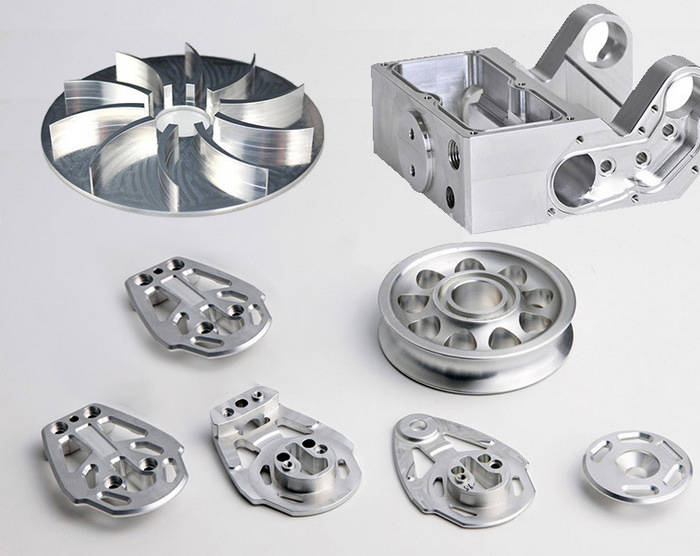
Die casting factories in the Shenzhen and Dongguan manufacturing corridor serve a wide range of sectors, including automotive parts, consumer electronics, communication hardware, pump and valve components, lighting housings and industrial brackets.
shenzhen die casting factory

Are Shenzhen die casting workshop facilities a good choice for your custom metal casting projects? It is a frequent question for purchasing managers, mechanical designers and quality engineers who source high-volume aluminum, zinc and magnesium die cast parts. Shenzhen has developed a complete industrial chain for die casting, mold making, CNC secondary machining and surface finishing.
shenzhen die casting workshop
Zinc castings are widely known for great plating performance. Parts can be directly electroplated into nickel, chrome and gold finishes without complicated pre-treatment. Secondary operations such as CNC tapping, drilling, deburring and polishing can be added to meet assembly requirements.
what is zinc die casting

The process is widely used for aluminum, zinc and magnesium alloys. These materials melt at relatively low temperatures compared to steel, making them suitable for repeated injection inside precision steel dies. After casting, parts can go through trimming, deburring, shot blasting, powder coating, anodizing or CNC secondary machining to meet drawing requirements.
what is a die casting