what is a die casting
What Is Die Casting? A Practical Guide to Custom Precision Die Casting for Industrial Buyers
Are die casting parts a good fit for your new product? It is a common question for purchasing managers, design engineers and quality teams, especially when you need high-volume metal components with consistent shape and thin-wall features. The short answer: die casting is one of the most cost-effective metal forming processes for mass production of non-ferrous metal parts. This guide covers how die casting works, its main variants, typical materials, tolerance limits, surface finishes, common defects, and what to check before selecting a die casting supplier.
What Is Die Casting?
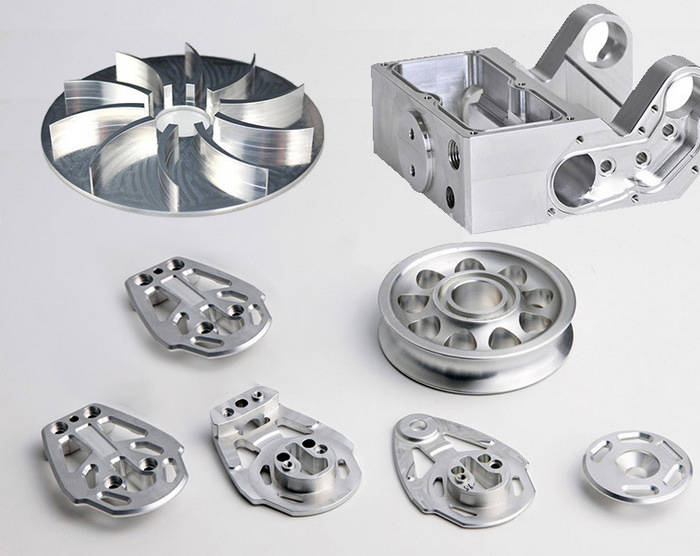
Die casting is a metal manufacturing process that forces molten metal under high pressure into hardened steel mold cavities, known as dies. Once the metal cools and solidifies inside the die, the mold opens and the finished part is ejected. Unlike CNC machining, which removes material from a solid block, die casting is a near-net-shape forming method. It excels at producing complex geometries with thin walls, built-in bosses, ribs and mounting points in a single cycle.
The process is widely used for aluminum, zinc and magnesium alloys. These materials melt at relatively low temperatures compared to steel, making them suitable for repeated injection inside precision steel dies. After casting, parts can go through trimming, deburring, shot blasting, powder coating, anodizing or CNC secondary machining to meet drawing requirements.
Main Types of Die Casting Processes
| Process Type | Key Features | Best For |
|---|---|---|
| Hot Chamber Die Casting | The injection cylinder sits submerged inside the molten metal furnace. Fast cycle time, limited to low melting point alloys. | Zinc, lead and tin alloys; small, thin parts like connectors, brackets and housing covers. |
| Cold Chamber Die Casting | Molten metal is ladled into the shot sleeve separately before injection. Higher injection pressure, larger part size available. | Aluminum and magnesium castings; automotive housings, pump bodies, equipment frames. |
| Vacuum Die Casting | Air is pulled out of the die cavity before injection, reducing porosity. | Parts requiring pressure tightness, heat treatment or welding. |
Common Die Casting Materials & Typical Properties
Most industrial die castings use non-ferrous alloys. Each family balances strength, weight, corrosion resistance, castability and cost.
- Aluminum Alloys: Light weight, good thermal conductivity, corrosion resistant. Suitable for automotive, lighting, electronics and heat sink housings. Cannot be easily heat treated in standard high-pressure die casting.
- Zinc Alloys: Excellent fluidity, very good dimensional stability, easy to plate. Ideal for decorative parts, gears, lock components and small precision fittings.
- Magnesium Alloys: Ultra-light structural metal, good strength-to-weight ratio. Common in handheld tools, drone parts and automotive lightweight components.
Tolerances & Dimensional Expectations
Die casting can hold good repeatable tolerances for as-cast surfaces, but it is not as tight as precision CNC machining. Draft angles are mandatory to allow ejection from the steel die. Sharp inside corners are not recommended; radii help reduce stress concentration and metal flow issues.
For critical holes, mating faces and assembly datums, most buyers add secondary CNC machining after casting. This hybrid workflow keeps unit cost low for bulk geometry while locking in tight tolerance features.
Typical Surface Finishes & Post Processing
As-cast surfaces have a natural die texture. Many projects require extra finishing steps:
- Deburring & trimming: Remove overflow flash and gating material
- Shot blasting: Uniform matte surface, clean casting skin
- Powder coating: Wear and corrosion protection, color options
- Electroplating: Bright decorative finish for zinc castings
- Anodizing: Hard protective layer for aluminum castings
- CNC secondary operation: Boring, tapping, milling for precision features
Common Die Casting Defects & What Causes Them
When evaluating samples from a supplier, watch for these frequent issues:
- Porosity / gas holes: Trapped air or dissolved gas inside the casting, caused by poor venting or fast injection speed.
- Cold shuts: Two metal flow fronts fail to merge fully, creating a weak seam.
- Flash: Excess metal squeezing out along die parting lines.
- Shrinkage cavities: Internal voids as metal shrinks during solidification.
- Misrun: Molten metal freezes before filling the full cavity, incomplete part.
A reliable die caster will run process trials, adjust gate and vent layout, and provide sample inspection reports before mass production release.
How to Choose a Qualified Die Casting Supplier
When sourcing die cast components, do not only compare unit piece price. Review these points:
- Tooling capacity: Can they design and build the hardened steel die in-house? What is the lead time for die making?
- Machine tonnage range: Their die casting machines must match your part projected area and required injection pressure.
- Secondary capability: Do they offer CNC machining, surface treatment and assembly under one roof?
- Quality control: CMM inspection, porosity testing, first article inspection (FAI), batch sampling records.
- Minimum order quantity: Die casting has high upfront tooling cost, so it is usually economical for medium to high volume orders.
Die Casting vs CNC Machining: Quick Comparison
| Item | Die Casting | CNC Machining |
|---|---|---|
| Production Volume | High volume, low per-unit cost after tooling | Low to medium volume, fast sampling, no hard tooling |
| Upfront Cost | High steel die cost | Low, only programming and setup |
| Tolerance | Moderate as-cast; tight tolerance needs secondary machining | Very tight directly from machine |
| Lead Time for First Sample | Longer, requires die fabrication | Short, suitable for prototype validation |
FAQ
Q: Can die cast aluminum parts be welded?
A: Standard high-pressure die cast aluminum often contains trapped gas, which can create bubbles during welding. Vacuum die casting alloys have much better weldability.
Q: What is the difference between die casting and sand casting?
A: Die casting uses reusable hardened steel dies with high pressure for smooth surfaces and high repeatability. Sand casting uses disposable sand molds, lower pressure, rougher surface and is better for large, low-volume castings.
Q: Is die casting cheaper than CNC machining?
A: For large order quantities, die casting normally delivers a much lower piece price. For prototypes or small batches, CNC machining is usually cheaper and faster.
Q: Can threads be cast directly into the part?
A: External threads are difficult and not recommended. Internal threads are normally created by tapping after casting.
Request Your Custom Die Casting Quote
Send your 2D drawings, 3D files, material specification and quantity requirements. Our factory provides die design, casting production, secondary CNC machining and surface finishing for industrial customers. We support FAI sampling and mass production orders.
Email: samuel@chnzhongzhu.com | Website: www.chnzhongzhu.com
what is zinc die casting
what is metal die casting
Related Article