
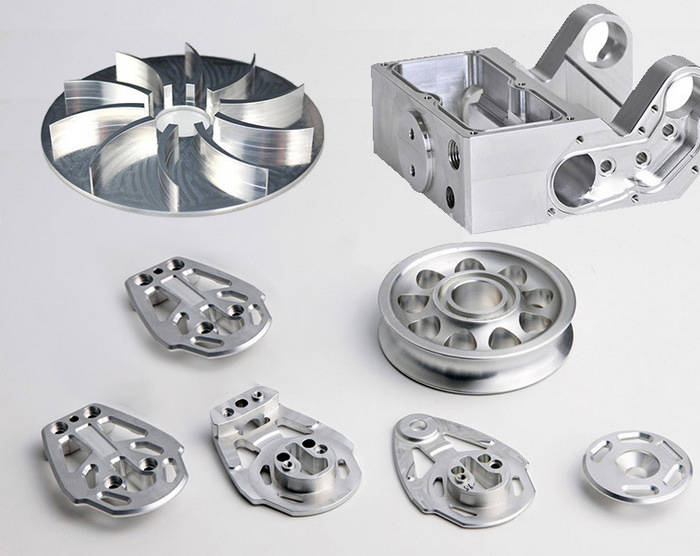
what is zinc die casting
What Is Zinc Die Casting? A Practical Guide to Custom Precision Zinc Die Casting for Industrial Buyers
Are zinc die casting parts suitable for your new product project? It is a frequent question for purchasing managers, design engineers and quality teams, especially when you need small, intricate metal components with excellent surface finish and high dimensional repeatability. The short answer: zinc die casting is a cost-effective high-pressure casting solution ideal for mass production of complex thin-wall parts that require plating, polishing and tight as-cast tolerances. This guide explains how zinc die casting works, common zinc alloys, tolerance ranges, surface finishing options, typical defects and key factors to evaluate a reliable zinc die casting supplier.
What Is Zinc Die Casting?
Zinc die casting is a high-pressure metal forming process that injects molten zinc alloy into precision hardened steel dies. After the material cools and solidifies inside the mold cavity, the die opens and the finished part is ejected. Most zinc components are produced on hot-chamber die casting machines, thanks to zinc’s relatively low melting temperature. Compared with aluminum die casting, zinc alloy flows much better, so it can reproduce ultra-fine details, thin walls, sharp logos and tiny structural features that are hard to achieve with other casting processes.
Zinc castings are widely known for great plating performance. Parts can be directly electroplated into nickel, chrome and gold finishes without complicated pre-treatment. Secondary operations such as CNC tapping, drilling, deburring and polishing can be added to meet assembly requirements.
Main Zinc Die Casting Alloys & Core Features
| Alloy Grade | Key Features | Typical Applications |
|---|---|---|
| Zamak 3 | Best general-purpose zinc alloy, balanced fluidity, dimensional stability and easy plating. Most widely used grade. | Locks, brackets, decorative housings, connectors, furniture hardware. |
| Zamak 5 | Higher strength and hardness than Zamak 3, slightly lower dimensional stability, good wear resistance. | Gears, hinge parts, structural fittings, load-bearing small components. |
| Zamak 7 | Superior surface smoothness, less porosity, excellent for high-grade plating and mirror polishing. | Jewelry fittings, cosmetic accessories, high-end decorative trim. |
| ZA-8 / ZA-12 | Higher aluminum content, stronger and more wear-resistant, less popular for fine plating. | Bearings, bushing parts, wear-resistant mechanical inserts. |
Tolerances & Dimensional Expectations
Zinc die casting delivers among the best as-cast tolerances of all high-pressure die casting metals. Excellent flow properties allow consistent replication of fine geometry. Draft angles are still required for smooth ejection from the steel die, and sharp internal corners should be replaced with radii to reduce stress and filling defects.
For precision tapped holes, alignment pins and critical mating surfaces, secondary CNC machining is commonly adopted. This hybrid method keeps tooling and unit cost reasonable while locking in tight tolerance features for assembly.
Surface Finishes & Post Processing Options
Zinc die casting shines in downstream surface treatment. Common finishing workflows include:
- Tumbling & deburring: Remove parting line flash and gate residues
- Shot blasting: Uniform matte base surface before coating
- Polishing: Mirror or satin finish for decorative parts
- Electroplating: Nickel, chrome, brass, gold plating for corrosion resistance and appearance
- Powder coating: Protective colored coating for industrial hardware
- Clear lacquer: Prevent oxidation and tarnish on plated surfaces
- CNC secondary work: Drilling, tapping, milling, reaming for precision features
Common Zinc Die Casting Defects & Root Causes
When reviewing first articles and mass production samples, watch for these typical defects:
- Porosity and blisters: Trapped gas inside the casting; blisters often appear after plating.
- Cold shuts: Separate molten flow fronts fail to fuse, creating weak visible lines.
- Flash: Excess zinc squeezes out at die parting lines, caused by worn dies or excessive injection pressure.
- Hot tearing: Cracks formed during solidification, common at sharp corners.
- Poor surface bubbles / pits: Dirty melt, insufficient venting or contaminated die release agent.
A professional zinc die casting supplier optimizes gating, venting and cycle parameters during trial runs, and provides FAI reports before mass production release.
How to Select a Qualified Zinc Die Casting Supplier
Price alone is not enough when selecting a zinc die casting vendor. Evaluate these key capabilities:
- Hot-chamber machine range: Machine tonnage matched to your part size and projected area.
- In-house tooling: Can they design, build and maintain hardened steel dies?
- Surface treatment support: Do they offer plating, polishing and coating in-house or controlled sub-contracting?
- Quality control: First article inspection, dimension checking, plating adhesion test and batch inspection records.
- MOQ and lead time: Zinc die casting has upfront die cost, best suited for medium and high volume orders.
Zinc Die Casting vs Aluminum Die Casting: Quick Comparison
| Item | Zinc Die Casting | Aluminum Die Casting |
|---|---|---|
| Weight | Denser, heavier for same volume | Lightweight, good for weight-sensitive designs |
| Surface & Plating | Excellent, ideal for chrome and nickel plating | Harder to plate, commonly anodized or powder coated |
| Wall Threshold | Can cast extremely thin walls and fine details | Limited minimum wall thickness |
| Machine Type | Mostly hot chamber | Cold chamber only |
| Typical Use | Hardware, locks, decorative and small precision fittings | Housings, heat sinks, automotive structural parts |
FAQ
Q: Are zinc die cast parts easy to plate?
A: Yes. Zinc alloys have great plating adhesion. Zamak 7 is the top choice when high-grade chrome or nickel plating is required.
Q: Will zinc die cast parts rust?
A: Zinc itself corrodes slowly in humid environments. Plating, lacquer or powder coating is needed for long-term corrosion protection.
Q: Can zinc die cast parts be used for gears?
A: Yes, Zamak 5 is widely used for low-to-medium load gears. For heavy-load transmission gears, other materials will be more suitable.
Q: Is zinc die casting expensive?
A: Die tooling cost is fixed upfront. Unit price becomes very competitive once the order volume goes up. For small prototype batches, CNC machining may be cheaper.
Request Your Custom Zinc Die Casting Quote
Send your 2D drawings, 3D files, alloy selection, surface finish and quantity requirements. Our factory provides die design, zinc casting production, secondary CNC machining and plating finishing for industrial customers. We support FAI sampling and mass production orders.
Email: samuel@chnzhongzhu.com | Website: www.chnzhongzhu.com
shenzhen die casting workshop
what is a die casting
Related Article