When Were 3D Printers Invented for Mold and Hardware Rapid Sampling
Author: SZTC
2026-08-20


Samuel Song Your service representative
Specializing in zinc-aluminum-magnesium alloy die-casting processing, CNC milling, CNC turning, 3D printing, injection molding and sheet metal processing. Manufacturing services.
-----------------------------------------------------------------------------------------------------------------------------------------------------------------------------------------------------------------------------------------------------------------------------------------------------------------------------------------------
3D printers have become standard equipment for fast sample production in plastic mold and hardware processing fields. More factory technicians and designers begin to explore the origin of this technology and frequently ask when were 3D printers invented. Understanding the invention timeline helps manufacturing teams recognize how 3D printing evolved into a reliable solution for industrial rapid prototyping and design verification.

1. The Earliest Invention of 3D Printing Devices
To accurately answer when were 3D printers invented, it is necessary to trace the earliest functional printing equipment.
1.1 Laboratory Prototype in 1981
The earliest generation of 3D printers were invented in 1981 by Japanese researcher Hideo Kodama. He developed a layered resin curing device that could stack materials to form solid parts. These original printers verified the core logic of additive manufacturing and started the technical exploration of modern 3D printing.
1.2 Early Technical Shortcomings
Although the first 3D printers were invented in 1981, they only adapted to simple laboratory tests. The devices lacked precision and stability, making them unable to support high-standard sampling for intricate plastic mold cavities and precision hardware components.

2. Industrial-Grade 3D Printer Invention and Patent
The key industrial milestone perfectly interprets when were 3D printers invented for practical manufacturing scenarios.
2.1 Formal Industrial Invention in 1984
In 1984, American engineer Chuck Hull invented stereolithography equipment, the first batch of truly practical industrial 3D printers. These optimized devices achieved stable dimensional accuracy and consistent molding quality, meeting the basic needs of industrial prototype production.
2.2 Official Commercial Authorization
In 1986, the core technology of these 3D printers obtained an official patent, and the first commercial 3D printing devices were launched in 1988. This move officially promoted 3D printers from laboratory research to industrial workshop application.

3. Industrial Application Value of Modern 3D Printers
Reviewing when were 3D printers invented reflects the huge progress of modern processing technology.
3.1 Continuous Technical Iteration
After decades of upgrading, the originally invented 3D printers have derived multiple mature technologies, including resin printing, FDM and metal printing. Modern equipment fully adapts to complex structural design and high-strength part production.
3.2 Efficient Rapid Sampling Capability
Today, 3D printers greatly optimize the production process of plastic mold and hardware samples. They shorten R&D cycles, reduce mold opening risks and cut trial production costs, bringing huge efficiency improvements to processing enterprises.
In short, the primitive 3D printers were invented in 1981, while mature industrial 3D printers were formally invented and commercialized in the mid-1980s. Clarifying when were 3D printers invented helps the manufacturing industry better apply this technology to achieve efficient rapid sampling.
Where Can I 3D Print Near Me for Mold and Hardware Fast Sampling
When Was the First 3D Printer Invented for Industrial Rapid Sampling
Related Article
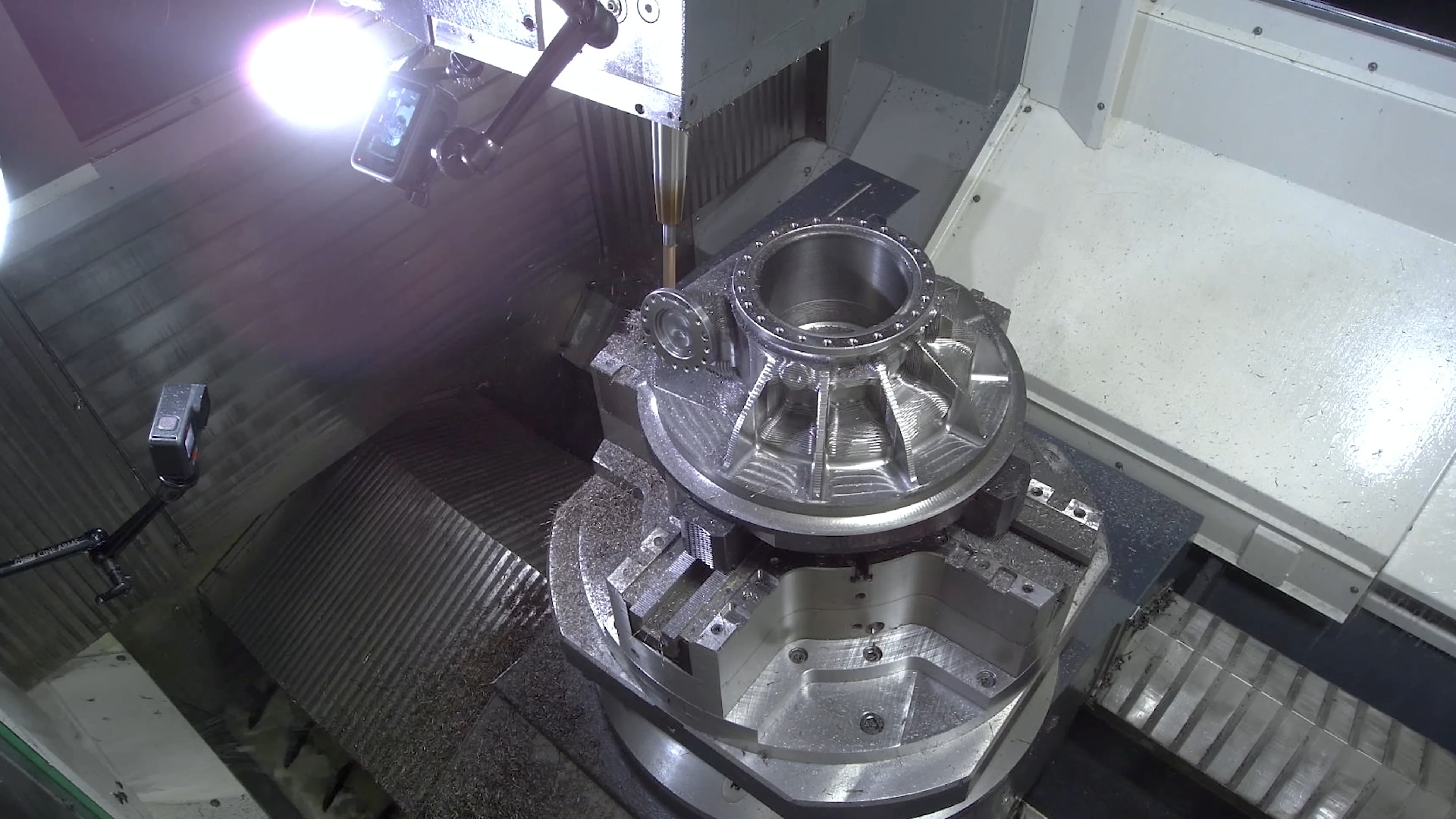
Grinding is not just a finishing touch for auto parts. It is a critical precision machining stage that determines sealing performance, noise level, service life and fatigue resistance of rotating automotive parts.
a grinding machine in an auto parts plant
This guide explains what stresses act on cast iron machine parts, the unique material properties of cast iron, common cast iron grades, CNC machining considerations, failure modes, and how you can evaluate a qualified cast iron machining supplier.
A cast iron machine part is acted upon?
Power transmission is not a single bolt-on component. It forms the motion chain between your prime mover and cutting/feeding units. For machine shops and equipment builders, transmission quality directly determines spindle runout, positioning repeatability and surface finish of machined workpieces.
what part of a machine is the power transmission?