A cast iron machine part is acted upon?
A Cast Iron Machine Part Is Acted Upon: Practical Guide for Industrial Buyers
What loads and forces is a cast iron machine part acted upon during service? This is a critical question for mechanical designers and purchasing managers sourcing machine bases, frames, brackets and housings. Cast iron is widely used in machine tool structures, but its mechanical behavior differs greatly from steel or aluminum. The short answer: cast iron components excel under compression loads, yet they are vulnerable to tension, bending and thermal stress. Understanding these acting forces helps you avoid cracking, deformation and unexpected machine downtime.
This guide explains what stresses act on cast iron machine parts, the unique material properties of cast iron, common cast iron grades, CNC machining considerations, failure modes, and how you can evaluate a qualified cast iron machining supplier. We will break down each load type, compare different cast iron materials, and share practical sourcing advice so you can specify and purchase cast iron machined parts with confidence.
Table of Contents
- What Forces Act on a Cast Iron Machine Part
- Cast Iron Material Properties That Determine Load Resistance
- Common Cast Iron Grades for Machined Machine Components
- 6 Key Load Types Acting on Cast Iron Machine Parts
- Cast Iron vs Steel and Aluminum Under Mechanical Loads
- Common Cast Iron Failure Modes and Prevention
- CNC Machining Considerations for Cast Iron Parts
- How to Evaluate a Cast Iron Machining Supplier
- FAQ: Loads on Cast Iron Machine Parts
- Conclusion and Quote Request
What Forces Act on a Cast Iron Machine Part
A cast iron machine part is acted upon by a mix of static mechanical loads, cyclic vibration loads and thermal loads in normal industrial operation. Unlike ductile metals such as carbon steel, cast iron has very low ductility. It does not bend much before cracking. Its greatest advantage is excellent vibration damping and high compressive strength.
Many machine builders select grey cast iron for lathe beds, milling machine bases, pump housings and support brackets exactly because it absorbs vibration and keeps cutting tools stable. However, the designer must route tensile loads away from thin cast iron sections. Even small tensile stress combined with internal casting defects can start a crack.
Before approving drawings and placing orders, buyers and engineers should confirm:
- Primary load direction: compression, tension or bending
- Magnitude of static load and cyclic vibration amplitude
- Temperature range and thermal cycling
- Section thickness, sharp corners and stress concentration points
- Cast iron grade and whether stress relief annealing is required
Cast Iron Material Properties That Determine Load Resistance
Cast iron is an iron-carbon alloy with carbon content above 2%. Flake graphite in grey cast iron interrupts the metal matrix. This microstructure creates its signature characteristics:
- High compressive strength
- Low tensile strength and low elongation
- Excellent vibration damping capacity
- Good wear resistance for sliding contact surfaces
- Good castability for complex internal cavities and thick frames
- Abrasive chips during CNC machining
Ductile iron (nodular cast iron) modifies graphite into spherical nodules. This greatly improves toughness and tensile strength, making ductile iron suitable for parts that must survive impact and bending loads where grey cast iron would crack.
Common Cast Iron Grades for Machined Machine Components
| Material Grade | Load Performance | Typical Machine Application |
|---|---|---|
| HT200 / HT250 Grey Cast Iron | Best under compression, excellent damping, brittle under tension | Lathe bed, machine base, column, pump body |
| QT450-10 / QT500-7 Ductile Iron | Good tensile strength, shock resistant, less brittle | Crankcase, gear housing, hydraulic valve block, bracket |
| Alloy Cast Iron | Heat and wear resistant, moderate strength | Cylinder liner, brake drum, guide rail |
6 Key Load Types Acting on Cast Iron Machine Parts
When a cast iron machine part is acted upon in equipment operation, these six load categories are most common:
- Compressive Load
Compression is the most favorable load for grey cast iron. Machine bases supporting spindle weight, cutting reaction force and assembly preload all work well in compression. Cast iron can bear high static compression without fracture. - Tensile Load
Tension is the main failure trigger. Flake graphite creates crack initiation points. Even small continuous tensile stress can propagate cracks, especially near casting porosity or sharp corners. Designers avoid placing grey cast iron under sustained tension. - Bending Load
Bending creates compression on one side and tension on the opposite surface. The tensile side is the weak point. Long cast iron beams and overhanging brackets are high-risk unless reinforced or redesigned with generous radii. - Vibration and Cyclic Fatigue Load
While cast iron damps vibration well, repeated cyclic loads create fatigue. Microcracks slowly grow under continuous machine vibration. This is common on machine frames running 24-hour shifts. - Thermal Stress
Uneven heating and cooling cause differential expansion. Thin walls heat or cool faster than thick sections. Internal thermal stress combines with residual casting stress and may lead to cold cracks after casting or hot cracks during operation. - Impact Load
Grey cast iron has low impact toughness. Sudden shock loads can produce immediate cracking. Ductile iron is selected when impact events are expected.
Cast Iron vs Steel and Aluminum Under Mechanical Loads
Many buyers wonder why machine tool builders still choose cast iron instead of steel weldments or aluminum castings. Each material responds differently when acted upon by working loads.
| Material | Compression | Tension / Impact | Vibration Damping |
|---|---|---|---|
| Grey Cast Iron | Excellent | Poor, brittle | Superior |
| Carbon Steel | Very Good | Excellent, ductile | Low |
| Aluminum Alloy | Good | Good, lightweight | Low |
Common Cast Iron Failure Modes and Prevention
When a cast iron machine part is acted upon beyond its safe limit, failures follow predictable patterns:
| Failure Mode | Root Cause | Control Method |
|---|---|---|
| Brittle crack propagation | Tensile stress, sharp corners, casting defects | Add fillet radii, NDT inspection, avoid tension design |
| Deformation after long runtime | Residual casting stress + thermal cycling | Stress relief annealing before finishing machining |
| Guide rail surface wear | Sliding friction, insufficient hardness | Surface quenching, proper lubrication |
| Fatigue cracking | Continuous cyclic vibration | Reduce vibration amplitude, increase section thickness |
One critical point for buyers: hidden defects such as sand inclusions, shrinkage cavities and cold shuts inside the casting become crack origins once external loads are applied. Non-destructive testing (ultrasonic or magnetic particle inspection) is recommended for load-bearing cast iron frames.
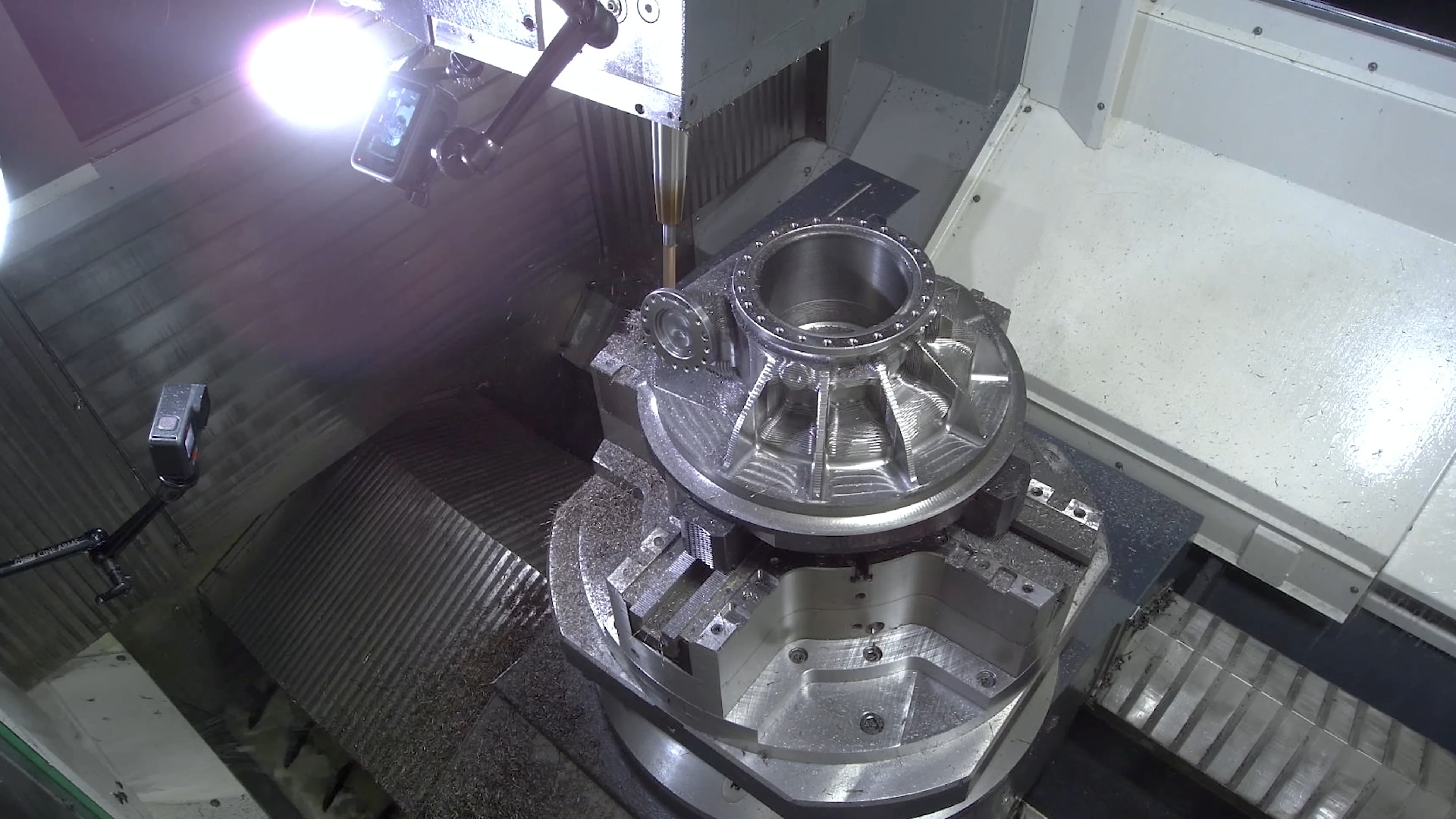
CNC Machining Considerations for Cast Iron Parts
Cast iron is machinable, but its graphite and hard inclusion particles accelerate tool wear. A reliable supplier follows these rules:
- Use carbide cutting inserts for milling, boring and facing
- Control fine cast iron dust with dust extraction systems
- Complete stress relief annealing before finish CNC machining
- Control flatness, parallelism and straightness for mating guide surfaces
- Add fillets instead of sharp internal corners to reduce stress concentration
- First article inspection for critical geometric tolerances
Stress relief is especially important. If a supplier skips annealing, residual stress will slowly release after machining, causing dimensional drift long after delivery when the part is acted upon by operating temperature and load.
How to Evaluate a Cast Iron Machining Supplier
When sourcing cast iron machine components, buyers should verify process capability instead of only comparing price:
- Confirm whether the foundry and machining shop can provide material test certificates for the specified cast iron grade.
- Ask if stress relief annealing is included in the standard process.
- Clarify NDT scope: magnetic particle test or ultrasonic inspection for load-critical castings.
- Review CNC equipment and fixture setup for large heavy cast iron frames.
- Request FAI (first article inspection) reports with measured dimensional data.
- Confirm packaging to prevent chipping and cracking during transit.
A good supplier will also review your drawing and point out risky design areas where tensile stress or stress concentration may appear when the cast iron machine part is acted upon under working load.
FAQ: Loads on Cast Iron Machine Parts
Cast iron machine parts are mainly acted upon by compressive load, tensile load, bending load, vibration fatigue load, thermal stress and occasional impact load. Grey cast iron performs well under compression but is weak under tension and impact.
Grey cast iron has excellent vibration damping capacity. Machine tools need stable cutting conditions. The base is designed to carry compression loads only, so its brittleness is acceptable when the load path is correctly arranged.
Grey cast iron cannot bend safely. Bending creates tension on one side and cracks will form easily. Use ductile iron or steel if bending load is unavoidable.
It does not change ultimate material strength, but it removes internal residual casting stress. This prevents unexpected cracking and dimensional shift after CNC machining when the part is acted upon by temperature and load.
Select ductile iron if the part must withstand impact, bending or continuous tensile load. Stick to grey cast iron for static compression frames and machine beds where vibration damping is the priority.
Conclusion and Quote Request
A cast iron machine part is acted upon by a combination of mechanical and thermal loads in real service. The core design rule is simple: leverage cast iron’s high compression strength and damping performance, and avoid exposing grey cast iron to sustained tension and impact. The quality of the casting, stress relief process and CNC finishing directly determine long-term stability.
For industrial buyers, the safest sourcing strategy is to communicate the working load conditions clearly to your supplier before production. A competent manufacturer can suggest the correct cast iron grade, heat treatment and inspection plan matching your application.
At Shenzhen Zhongzhu Technology Co., Ltd., we focus on custom manufacturing solutions for industrial customers. Our manufacturing-related services include precision machining, casting, stamping and custom metal and plastic component processes. If you are sourcing cast iron machined machine parts, send us your 2D drawing and 3D model together with load requirements, material grade, quantity, surface treatment and target delivery date.
Our team can review the technical requirements and discuss a suitable manufacturing route based on the project details. We welcome inquiries for custom components, prototypes and production orders.
Get In Touch
Looking for a reliable manufacturing partner for your custom cast iron precision components? Contact our team today.
Shenzhen Zhongzhu Technology Co., Ltd.
Custom metal components, precision machining, die casting, stamping and plastic components.
📄 Request a Technical Review or Quotation
//www.chnzhongzhu.com/about-us.html
📞 Speak with Our Team
//www.chnzhongzhu.com/about-us.html
🔗 Explore Our Manufacturing Services
//www.chnzhongzhu.com/services.html
Shenzhen Zhongzhu Technology Co., Ltd.
315 PING 'AN AVENUE, PINGHU STREET, LONGGANG DISTRICT, SHENZHEN CITY, GUANGDONG PROVINCE
📞 +86 18688963321
✉ samuel@chnzhongzhu.com
Shenzhen Zhongzhu Technology
//www.linkedin.com/in/samuel-song-34500a18b/ //www.youtube.com/@SamuelSoong
a grinding machine in an auto parts plant
what part of a machine is the power transmission?
Related Article