what part of a machine is the power transmission?
What Part of a Machine Is the Power Transmission? A Practical Guide to Mechanical Power Transfer, Components and CNC Machined Transmission Parts
Are power transmission sections easy to identify on CNC machines, lathes and automation equipment? It is a common question for maintenance technicians, purchasing managers and mechanical engineers, especially when sourcing replacement parts, troubleshooting vibration or ordering custom machined components. The short answer is that power transmission refers to the mechanical assembly that transfers torque and rotary motion from the motor to working machine elements. Misunderstanding this assembly leads to wrong spare part selection, repeated machine downtime and poor machining accuracy. This guide explains what counts as power transmission, its core parts, common drive types, typical failure symptoms and how industrial buyers can source precision CNC machined transmission components.
Power transmission is not a single bolt-on component. It forms the motion chain between your prime mover and cutting/feeding units. For machine shops and equipment builders, transmission quality directly determines spindle runout, positioning repeatability and surface finish of machined workpieces. Buyers should define material, tolerance, heat treatment and backlash requirements when purchasing custom transmission parts alongside other CNC machined components.
- What Is Power Transmission on a Machine?
- Core Components of Machine Power Transmission
- 4 Main Types of Mechanical Power Transmission
- Power Transmission Type Comparison Table
- Common Transmission Faults and Troubleshooting
- Shaft Alignment and Preventive Maintenance Tips
- How to Source Custom CNC Machined Transmission Parts
- FAQ: Machine Power Transmission
- Conclusion and Quote Request
What Is Power Transmission on a Machine?
Power transmission is the mechanical assembly that transfers rotational force and motion from the power source to the working parts of industrial machinery. It sits after the motor and before the final actuator such as spindle, ball screw, roller or rotary table. The motor only generates power; the transmission assembly converts speed, multiplies torque, changes rotation direction and delivers controlled motion.
Many machine problems trace back to degraded power transmission:
- Chatter marks and wavy surface finish on CNC machined parts.
- Lost positioning accuracy and inconsistent dimensional tolerance.
- Abnormal noise, knocking, squealing or resonant vibration during operation.
- Overheating bearings, couplings and gear housings under load.
- Premature wear of ball screws, linear guides and spindle assemblies.
- Unplanned downtime and rejected production batches.
For industrial buyers, power transmission components must be matched to load rating, speed range, precision grade and working environment. General workshop equipment, high-precision CNC mills and heavy gearbox machinery each require different transmission designs.
Before ordering custom machined transmission parts, buyers should confirm:
- Transmission type: gear / timing belt / chain / direct coupling
- Torque load, continuous RPM and peak shock load
- Allowed backlash and positioning accuracy requirement
- Material and heat treatment specification (40Cr, 42CrMo, stainless steel etc.)
- Tolerance for shaft OD, keyway, runout and tooth profile
- Lubrication environment: grease bath, oil bath or dry operation
In other words, what part of a machine is the power transmission is not a simple single-part answer. It is a complete motion chain defined by your machine’s performance specification.
Core Components of Machine Power Transmission
A typical power transmission chain consists of multiple matched machined parts. Every component works together to transfer power reliably.
1. Transmission shafts: The central load-bearing parts that carry torque, support gears and pulleys. Shafts require tight concentricity, controlled surface roughness and precise keyway slots. They are commonly CNC turned and ground.
2. Couplings: Connect two separate shafts, absorb minor misalignment and damp vibration. Flexible couplings are widely used on CNC feed axes, while rigid couplings apply where zero play is required.
3. Gears and gear racks: Reduce speed, amplify torque and change rotation direction. Ground gears deliver low backlash for precision machine tools; cast gears are used for heavy low-speed equipment.
4. Timing pulleys and synchronous belts: Provide zero-slip synchronous transmission, low noise and simple installation. Popular for medium-speed CNC spindles and automation axes.
5. Sprockets and roller chains: Suitable for heavy loads and long center distances. Common in conveyors and rugged industrial machinery, less common for high-precision CNC feed axes.
6. Bearings and bearing housings: Support rotating shafts, control radial and axial runout, reduce friction. Precision P4/P5 bearings are standard for spindle and high-speed transmission.
7. Seals, lock nuts and keyways: Auxiliary machined features that fix components, retain lubrication and prevent contamination ingress.
Each component is a machined part. When one part wears, the whole transmission chain suffers accelerated wear. This is why maintenance teams inspect the full chain instead of replacing only the broken piece.
4 Main Types of Mechanical Power Transmission
Factory machine designers select transmission types based on accuracy, load, noise and maintenance budget. Many machines combine multiple transmission methods in one power chain.
1. Gear transmission
Meshed gear teeth transfer torque between shafts. It offers high torque capacity, stable speed ratio and compact layout. Ground spur gears, helical gears and bevel gears are widely used in gearboxes, spindle heads and rotary tables. Drawbacks include gear noise, strict lubrication requirements and backlash control challenges.
2. Timing belt transmission
Toothed synchronous belts and pulleys maintain fixed speed ratio without slip. Belt drives isolate vibration, are quieter than gears and are easy to replace. The main limitation is belt stretch after long runtime, which reduces positioning accuracy. Ideal for medium-speed CNC spindles and automation axes.
3. Direct coupling transmission
Motor shaft directly connected to ball screw or spindle via coupling. This design minimizes intermediate parts, achieves ultra-low backlash and excellent repeatability. It is the preferred design for high-precision linear feed axes on milling machines.
4. Chain and sprocket transmission
Roller chain drives handle heavy shock loads and large shaft spacing. They are durable and low-cost for rugged equipment. However, chain elongation, vibration and backlash make them unsuitable for precision machining axes.
The core principle: power transmission design balances precision, load, speed and maintenance cost. There is no universal best solution for all industrial machines.
Power Transmission Type Comparison Table
| Transmission Type | Best For | Strengths | Limitations |
|---|---|---|---|
| Gear transmission | High torque, spindle gearboxes, rotary tables | High load capacity, compact, stable ratio | Noise, lubrication required, backlash control costly |
| Timing belt drive | Medium speed spindles, automation axes | Low vibration, quiet, easy replacement | Belt stretch over time, not for extreme heavy load |
| Direct coupling | High precision CNC feed axes | Minimal backlash, excellent repeatability | Strict alignment required, no vibration isolation |
| Chain drive | Conveyors, heavy rugged machinery | High shock load tolerance, long center distance | Elongation, vibration, poor positioning accuracy |
Is the motor counted as power transmission? No. The motor is the power source. Power transmission only covers the mechanical parts after the motor that deliver motion and torque.
Can I replace a gear with a belt pulley to reduce cost? Only if your machine’s torque, speed and accuracy requirements allow. Changing transmission type changes the whole machine dynamic performance, not just one part.
Common Transmission Faults and Troubleshooting
| Fault Symptom | Root Cause | Supplier / Maintenance Control Measure |
|---|---|---|
| Chatter marks on machined surface | Worn gears, loose coupling, bearing play | Check backlash, replace worn components, re-align shafts |
| Squealing or grinding noise | Dry lubrication, damaged gear teeth, belt mis-tension | Inspect lubrication, check tooth wear, adjust belt tension |
| Position offset and inconsistent dimension | Belt stretch, excessive gear backlash, loose keyway | Replace belt, select low-backlash gears, verify key fit tolerance |
| Overheating at coupling or gear housing | Shaft misalignment, overloading, insufficient lubricant | Laser alignment check, confirm load rating, refill lubricant |
| Sudden jamming or slip | Broken gear tooth, sheared key, failed bearing | Full transmission inspection, replace matched set of parts |
One frequent mistake is replacing only the visibly broken component. Wear in one part usually creates impact load that damages mating shafts, bearings and gears. For precision machines, it is best to inspect the whole transmission chain during repair.
Backlash is the critical specification for buyers of CNC machine transmission parts. Low-backlash gears and disc couplings cost more but are mandatory for high-precision milling and turning axes.
Shaft Alignment and Preventive Maintenance Tips
Even perfectly machined transmission parts fail quickly under poor shaft alignment. Parallel offset and angular misalignment create cyclic stress on couplings, bearings and shafts.
Standard transmission maintenance checklist:
- Check shaft alignment with dial gauge or laser alignment tool quarterly.
- Inspect lubricant level, cleanliness and oil contamination for gearboxes.
- Check timing belt tension, tooth wear and crack signs.
- Check coupling fastener torque and elastomer insert aging.
- Monitor bearing temperature and vibration trend during operation.
- Clean transmission housing and seal areas to prevent abrasive dust ingress.
- Log vibration data to predict component service life before failure.
For heavy-duty equipment, scheduled replacement of wear parts is cheaper than emergency breakdown repair. Many machine builders provide recommended service intervals for gears, belts and bearings in their operation manual.
How to Source Custom CNC Machined Transmission Parts
When you need custom shafts, gear blanks, coupling hubs, timing pulleys, bearing housings and keyed sleeves, drawing requirements determine whether the parts fit and perform reliably.
Common materials for power transmission components:
- 45# steel: General shafts, low-load pulleys and structural hubs.
- 40Cr / 4140: Medium-load shafts, coupling hubs, induction hardenable.
- 42CrMo / 4340: High torque shafts and heavy-load gear blanks.
- 20CrMnTi: Carburized gears requiring hard tooth surface and tough core.
- 304 / 316 stainless: Corrosion-resistant transmission parts for wet environment.
- Aluminum alloy: Lightweight pulley and adapter hubs for low inertia.
Key specifications to clarify before quotation:
- Shaft diameter tolerance, runout and surface roughness Ra.
- Gear module, tooth count, pressure angle and precision grade.
- Keyway width, depth and fit tolerance (JS9, P9 etc.).
- Heat treatment: quenching & tempering, induction hardening, carburizing.
- Surface treatment: black oxide, zinc plating, hard anodizing.
- Quantity, first article inspection requirement and delivery schedule.
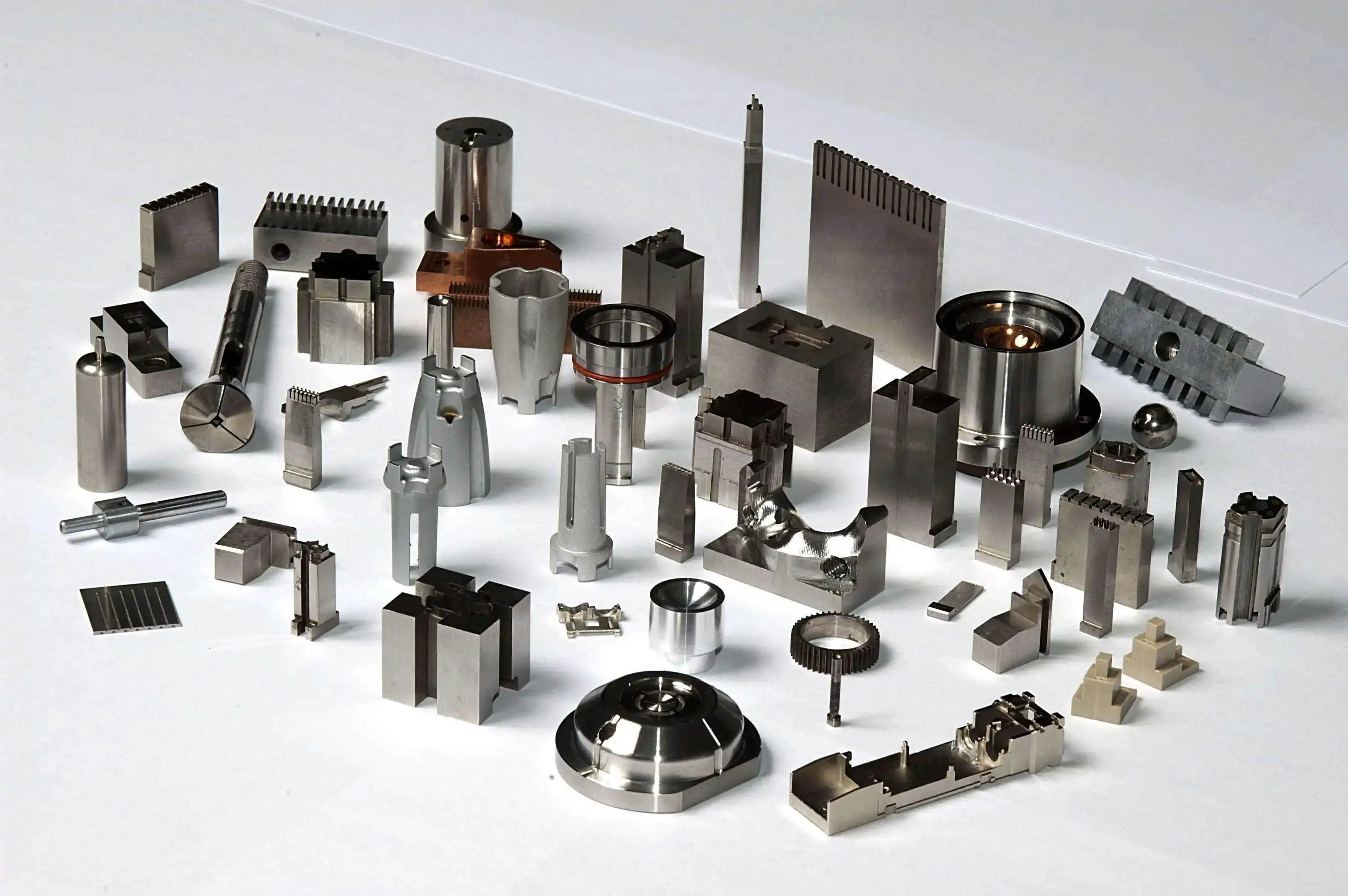
Our factory provides precision CNC turning, milling, grinding, gear hobbing and keyway machining for custom power transmission components. We support prototype samples and mass batches for machine builders, automation manufacturers and maintenance contractors.
FAQ: Machine Power Transmission
These answers address common questions from procurement engineers, maintenance supervisors and equipment buyers sourcing custom CNC transmission parts.
Q1: What part of a machine is the power transmission?
A1: Power transmission is the mechanical assembly between the motor and working units. It includes shafts, couplings, gears, pulleys, belts, bearings and related machined parts that transfer torque and motion.
Source: Mechanical power transmission engineering definitions.
Q2: Is a bearing part of power transmission?
A2: Yes. Bearings support rotating transmission shafts, control runout and reduce friction, so they are an essential supporting part of the transmission chain.
Source: Machine tool motion system design.
Q3: Which transmission type has the least backlash?
A3: Direct coupling and precision ground gear drives can achieve very low backlash. Zero-backlash couplings and anti-backlash gears are available for high-precision CNC axes.
Source: Precision motion control component standards.
Q4: Can I mix brands of gears and shafts in one transmission?
A4: It is possible only if module, pressure angle, tolerance and hardness match. Mismatched tooth profile or hardness will cause rapid uneven wear.
Source: Gear mating best practice.
Q5: What heat treatment is best for transmission shafts?
A5: 40Cr and 42CrMo shafts usually use quenching and tempering for overall toughness. Induction hardening is applied to bearing seats and keyway surfaces for wear resistance.
Source: Shaft manufacturing process guidelines.
Q6: Why do timing belts need regular tension adjustment?
A6: New belts settle and stretch after running in. Too loose causes slip and lost accuracy; too tight overloads bearings and accelerates fatigue failure.
Source: Synchronous belt drive maintenance manual.
Q7: What is the difference between power transmission and power source?
A7: The power source (motor) generates energy. Power transmission converts and delivers that energy to the working tool. They are separate parts of the machine.
Source: Mechanical system theory.
Q8: Are chain drives suitable for CNC milling machine feed axes?
A8: Generally no. Chain elongation and vibration create positioning error and poor surface finish. Chains are reserved for heavy conveyor and low-precision mechanisms.
Source: CNC machine motion design practice.
Q9: What tolerance grade is typical for custom transmission shafts?
A9: CNC transmission shafts commonly use h6 or g6 tolerance for bearing seats, with runout controlled within 0.002~0.005mm for high-precision equipment.
Source: Precision shaft machining specification.
Q10: Should I buy transmission parts as assemblies or separate machined components?
A10: For repair, matched assemblies are easier. For custom machine design, ordering separate CNC machined parts gives flexibility but requires full tolerance coordination by your engineering team.
Source: Industrial procurement common practice.
Conclusion and Quote Request
So, what part of a machine is the power transmission? It is the complete motion transfer chain between the motor and working components, built from shafts, couplings, gears, pulleys, belts and bearings. Selecting the right transmission type and specifying strict machining tolerances directly improves machine stability, accuracy and service life. The most frequent mistakes happen when buyers treat transmission parts as generic off-the-shelf spares without defining load, backlash and heat treatment requirements.
For industrial machine builders and maintenance buyers, power transmission components are high-impact precision parts. Quality CNC machining, proper heat treatment and inspection are essential to avoid repeated failure and production loss.
At Shenzhen Zhongzhu Technology Co., Ltd., we provide custom CNC machining for power transmission components including shafts, gear blanks, coupling hubs, timing pulleys and bearing housings. We support turning, grinding, gear hobbing, keyway machining and surface treatment for prototype and mass orders.
Send us your 2D drawings, 3D STEP files, material grade, tolerance, heat treatment and quantity. Our engineering team will review manufacturability and provide a formal quotation.
Get In Touch
Looking for a reliable manufacturing partner for your custom CNC machined power transmission parts? Contact our team today.
Shenzhen Zhongzhu Technology Co., Ltd.
Custom metal components, precision machining, die casting, stamping and plastic components.
📄 Request a Technical Review or Quotation
Contact Us →📞 Speak with Our Team
Get In Touch →🔗 Explore Our Manufacturing Services
View Products & Services →Shenzhen Zhongzhu Technology Co., Ltd.
315 PING 'AN AVENUE, PINGHU STREET, LONGGANG DISTRICT, SHENZHEN CITY, GUANGDONG PROVINCE
📞 +86 18688963321
✉ samuel@chnzhongzhu.com
Shenzhen Zhongzhu Technology


how to clean machined aluminum parts?
Related Article