Is Machine Learning Part of AI?
Is Machine Learning Part of AI? A Practical Guide to Artificial Intelligence, Machine Learning and Industrial Applications
If you have ever used a recommendation system, asked a chatbot a question, or watched a camera recognize an object, you have probably encountered artificial intelligence. But is machine learning part of AI, or are the two terms describing the same technology? The distinction matters. AI is the broader field of building systems that perform tasks associated with human intelligence, while machine learning is one of the main approaches used to develop those systems. Understanding the relationship also helps explain how modern factories use data, automation and intelligent software to improve production.
This guide explains the relationship between AI, machine learning and deep learning in practical terms. It covers how the technologies differ, how they work, where they are used, and what they mean for industrial manufacturing, quality inspection and CNC machining. Whether you are researching the basics or evaluating technology for a business, the goal is to give you a clear framework rather than a list of technical buzzwords.
- Is Machine Learning Part of AI?
- What Is the Difference Between AI and Machine Learning?
- How Does Machine Learning Work?
- Where Does Deep Learning Fit into AI?
- Common Types of Machine Learning
- AI and Machine Learning in Industrial Manufacturing
- Benefits and Limitations of Machine Learning
- FAQ: AI and Machine Learning
- Conclusion and Contact
Is Machine Learning Part of AI?
Yes. Machine learning (ML) is a subset of artificial intelligence (AI). AI is the broader field concerned with creating computer systems that can perform tasks normally associated with human intelligence. These tasks include recognizing patterns, understanding language, solving problems, making recommendations and supporting decisions.
Machine learning is one way to build AI systems. Instead of writing a separate instruction for every possible situation, developers train a model using data. The model identifies patterns in that data and uses what it has learned to make predictions or decisions when it receives new information.
For example, an AI system designed to identify defective metal components may use machine learning to study thousands of images of acceptable and defective parts. After training, the model can analyze new inspection images and estimate whether a component contains a visible defect. The AI application is the inspection system; machine learning is the technique that helps it recognize patterns.
The relationship can be summarized in one sentence: all machine learning is part of AI, but not all AI uses machine learning. Some AI systems use predefined rules, logical reasoning or search algorithms rather than learning patterns from training data.
It is useful to understand this distinction when evaluating technology products. A product described as AI-powered does not necessarily use machine learning, and a machine learning model is not automatically capable of every task associated with human intelligence.
What Is the Difference Between AI and Machine Learning?
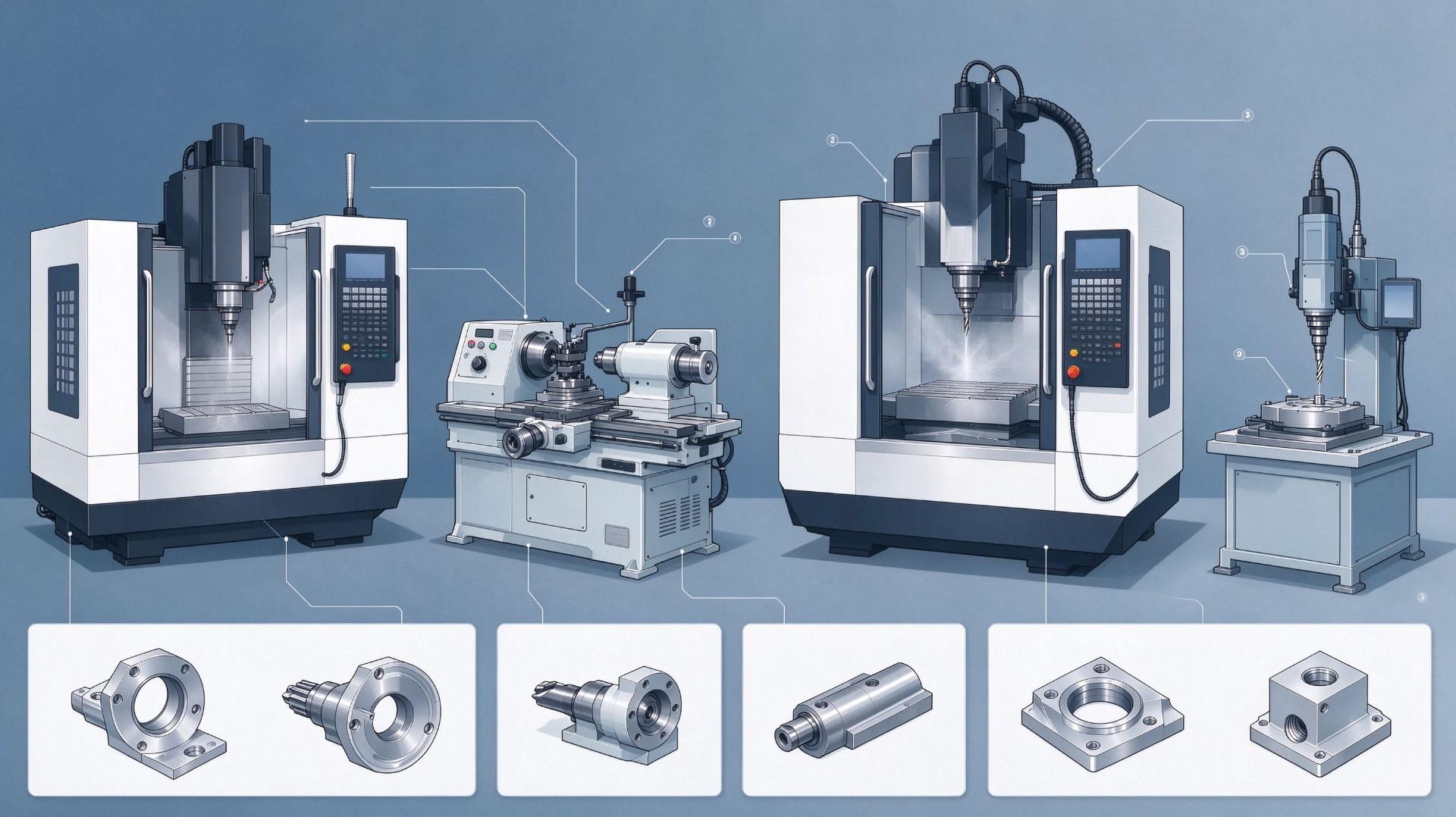 AI and machine learning are closely related, but they describe different levels of technology. AI defines the overall objective: building systems that can perform intelligent tasks. Machine learning describes a group of methods that allow computers to learn patterns from examples and data.
Artificial intelligence. AI includes a wide range of approaches for solving problems. A rule-based system, for example, can make a decision by following conditions written by a programmer. A chess program may search possible moves and evaluate them according to predefined strategies. These systems can demonstrate intelligent behavior without necessarily learning from a training dataset.
Machine learning. ML focuses on algorithms that improve their performance by learning from data. A model may be trained to recognize patterns in production measurements, forecast equipment failures, classify customer requests or estimate delivery times. Its performance depends on the quality of the training data, the model design and the way it is evaluated.
Generative AI. Generative AI is a category of AI that creates new content, such as text, images, audio or code. Many modern generative AI systems use machine learning, particularly deep learning, to learn statistical patterns from large datasets. A chatbot that generates an answer to a question is one example.
| Technology | Meaning | Example |
|---|---|---|
| Artificial Intelligence (AI) | The broad field of creating systems that perform intelligent tasks. | A chess-playing computer or an automated decision-support system. |
| Machine Learning (ML) | A subset of AI that learns patterns from data. | An email spam filter trained on examples of spam and legitimate messages. |
| Deep Learning (DL) | A specialized form of ML based on multi-layer neural networks. | Image recognition, speech recognition and advanced visual analysis. |
| Generative AI | AI systems that generate new content based on learned patterns. | Text generation, image generation and code assistance. |
Think of AI as the overall category, machine learning as one important approach within it, and deep learning as a more specialized technique within machine learning. Generative AI describes systems by what they do: generate new content. These categories are related, but they are not interchangeable.
How Does Machine Learning Work?
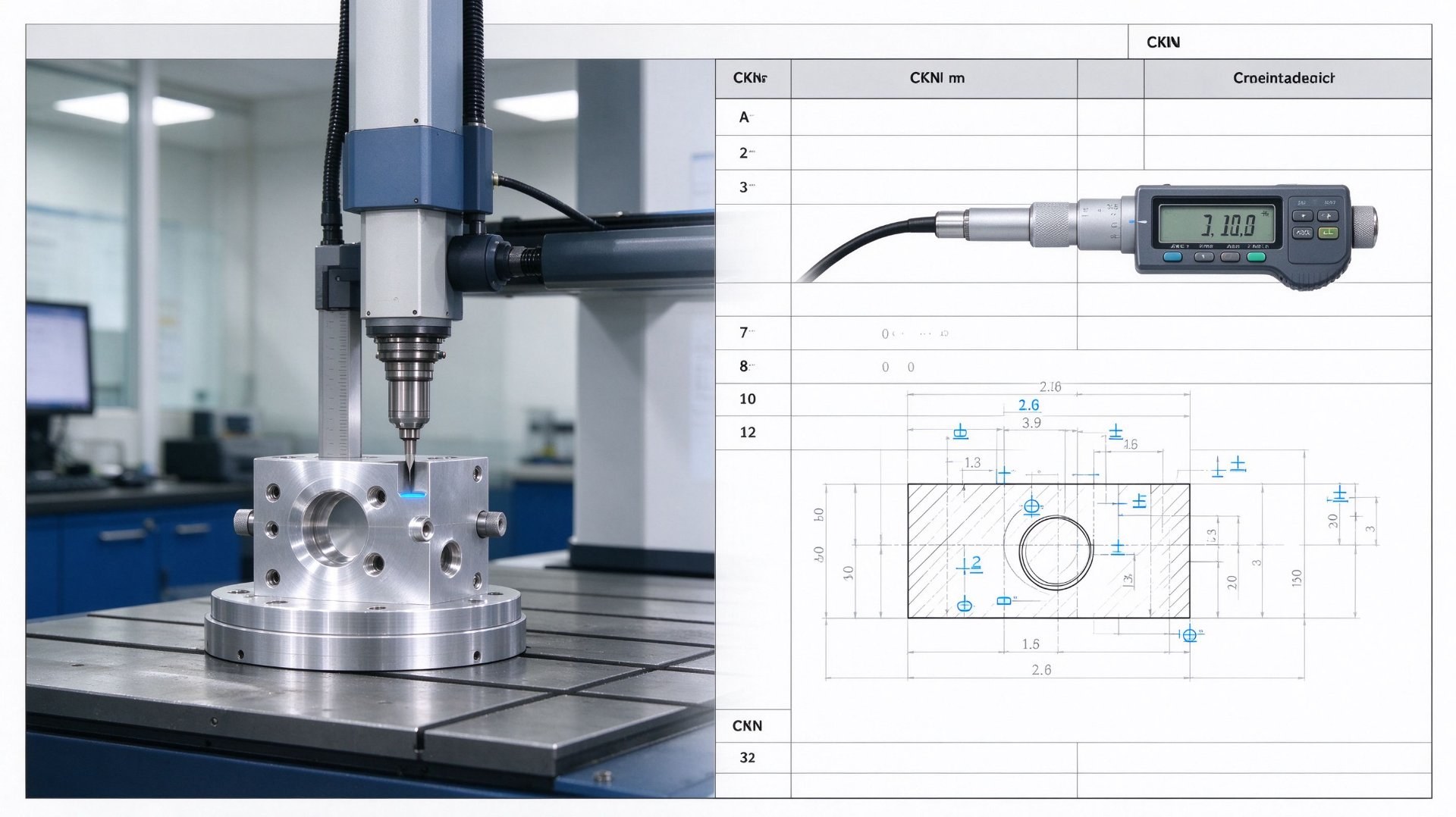 A machine learning project usually starts with a specific problem. The development team collects relevant data, prepares it for analysis, chooses an algorithm, trains a model and evaluates how well it performs on information it has not previously seen.
Step 1: Define the problem. The first task is to decide what the model should predict, classify or recommend. For example, a factory may want to predict whether a machine is likely to require maintenance within the next week. A clearly defined target makes it easier to select useful data and evaluate results.
Step 2: Collect and prepare data. Data may come from machine sensors, inspection records, production logs, images, customer transactions or other sources. It needs to be checked for missing values, inconsistent formats, errors and irrelevant information. Poor-quality data can lead to unreliable predictions.
Step 3: Select a model and train it. Developers choose an algorithm that fits the task. During training, the model adjusts its internal parameters to identify relationships between the input data and the expected output. Different problems require different approaches, so one algorithm is not suitable for every application.
Step 4: Evaluate performance. A model should be tested using data that was not used during training. Classification systems may be assessed through precision, recall and other metrics, while prediction models may be evaluated using measures such as mean absolute error. The right metric depends on the cost of different mistakes.
Step 5: Deploy and monitor. Once a model meets the required performance level, it can be integrated into a software application or production workflow. Its performance should continue to be monitored because equipment, materials, operating conditions and data patterns can change over time.
Training a model is not the same as making it intelligent in every situation. A model is generally designed for a defined task and may perform poorly when it encounters data that differs significantly from its training examples.
Where Does Deep Learning Fit into AI?
Deep learning is a specialized branch of machine learning. It uses artificial neural networks with multiple layers to learn increasingly complex patterns from data. These networks are loosely inspired by the structure of biological neural systems, although their operation is based on mathematical computation rather than the way a human brain works.
Traditional machine learning often relies on developers selecting or designing useful features for a model. For example, an image-classification project might use measurements of edges, shapes or textures as inputs to an algorithm.
Deep learning can learn many of these features directly from large collections of raw data. This makes it particularly useful for complex tasks involving images, audio, video and natural language. However, deep learning can require substantial computing resources, large datasets and careful testing.
Common applications include facial recognition, speech-to-text systems, automated image classification, language models and visual defect detection. In manufacturing, deep learning may help inspect complex surfaces or identify patterns in sensor data that are difficult to describe using simple rules.
Deep learning is not automatically better than traditional machine learning. For a small dataset or a relatively simple prediction task, a conventional algorithm may be easier to train, explain and maintain. The best approach depends on the problem, data availability, accuracy requirements and operating environment.
Common Types of Machine Learning
Machine learning methods are often grouped according to how a model receives feedback during training. The three widely discussed categories are supervised learning, unsupervised learning and reinforcement learning.
Supervised learning. The model learns from labeled examples, where each training input is paired with a known answer. A system trained on images labeled as acceptable or defective can learn to classify new inspection images. Other applications include price prediction, demand forecasting and email classification.
Unsupervised learning. The model works with data that does not have predefined labels and tries to identify patterns or groups. A manufacturer might analyze production records to discover groups of machines with similar operating behavior or identify unusual measurements that deserve investigation.
Reinforcement learning. An agent learns by interacting with an environment and receiving rewards or penalties for its actions. Over repeated attempts, it learns a strategy that aims to maximize the total reward. This approach is used in areas such as robotics, game-playing systems and some optimization problems.
| Learning Type | Training Data | Typical Application |
|---|---|---|
| Supervised learning | Labeled examples with known outputs. | Defect classification and demand prediction. |
| Unsupervised learning | Unlabeled data. | Customer segmentation and anomaly detection. |
| Reinforcement learning | Feedback from actions and their outcomes. | Robotics and sequential decision-making. |
The choice of learning method depends on the problem and the information available. A project with reliable historical labels may be suitable for supervised learning, while a project focused on discovering unknown patterns may benefit from unsupervised methods.
AI and Machine Learning in Industrial Manufacturing
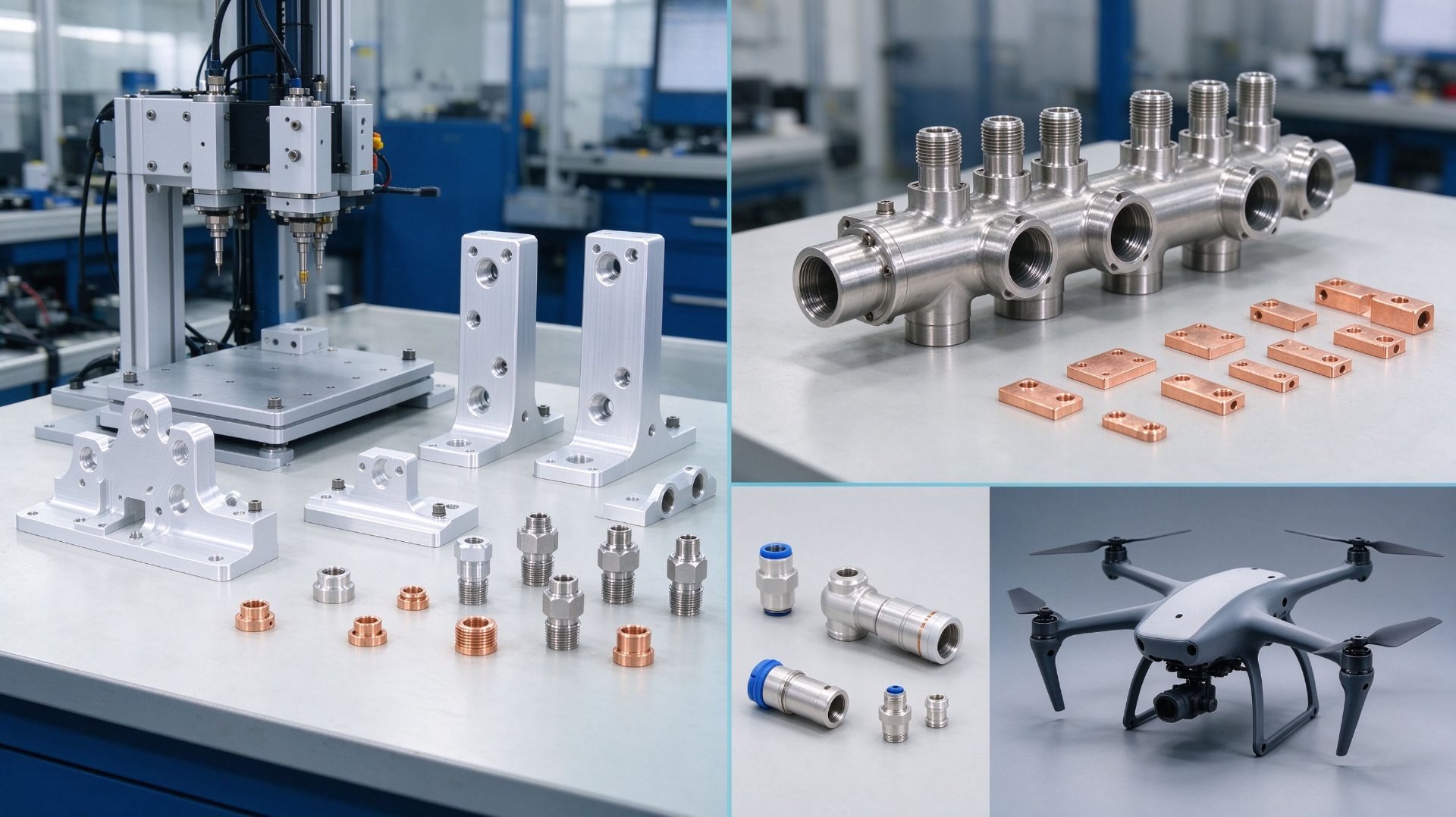
AI and machine learning are increasingly relevant to manufacturing because modern production environments generate large amounts of data. CNC machines, inspection equipment, production management systems and sensors can all provide information that helps manufacturers understand process performance.
1. Predictive maintenance. Machine sensors can record vibration, temperature, spindle load and other operating conditions. Machine learning models can analyze historical patterns and identify signals associated with equipment problems. Maintenance teams can use these predictions to investigate potential issues before an unexpected breakdown disrupts production. A prediction is an early warning, however, not a substitute for mechanical inspection.
2. Automated quality inspection. Computer vision systems can analyze images of manufactured components to identify visible defects such as scratches, dents, missing features or surface irregularities. When trained with representative inspection data, machine learning models can help sort parts and direct questionable items for further examination. Measurement equipment and established inspection procedures remain essential for verifying dimensional tolerances.
3. Production process optimization. Data from machining operations can help engineers understand how cutting parameters, tool wear, material properties and machine conditions relate to production outcomes. Analytical models may support decisions about process settings, cycle time and production scheduling. Any proposed adjustment should be validated against actual part quality and machine capability.
4. Demand forecasting and inventory planning. Machine learning can analyze historical orders, seasonal patterns and other business information to estimate future demand. Better forecasts can support purchasing, raw material planning and production scheduling, although sudden market changes can still make forecasts inaccurate.
5. Robotics and automation. AI-based perception can help robots identify objects, understand their positions and adapt to changes in the work area. In manufacturing, these capabilities may support material handling, part sorting and flexible assembly. Reliable deployment still requires suitable sensors, safety systems and integration with existing equipment.
6. CNC machining and precision manufacturing. Machine learning can support analysis of machining data, tool condition monitoring, process prediction and automated inspection. For example, a model may analyze spindle vibration and cutting-load patterns to identify possible tool wear. Engineers can then inspect the tool and verify whether replacement is necessary. The purpose is to support stable production, not to remove the need for engineering judgment.
For manufacturers producing custom metal and plastic components, the practical value of AI is closely connected to process control, traceability and inspection. Digital tools can help teams make better use of production information, but accurate drawings, suitable materials, capable equipment and reliable quality procedures remain the foundation of a good part.
Benefits and Limitations of Machine Learning
Machine learning can provide significant value when it is applied to a well-defined problem with suitable data. However, it also introduces technical and operational challenges that businesses should consider before investing in a project.
Potential benefits. Machine learning can process large datasets, identify patterns that are difficult to detect manually, automate repetitive classification tasks and support more consistent predictions. In manufacturing, these capabilities may help improve inspection efficiency, detect unusual process behavior and support maintenance planning.
Data quality requirements. A model learns from the information provided to it. If the training data is incomplete, inconsistent, biased or incorrectly labeled, the model may produce unreliable results. Data collection and preparation can therefore take a substantial amount of project time.
Model accuracy and generalization. A model that performs well on training data may not perform equally well in a different factory, on another material or under changed operating conditions. Testing with representative data and monitoring performance after deployment are essential.
Cost and integration. Some machine learning projects require specialized software, computing resources, sensors, data infrastructure and technical expertise. Integration with existing manufacturing systems can also be complex. A business should compare the expected operational benefit with the full cost of implementation and maintenance.
Human oversight. Machine learning predictions should be treated as decision-support information when safety, product quality or regulatory requirements are involved. Engineers and quality professionals need to validate important results, investigate unusual outputs and maintain responsibility for final decisions.
The most successful applications are usually those that solve a specific operational problem and can be measured against clear performance targets. Starting with a focused use case is often more practical than attempting to introduce AI across an entire organization at once.
FAQ: AI and Machine Learning
These answers explain the relationship between AI, machine learning and related technologies, with examples relevant to everyday software and industrial applications.
Q1: Is machine learning part of AI?
A1: Yes. Machine learning is a subset of artificial intelligence. It enables computer systems to learn patterns from data and use those patterns to make predictions, classifications or decisions. AI is the broader field, and it also includes approaches that do not rely on machine learning.
Q2: Is AI the same as machine learning?
A2: No. AI is the broader concept of building systems that perform tasks associated with human intelligence. Machine learning is one approach within AI that uses data to train models. The terms are related, but they do not mean exactly the same thing.
Q3: What is the difference between AI, machine learning and deep learning?
A3: AI is the broad field, machine learning is a subset of AI, and deep learning is a specialized subset of machine learning that uses multi-layer neural networks. Deep learning is particularly useful for complex tasks such as image recognition, speech processing and natural language applications.
Q4: Can AI work without machine learning?
A4: Yes. Some AI systems use predefined rules, search algorithms, logic or planning methods to perform intelligent tasks. A rule-based system can make decisions based on programmed conditions without learning from a training dataset.
Q5: Is ChatGPT an example of machine learning?
A5: Yes. ChatGPT is a generative AI system built using machine learning, including deep learning techniques. It uses a trained language model to generate responses based on patterns learned during training and the context provided in a conversation.
Q6: What are the three main types of machine learning?
A6: The commonly discussed categories are supervised learning, unsupervised learning and reinforcement learning. Supervised learning uses labeled examples, unsupervised learning looks for patterns in unlabeled data, and reinforcement learning learns through actions and feedback from an environment.
Q7: How is machine learning used in manufacturing?
A7: Manufacturers can use machine learning for predictive maintenance, visual defect detection, production data analysis, demand forecasting and process monitoring. In CNC machining, models may analyze sensor readings and machining data to help identify tool wear or unusual operating conditions.
Q8: Does machine learning always produce accurate results?
A8: No. Results depend on data quality, model design, training methods and the conditions in which the model is used. Models can make incorrect predictions, particularly when they encounter data that differs from their training examples. Testing, monitoring and human review are important.
Q9: Does machine learning require a large amount of data?
A9: Not always. Some machine learning methods can work with relatively small datasets, while deep learning applications often benefit from larger and more diverse datasets. The amount of data required depends on the task, model complexity and the quality of the available information.
Q10: Will machine learning replace engineers in manufacturing?
A10: Machine learning can automate certain analysis and inspection tasks, but it does not replace the full range of engineering responsibilities. Engineers still need to define requirements, validate results, understand materials and manufacturing processes, solve unexpected problems and make decisions involving product safety and quality.
Conclusion and Contact
So, is machine learning part of AI? Absolutely. Machine learning is an important branch of artificial intelligence that allows systems to learn patterns from data. Deep learning is a specialized form of machine learning, while generative AI uses learned patterns to create new content.
For industrial businesses, the value of these technologies lies in practical applications such as predictive maintenance, automated inspection, production analysis and process optimization. They can help manufacturers make better use of operational data, but successful implementation still depends on sound engineering, reliable equipment and effective quality control.
At Shenzhen Zhongzhu Technology Co., Ltd., we focus on custom manufacturing solutions for industrial and commercial applications, including CNC machining, precision metal components, die casting, sheet metal stamping and plastic injection molding. If your project requires custom mechanical parts, send us your drawings and technical requirements. Our team can review the manufacturing requirements and discuss a suitable production solution.
Get In Touch
Looking for a reliable manufacturing partner for your next project? Contact our team today.
Shenzhen Zhongzhu Technology Co., Ltd. provides custom manufacturing support for precision CNC machined parts, die-cast components, sheet metal parts and plastic products.
📄 Discuss Your Manufacturing Requirements
Contact Us →📞 Speak with Our Team
Get In Touch →🔗 Explore Our Manufacturing Services
View Products and Services →Shenzhen Zhongzhu Technology Co., Ltd.
315 PING 'AN AVENUE, PINGHU STREET, LONGGANG DISTRICT,
SHENZHEN CITY, GUANGDONG PROVINCE, CHINA
📞 +86 18688963321
✉ samuel@chnzhongzhu.com
Engineering Precision. Delivering Confidence.


How Does Oil Between Machine Parts Reduce Friction?
Related Article