How Powerful Is the Maker in Hardware and Plastic Mold Fast Sampling
Author: SZTC
2026-09-20
In the traditional hardware processing and plastic mold manufacturing sectors, new product validation has long been constrained by rigid, time-consuming production workflows. Conventional CNC machining, steel mold opening, and manual trial sampling require lengthy preparation, high labor input, and substantial material waste. Today, professional industrial makers have emerged as game-changers for rapid prototyping, helping factories iterate designs faster, cut costs, and minimize mass production risks. For manufacturing owners and engineers exploring flexible production upgrades, one question stands out above all others: how powerful is the maker in real-world mold and hardware fast sampling scenarios. This article unpacks the true power of industrial makers, covering their technical strengths, workflow advantages, and irreplaceable industrial value.
1. Who Is the Industrial Maker in Modern Manufacturing
To fully understand how powerful is the maker, it is critical to differentiate industrial makers from casual hobby creators. Unlike amateur users who only produce simple decorative models, factory-based makers focus entirely on industrial-grade rapid sampling tailored for hardware and plastic mold production.
1.1 Core Definition of Industrial Makers
An industrial maker is a technical practitioner who integrates structural design, manufacturability optimization, multi-technology 3D printing, and standardized post-processing. They master industrial CAD modeling, DFM modification, slicing parameter tuning, material matching, and defect troubleshooting. In mold and hardware workshops, makers bridge the gap between initial design and formal mass production, delivering verified, assembly-ready prototypes within extremely short lead times.
1.2 Maker vs Traditional Processing Workflows
Traditional manufacturing relies on fixed tooling, standardized machine programs, and repetitive subtractive processing, making it inefficient for customized prototypes and frequent design revisions. In contrast, makers adopt flexible additive manufacturing logic. Instead of cutting materials from solid blocks or opening expensive steel molds, they build parts layer by layer, enabling fast iteration for complex structures that traditional methods struggle to produce. This fundamental difference lays the foundation for the maker’s unique industrial power.
2. Core Technical Strengths That Define Maker Power
The most direct answer to how powerful is the maker lies in their comprehensive technical capabilities, which solve the most common pain points in mold and hardware sampling: slow speed, high cost, and low pass rate.
2.1 Advanced Design Optimization for Complex Industrial Structures
Many hardware fixtures and plastic mold cavities contain intricate features, including thin walls, deep grooves, conformal cooling channels, and irregular overhangs. These structures are either impossible or extremely costly to produce via traditional CNC machining or steel mold tooling. Professional makers specialize in Design for Additive Manufacturing (DFAM). They revise unreasonable wall thicknesses, eliminate structural dead angles, optimize support layouts, and transform unprintable designs into stable, producible prototypes. For plastic molds, makers can print integrated conformal cooling structures to simulate real injection molding efficiency. For hardware parts, they merge multi-piece assemblies into one-piece printed components to eliminate assembly gaps and tolerance errors.
2.2 Flexible Multi-Process Matching for Different Sampling Needs
Powerful makers do not rely on a single printing technology. They flexibly select the most cost-effective process according to project requirements. For basic hardware structural verification and appearance testing, they deploy low-cost FDM printing to control budgets. For high-precision plastic mold cavity texture validation and fine dimensional checking, they use SLA resin printing for ultra-smooth surface finishes. For functional hardware parts requiring toughness and wear resistance, SLS nylon printing delivers stable mechanical performance. For high-strength mold inserts and load-bearing metal fixtures, makers operate industrial SLM metal printing systems. This precise cross-process matching ensures every prototype meets its intended industrial standard without over-engineering or quality compromise.
2.3 Rapid Iteration and On-Site Problem-Solving Capabilities
In new product development, design revisions and urgent customer confirmations occur frequently. Traditional mold modification and CNC rework usually take three to seven days, delaying project schedules significantly. A skilled industrial maker can complete model adjustment, parameter recalibration, reprinting, and post-finishing within 24 hours. When facing common printing defects such as warping, layer separation, surface bubbling, and dimensional deviation, makers can quickly identify root causes, including material moisture, incorrect orientation, unreasonable infill settings, or environmental temperature fluctuations. Their ability to troubleshoot and iterate rapidly drastically shortens R&D cycles.
2.4 Standardized Post-Processing and Quality Control
Raw printed parts cannot be directly used for industrial testing. What distinguishes professional makers from ordinary operators is their strict industrial quality awareness. Makers conduct standardized post-processing, including support removal, UV curing, precision sanding, polishing, and dimensional inspection. They verify tolerance accuracy, surface roughness, and structural stability to ensure each prototype matches formal production standards. For mold samples, they simulate mold opening and demolding effects. For hardware prototypes, they conduct assembly and load-bearing tests. This rigorous quality control guarantees reliable data for subsequent mass production.
3. Industrial Value: How Makers Reshape Mold and Hardware Production
Beyond technical skills, the true power of makers is reflected in their ability to reduce factory costs, lower production risks, and enhance market competitiveness.
3.1 Dramatic Cost Reduction in R&D and Trial Production
Traditional mold development requires repeated steel mold opening and CNC reprocessing, generating massive material waste and labor costs. A single round of mold modification can cost thousands of dollars and days of working time. Makers replace high-risk formal tooling with low-cost rapid sampling. Multiple design versions can be verified through 3D printed prototypes before finalizing steel molds, cutting trial production costs by over 60% for most customized projects.
3.2 Shortened Time-to-Market for New Products
In the competitive customized manufacturing industry, sampling speed directly determines order winning capability. Traditional sampling cycles range from three to ten days, while maker-driven rapid prototyping delivers qualified samples within one day. Fast design iteration and instant customer confirmation enable factories to respond to market demands faster than competitors, greatly improving project efficiency and customer satisfaction.
3.3 Minimized Mass Production Risks
Most mass production defects stem from unvalidated design flaws, unreasonable wall thickness distribution, poor draft angle settings, and untested structural stress points. Makers complete multi-round functional testing and assembly simulation during the sampling stage, optimizing potential defects in advance. This pre-production verification significantly improves the one-time success rate of formal mold opening and batch production, avoiding huge economic losses caused by large-scale defective products.
4. Why Modern Makers Keep Growing More Powerful
With the continuous upgrading of additive manufacturing technology and industrial standards, maker capabilities are evolving from simple prototyping to formal small-batch production, further expanding their industrial value.
4.1 Accumulated Industrial Manufacturing Experience
Industrial makers possess long-term practical experience in mold and hardware industries. They understand traditional processing limitations, customer pain points, and mass production logic. Unlike technical operators who only know machine operation, makers can optimize designs for both printing feasibility and future batch producibility, creating seamless connections between prototyping and mass production.
4.2 Integration of Digital Tools and Intelligent Manufacturing
Modern makers combine intelligent slicing software, structural simulation tools, and precision detection equipment to achieve digital and standardized production. AI-assisted parameter optimization and defect prediction further improve printing accuracy and stability. This digital upgrade makes maker workflows more reliable, scalable, and suitable for high-standard industrial manufacturing.
5. Conclusion
Ultimately, the clearest answer to how powerful is the maker in hardware and plastic mold fast sampling is undeniable. Modern industrial makers break the limitations of traditional manufacturing through professional design optimization, multi-process flexible production, ultra-fast iteration, and strict quality control. They reduce costs, shorten lead times, and eliminate mass production risks, becoming indispensable core resources for modern manufacturing enterprises. As additive manufacturing continues to advance, powerful industrial makers will keep empowering mold and hardware innovation, leading the industry toward faster, lower-cost, and more flexible customized production.


Samuel Song Your service representative
samuel@chnzhongzhu.com WhatsApp:+86 18688963321
Specializing in zinc-aluminum-magnesium alloy die-casting processing, CNC milling, CNC turning, 3D printing, injection molding and sheet metal processing. Manufacturing services.
How to 3D Model for 3D Printing | Complete Guide for Mold & Hardware Sampling
How Much to 3D Print a House | Full Industrial Cost Guide 2026
Related Article
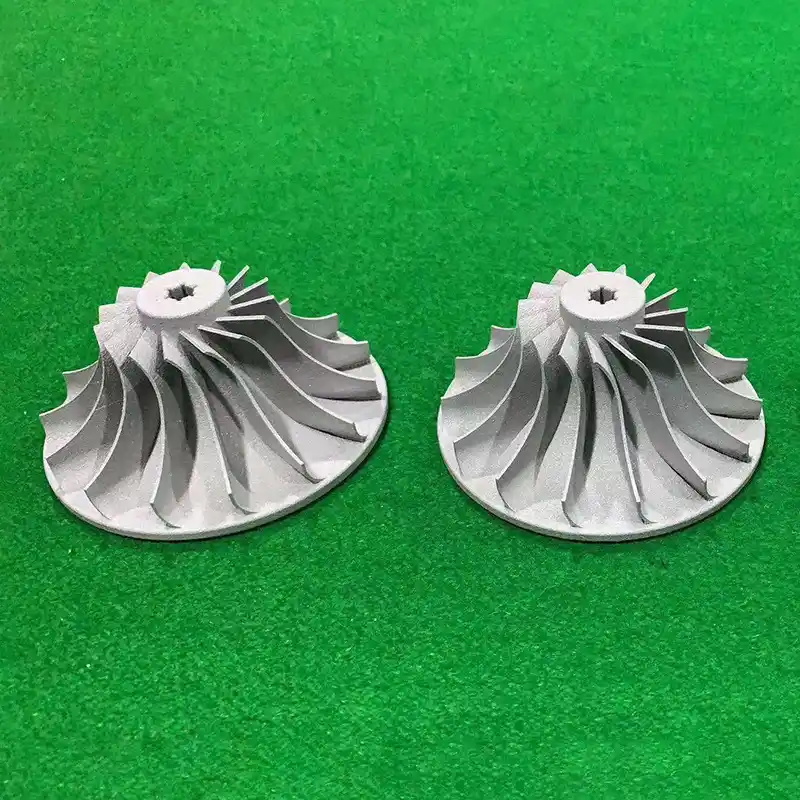
A 3D-printed sample can look like a finished component, but its material may be very different from the material used in production. The choice depends on what the sample needs to prove: appearance, fit, assembly, or performance.
what are 3d prints made of?

Before a 3D printer can produce a sample, it needs a digital model of the part. In manufacturing, this file carries the geometry that engineers want to turn into a physical component.
what are 3d printing files called?