Survey study: Additive manufacturing, opening new phases in series production
Author: Jokddy
2023-08-26
Retrospect of the development of additive manufacturing: from a small amount of template manufacturing used for scientific research and education in the early stage, to the production of a small number of products in consumer-grade home printers in the growth stage, and to the rapid development stage of the two airlines and other fields with an annual output of 1,000 pieces and 10,000 pieces Additive manufacturing has gone through a road of mass production and industrialization from unfamiliarity to cognition, from childishness to maturity;
Achieving annual output of tens of thousands to millions of pieces: Although additive manufacturing is blossoming and fruiting in various industries, observing specific applications, it is divided into three categories, repairing needs, individualized needs, and small batch needs, and the small batch demand with an annual output of 10,000 pieces to the large batch demand with an annual output of millions or even tens of millions of pieces, three important elements are required, namely low cost, high efficiency and consistency;
The three elements are indispensable: to achieve the above three requirements, it is necessary to improve equipment, technology, and materials. In terms of cost reduction, reducing equipment and powder prices, improving printing efficiency, capacity utilization and yield improvement are all important. Good effect; in terms of improving efficiency, assembly line operations, increasing the number of light sources, and increasing the thickness of printing layers have greatly improved efficiency; in terms of consistency, the establishment of a standard system from powder to equipment to printing services and unmanned factories will Effectively solve the consistency problem of mass production of products.
From single-piece imitation repair to 100-piece sample trial production, from small-batch supply of 10,000 pieces to stable and consistent product delivery of millions of pieces, additive manufacturing is constantly expanding its potential replacement space while breaking through its own process bottlenecks. With the emergence of batch applications, the ceiling of the industry will be further opened.
Achieving annual output of tens of thousands to millions of pieces: Although additive manufacturing is blossoming and fruiting in various industries, observing specific applications, it is divided into three categories, repairing needs, individualized needs, and small batch needs, and the small batch demand with an annual output of 10,000 pieces to the large batch demand with an annual output of millions or even tens of millions of pieces, three important elements are required, namely low cost, high efficiency and consistency;
The three elements are indispensable: to achieve the above three requirements, it is necessary to improve equipment, technology, and materials. In terms of cost reduction, reducing equipment and powder prices, improving printing efficiency, capacity utilization and yield improvement are all important. Good effect; in terms of improving efficiency, assembly line operations, increasing the number of light sources, and increasing the thickness of printing layers have greatly improved efficiency; in terms of consistency, the establishment of a standard system from powder to equipment to printing services and unmanned factories will Effectively solve the consistency problem of mass production of products.
From single-piece imitation repair to 100-piece sample trial production, from small-batch supply of 10,000 pieces to stable and consistent product delivery of millions of pieces, additive manufacturing is constantly expanding its potential replacement space while breaking through its own process bottlenecks. With the emergence of batch applications, the ceiling of the industry will be further opened.
1. The road to mass production
Looking at the development of the industry, we can find that the emergence of a new technology is often accompanied by several stages:
1. The budding period
New technologies often show completely different particularities from traditional technologies in the embryonic stage, but similarly, compared with traditional technologies, there are more problems, such as stability, cost, security, etc., so the main players in this stage are Laboratories of major universities, research institutes of giant companies, and research institutes of national government departments, etc. Because technologies in the pilot phase are cost-effective, this phase is fertile ground for new technologies to emerge.
2. Growth period
Not all new technologies can usher in thriving growth, and perhaps only a few have gained the attention of industry giants and brought demand. A huge amount of money has been invested in this field, on the one hand, to accelerate the iteration of new technologies, and more importantly, to enable the industrialization of new technologies. Only the technologies that can be industrialized have actual commercial value, and most of the technologies have problems at the level of industrialization and fail halfway. Since European and American countries have great advantages in innovation, this stage is generally technology imported from overseas, which is incubated and landed by domestic enterprises, and the localization rate of the industrial chain is relatively low.
3. The trough period
Development is tortuous. On the road to industrialization, new technologies generally face a short-term overheating situation. People's high expectations for new technologies lead to a large amount of capital and manpower investment, while the output is relatively low. Subsequently, problems such as relatively immature and narrow application of new technologies in the early stage of development gradually emerged, driving the industry to clear up. In the process of clearance, expensive imported equipment and materials have become an obstacle to cost reduction, so domestic enterprises have begun to try localization, and the localization rate has steadily increased. Although the industry is facing unfavorable factors such as declining demand and clearing supply, it has also accumulated strength. Enterprises that have successfully survived the cold winter have greater advantages in cost control, customer channels, and technical strength, so they will be the first to benefit in the recovery stage of the industry.
4. Development period
After the industry experienced confusion during the cold winter period, it finally found suitable applications in some fields, and enterprises at this stage ushered in rapid development. At this stage, with the rapid growth of downstream demand, the rapid expansion of the production capacity of the entire industry chain, and the high capital expenditure, the performance of related companies has been realized one after another, and the primary and secondary investment and financing activities have become active. At the same time, the localization rate has been further improved, driving the rapid development of technology in related enterprises in the industrial chain.
5. Maturity period
In the mature stage, the basic industry and company competition pattern has been determined, and the technical route is mature. Therefore, existing players tend to block new entrants by building a higher moat and suppressing the overall profit of the industry. At the same time, since the rapid growth stage of the industry has passed, the gross profit margin of companies in the industry has returned to a normal stage, waiting for the emergence of the next round of technological iteration.
Looking at the development of the industry, we can find that the emergence of a new technology is often accompanied by several stages:
1. The budding period
New technologies often show completely different particularities from traditional technologies in the embryonic stage, but similarly, compared with traditional technologies, there are more problems, such as stability, cost, security, etc., so the main players in this stage are Laboratories of major universities, research institutes of giant companies, and research institutes of national government departments, etc. Because technologies in the pilot phase are cost-effective, this phase is fertile ground for new technologies to emerge.
2. Growth period
Not all new technologies can usher in thriving growth, and perhaps only a few have gained the attention of industry giants and brought demand. A huge amount of money has been invested in this field, on the one hand, to accelerate the iteration of new technologies, and more importantly, to enable the industrialization of new technologies. Only the technologies that can be industrialized have actual commercial value, and most of the technologies have problems at the level of industrialization and fail halfway. Since European and American countries have great advantages in innovation, this stage is generally technology imported from overseas, which is incubated and landed by domestic enterprises, and the localization rate of the industrial chain is relatively low.
3. The trough period
Development is tortuous. On the road to industrialization, new technologies generally face a short-term overheating situation. People's high expectations for new technologies lead to a large amount of capital and manpower investment, while the output is relatively low. Subsequently, problems such as relatively immature and narrow application of new technologies in the early stage of development gradually emerged, driving the industry to clear up. In the process of clearance, expensive imported equipment and materials have become an obstacle to cost reduction, so domestic enterprises have begun to try localization, and the localization rate has steadily increased. Although the industry is facing unfavorable factors such as declining demand and clearing supply, it has also accumulated strength. Enterprises that have successfully survived the cold winter have greater advantages in cost control, customer channels, and technical strength, so they will be the first to benefit in the recovery stage of the industry.
4. Development period
After the industry experienced confusion during the cold winter period, it finally found suitable applications in some fields, and enterprises at this stage ushered in rapid development. At this stage, with the rapid growth of downstream demand, the rapid expansion of the production capacity of the entire industry chain, and the high capital expenditure, the performance of related companies has been realized one after another, and the primary and secondary investment and financing activities have become active. At the same time, the localization rate has been further improved, driving the rapid development of technology in related enterprises in the industrial chain.
5. Maturity period
In the mature stage, the basic industry and company competition pattern has been determined, and the technical route is mature. Therefore, existing players tend to block new entrants by building a higher moat and suppressing the overall profit of the industry. At the same time, since the rapid growth stage of the industry has passed, the gross profit margin of companies in the industry has returned to a normal stage, waiting for the emergence of the next round of technological iteration.
We believe that the additive manufacturing industry has generally experienced the above-mentioned stages. At the same time, in the process of continuous expansion of industrial scale, improvement of localization rate, and reduction of technology maturity costs, the scale of products that can be directly produced by additive manufacturing has also been repaired and customized from the beginning. A few or hundreds of companies gradually develop into thousands or even tens of thousands of small-scale, mass-produced products:
The price of early 3D printing was relatively high, but it had the advantage of no mold. The demand was mainly concentrated in the fields of single-piece customization and repair parts. Low, scale production has not yet been realized. At this stage in our country, most of the business managers are university professors, overseas returnees and other forward-looking entrepreneurs;
With the development of technology, 3D printing gradually presents its characteristics of high complexity and light weight, and is gradually recognized by designers. 3D printing makes the process realizability no longer a shackle that limits the innovation ability of designers. With the redesign and performance optimization of component structures by design units, additive manufacturing has become a must for improving the performance of certain weapons and equipment. Since the number of weapons and equipment purchased ranges from thousands to tens of thousands, and the additive manufacturing technology at this time has been developed over the years to achieve both efficiency and cost, so in the aerospace field, additive manufacturing has achieved rapid growth;
From customized and restorative needs to small-scale and mass production needs, the additive manufacturing industry has achieved breakthroughs on both the supply side and the demand side. At the supply side level, the entire process of the industrial chain from powder to equipment to service is perfect, participants transition from overseas giants to domestic manufacturers, the localization of core components is accelerated, and the number of laser heads is multiplied from single light to multi-light—a multi-party optimization On the downside, the 3D printing supplier has met the technology, efficiency and cost conditions of mass production; on the demand side, the design side of downstream customers has gradually increased their acceptance of additive manufacturing technology, and the requirements for lightweight and high-performance weapons and equipment have brought The demand for new processes such as additive manufacturing is increasing, and the explosion of demand in the aerospace field has also laid the foundation for the rapid growth of additive manufacturing—the demand side of 3D printing is ready for the transformation of the industry. Since then, 3D printing has gone through a road of batch production with gradually improved awareness and mature technology.
1.1 Classification by Production Scale
In the past, when people classified additive manufacturing, they often classified them according to technical routes and application fields, but not from the perspective of production scale. The main reason is that large-scale batch production applications have not been formed before, mainly single Repair or mold, and the explosion of demand in the aerospace field proves that additive manufacturing is no longer a niche industry for simple repair or customized needs, but an industry that can truly achieve large-scale production;
With the advancement of technology, the improvement of efficiency and the reduction of cost, the additive manufacturing technology that solves the problem of product consistency will gradually move from the mass production scale of tens of thousands of pieces to the mass production scale of millions of pieces. Although at the current point of view, there are already tens of millions of applications in the dental field, but the promotion effect has not yet formed. The reasons for the analysis are mainly due to two points. 1) The dental products are relatively small, and the requirements for product consistency are not high. Printing The equipment is mainly small equipment, and the concentration is low, so a single spark cannot start a prairie fire; 2) The main idea of dental application is to use 3D printing to replace the original process, and it has not really changed the industry from the design side. Therefore, in order to have a large-scale application of millions of pieces in the manufacturing industry in a real sense, it must be truly independent of traditional technology in terms of design, manufacturing, and terminal application forms.
1.2 Three major requirements create core competitiveness
Since applications with an annual output of millions or even tens of millions are mostly civilian applications, the back-end testing of applications does not require every product to be tested as in aerospace, and is often done through sampling and other methods. As for civil applications with an annual output of millions of pieces, there are three main requirements, namely, low cost, high efficiency, and consistency. Among them, low cost mainly refers to the design, processing, and back-end heat treatment and The cost of inspection should be equal to or even lower than that of traditional manufacturing. Of course, in some areas, the parity of the whole life cycle can also be achieved through redesign; and high efficiency means that 3D printing needs to have the capacity necessary for mass production. Therefore, for equipment The requirements for cluster operations are relatively high; finally, consistency refers to the small error in the final molding of printing multiple parts, which requires high printing accuracy and stability of the equipment. Many requirements in the civilian field make it necessary to solve the above problems in the promotion process of 3D printing in order to achieve the leap from ten thousand pieces to one million pieces. However, leading enterprises can more easily solve the above problems by virtue of their long-term practice database and experience accumulation, so they will forge core competitiveness in the civilian field.
Second, the possible path to mass production
Based on our previous understanding of the industry and the investigation of the industry chain, we will talk about possible implementation paths in terms of cost reduction, efficiency improvement, and product consistency.
Based on our previous understanding of the industry and the investigation of the industry chain, we will talk about possible implementation paths in terms of cost reduction, efficiency improvement, and product consistency.
2.1 Cost reduction
Cost is the core of the manufacturing industry. According to our previous cost dismantling in the Additive Manufacturing In-depth Report, manufacturing costs, powder costs and labor costs are the main components of additive manufacturing costs. Therefore, we will look at these three angles Explore ways to reduce costs:
The manufacturing cost quotation is usually determined by unit machine hour cost and printing time. The cost per unit hour depends on the cost and depreciation period of the equipment - 1) With the mass production and localization of core components in the equipment, the price of equipment has dropped a lot in the early years when European and American companies monopolized; 2) In order to meet the In order to meet the demand for mass production of the same structure, dedicated sub-structure printing equipment will appear, thereby effectively reducing equipment costs; 3) Depreciation and maintenance-related costs have decreased with the improvement of equipment stability, and are expected to remain stable in the future. In terms of printing time, printing efficiency and printing workload are related to it. The printing efficiency is not detailed here, but the printing workload is essentially determined by the amount of powder used to print the workpiece and its complexity. Topology optimization is important in removing redundant structures. At the same time, the complexity is also increased, but the average printing time of the final topology-optimized model has decreased;
Powder cost is an important part of determining raw materials, which mainly depends on the price of unit powder and the overall usage. In terms of unit powder price, whether it can be mass-produced, powder output rate, and the cost of powder-making equipment is the key—1) Since the current annual output of powder is small and the powder output rate still has room for improvement, there is potential room for cost optimization ; 2) The depreciation of milling equipment will show a downward trend with the increase of domestic production rate and the emergence of large-scale milling equipment. In terms of overall dosage, the amount of powder used has been reduced after optimization. At the same time, the support structure and yield rate will also affect the overall powder dosage, so it will be the key object of optimization in the future. Recently, there have been cases of unsupported printing below 30 degrees in the industry, which greatly reduces powder consumption;
Labor cost is also an unavoidable factor in the printing process. Through intelligence and digitization, unmanned management capabilities can be effectively improved. At the same time, real-time online monitoring during the process can also reduce personnel costs while reducing defect rates. Leading companies in the industry have proposed their own unmanned chemical factory solutions. With the emergence of customer equipment clusters, the black lamp factory solution will have the possibility of landing.
All in all, the cost item of printing is related to many factors. After splitting, there are many factors related to each item in the cost. For example, the yield rate has a strong correlation with manufacturing cost, material cost and labor cost, and this has also become An important indicator of the competitiveness of different print service vendors.
2.2 Improve efficiency
Efficiency is the second most important factor in manufacturing after cost. The improvement of efficiency is especially important for the 3D printing industry. In addition, because most of the manufacturing units in the additive manufacturing industry are single equipment, the scale effect is not so significant. Therefore, downstream customers have higher requirements for production capacity. By improving efficiency, costs can be effectively reduced while meeting Customer capacity requirements. At present, the main factors that affect the printing time are the powder spreading time and powder feeding time.
The shortening of powder spreading time mainly depends on the powder spreading strategy and assembly line operation. At present, the industry has completed the popularization of two-way powder spreading technology, but companies with independent customization software capabilities have begun to study the strategy of variable speed powder spreading. Through variable speed powder spreading, the powder spreading speed can be intelligently adjusted according to the contour of the part, so as to achieve the powder spreading speed and Balance of spreading powder quality. In addition, assembly line operation is a new printing method proposed in the industry in recent years, which separates printing, powder spreading and other links, and adopts a multi-station processing method to realize continuous production of equipment.
The powder feeding time is actually a problem of powder deposition efficiency. Increasing the number of light sources and printing layer thickness are the main solutions in the industry.
In terms of the number of light sources, since the additive manufacturing industry developed a multi-laser printing strategy in 2017, the printing efficiency of each additional laser head device has increased by 20-50%. "The most powerful arms race - taking BLT as an example, the theoretical deposition rate has been increased from the highest 15cm3/h of S210 to the highest 300cm3/h of S1000, and the efficiency has been increased by 20 times. However, with the increase in the number of laser heads, the industry has found that problems such as light source interference, wind field control, and seam overlap have brought about a sharp increase in equipment and printing costs. At the same time, the efficiency margin of super-large equipment and more than 10 laser heads is improving rapidly. convergence. Therefore, in the civil field, the industry has unanimously turned its attention to the medium-sized equipment of "400-500 size" (here refers to 400mm*400mm*400mm-500mm*500mm*500mm cavity size), with excellent cost and efficiency balance, We expect this type of equipment to become a hot-selling model in the industry;
In addition, some new printing methods such as surface laser printing have also appeared in the industry. Surface laser printing is also called area printing technology. The traditional laser selective melting technology uses point light sources, while area printing technology uses the light source as a pulsed beam (approx. The form of millions of point light sources) is projected onto the working plane to achieve rapid sintering of the powder. Compared with the traditional method, the printing speed is greatly improved, and it can maintain high resolution while achieving fast printing. Of course, since the lapping process is discontinuous, errors are prone to occur, and this technology has not yet been industrialized. It is believed that after the technological breakthrough, the printing efficiency will usher in a qualitative leap;
In terms of printing layer thickness, the current leading players in the industry have begun to study ultra-large layer thickness printing. Although increasing the layer thickness will reduce the accuracy of printed parts to a certain extent, and at the same time require higher laser power, through the high-precision control of high-power lasers and the solution to the problem of powder splashing, the thickness of single-layer printing has been reduced in some civilian fields. From 50μm to 140μm, the improvement is relatively high. While increasing the layer thickness, it also puts forward requirements on the control accuracy of the equipment and the stability of the high-power laser. With the increase of layer thickness, the powder spreading and powder feeding time have been effectively reduced.
2.3
Consistency resolution
Consistency issues are the core of 3D printing technology moving towards additive "manufacturing". The advantage of early 3D printing technology lies in rapid prototyping, which also means that demand often comes from one-off production rather than real "mass manufacturing". In the process of industrialization, customers cannot accept low yield, poor consistency and high cost. Therefore, the industry has experienced a long and painful industrialization, and finally realized the transition from handicrafts to small-batch industrial products. applied. In the two aviation fields, each printed product needs to be equipped with a test rod to test the performance of the product during the printing process, and the testing cost is often close to the manufacturing cost. However, the civil field cannot accept the high cost of testing. Sampling testing is usually used to ensure the pass rate of products. Therefore, in order to move from small batches of industrial products to large batches of industrial products and even bulk commodities, the solution of consistency has become the core:
1) Consistency is first reflected in the establishment of the material standard system. Since the current additive manufacturing industry has not yet formed a standard material system, often third-party powders cannot be used universally, and each has related patents such as trademarks, which makes the interchangeability of powders poor. Most current printing service companies use self-production or patent authorization. Powder is obtained by processing and other methods, but there is still the problem of low consistency of raw materials. In the future, with the unification of powder standards and the integration and acquisition of powder companies, the problem of powder consistency will be gradually resolved;
2) Consistency also requires the device itself to be good enough. Printing equipment is the basic unit of production, which has a great impact on the consistency of product output. Leading enterprises have a deep understanding of equipment stability, printing accuracy and lap error, and have formed a know-how through continuous iterative optimization. The process route meets the customer's requirements for equipment stability and consistency;
3) Second, consistency requires print service companies to have their own understanding of the printing process. Printing services involve modeling, slicing, printing and post-processing. Enterprises with rich printing experience have their own unique database experience and understanding of process parameters in terms of topology optimization, support design, slicing methods, process monitoring and post-processing. To solve the consistency problem of printed products, it is inseparable from the rich printing experience of the relevant enterprise team;
4) Finally, the construction of an unmanned chemical plant can effectively reduce the interference of human factors. During the printing process, powder loading, printing, powder cleaning, testing, post-processing and other processes all use manual methods, and the subjective factors are strong. Therefore, after the production process is digitized and unmanned, the interference of human factors will be eliminated to the greatest extent, so as to ensure the quality of the product. Consistency of delivery.
3. The switching of valuation anchors opens up the ceiling of the industry
The valuation peak has passed, and performance cashing has become the focus of the market: With the rapid development of the additive manufacturing industry, the primary and secondary markets are increasingly concerned, and investors have put forward higher requirements for related companies, such as profitability, information disclosure, social Responsibility and many other aspects. As the company's influence in the market gradually expands, the secondary market's understanding of the industry deepens, and the performance of all aspects will also have an impact on the company's own valuation. In the future, the market will focus on the realization of performance, and the tolerance for the valuation of related companies will gradually decrease;
The two aviation fields have crossed the stage from 0 to 1, and are striding towards a new journey: At present, the additive manufacturing industry has gradually gone through the process from 0 to 1 in the aerospace field, and the additive manufacturing technology has initially formed in the industry. It is a consensus that one of the mainstream technologies of aerospace high-end manufacturing, with the transformation of research parts into batch production parts and the improvement of penetration rate, the industry is making great strides towards a period of rapid growth from 1 to N.
The civilian field is in the ascendant, so please be patient: Due to the high requirements for price, production capacity and mass production in the civilian field, the application of the industry in the civilian field has not yet formed a scale. The budding additive manufacturing industry still needs to answer three questions in order to get out of its infancy: How much can the cost be reduced? How much more efficient can it be? Consistency cannot be guaranteed? Although the resolution of the three problems will not be achieved overnight, we still hope that the market will be patient enough. At the same time, the industry should cooperate with customers in depth to help customers solve their problems while improving themselves. I believe that one day, when the butterfly emerges from its cocoon, the 3D printed ceiling will be opened.
4. Points of attention
Downstream demand is lower than expected: Since additive manufacturing is a new process, the market still needs to be developed, and it has not yet been widely recognized by customers, so there is a risk that downstream demand is lower than expected due to factors such as high costs and insufficient awareness of downstream customers;
Technical route subversion risk: Since the development of the additive manufacturing industry is still immature, there are many technical routes. Although the company has carried out a multi-route diversified layout according to the situation, there is still a risk that the technical route will be subverted by new processes and new technologies;
The commissioning of fundraising projects is not as expected: most of the printing equipment manufacturing sites are steel structure workshops, the construction is difficult and the construction period is not long, but there is still the risk that the project construction progress will not be as expected due to various factors;
The localization of core parts and components is not as good as expected: Although the company already has a set of localized replacement solutions, the localization of core parts still needs the recognition of downstream customers and the continuous improvement of the technical level of domestic suppliers. The risk that the localization process of parts and components is not as expected;
Risk of intensified market competition: Although the additive manufacturing industry is a know-how process, it is highly dependent on experience and databases, and there are Matthew effects and brand effects. However, with the increase of competitors, there will be deterioration of the competition pattern and a decline in gross profit margins, etc. risk.
Guangxi Nannan Aluminum: Analysis of 6061 Aluminum Alloy Extruded Ring Streaks and the Effect of Extrusion Process on Ring Streaks
Professor Du Jun from South China University of Technology: The relationship between microstructure evolution and thermal conductivity of Mg-Sn-Ca alloy
Related Article
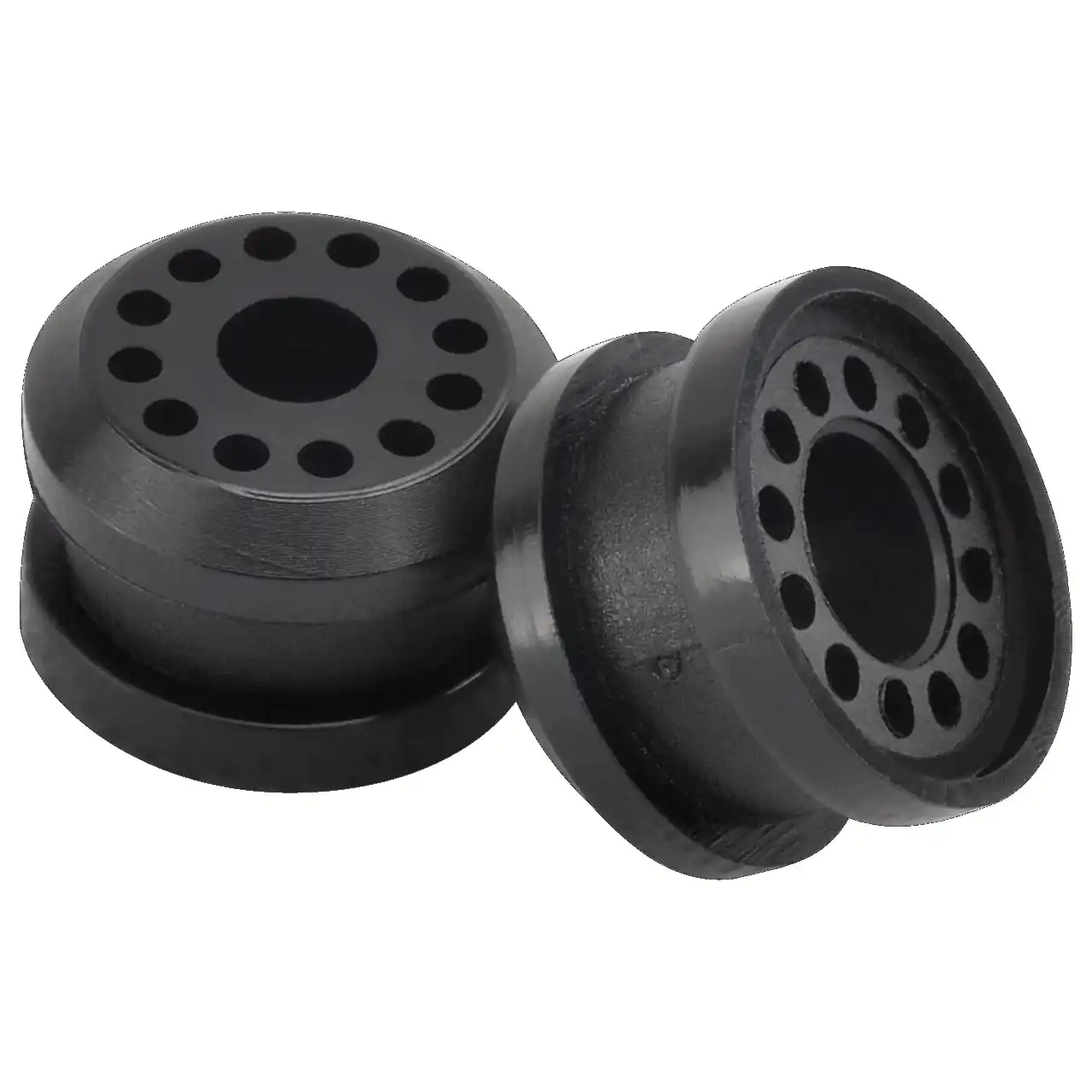
Fast sampling is the fastest way to win business in the hardware machining and plastic mold industries. Customers want a working sample in days, and a 3D printer delivers it, but only when you know how to print in 3d correctly.
how to print in 3d
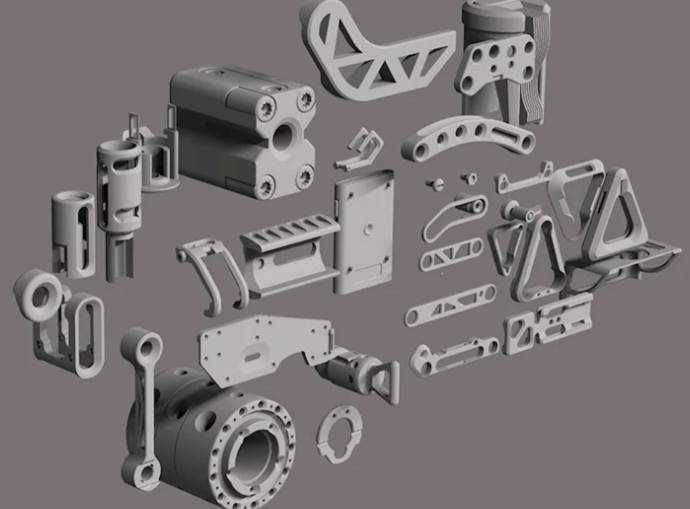
Fast sampling is the fastest way to win business in the hardware machining and plastic mold industries. Customers often send an STL file and expect a working sample in days.
how to print an stl file