
The Impact of Squeeze Casting on Microstructure and Mechanical Properties of High-Zinc Magnesium Alloys
Magnesium and magnesium alloys are characterized by low density, high specific strength and stiffness, good damping properties, excellent electronic shielding performance, and ease of recyclability. They hold significant application value and vast prospects in areas such as automotive, electronics, aerospace, and defense industries. Among them, the Mg-Zn-Al (ZA) series alloys exhibit good high-temperature performance, excellent casting properties, and lower production costs. Research indicates that by altering the Zn content and controlling the w(Zn)/w(Al) ratio in Mg-Zn-Al alloys, it is possible to enhance the alloy's heat resistance and high-temperature creep resistance.

The microstructure of Mg-Zn-Al alloys consists mainly of heat-stable phases such as τ-Mg32(Al,Zn)49 (melting point 535°C), ϕ-Al2Mg5Zn2 (melting point 393°C), or ε-MgZn (melting point 347°C). Alloys with w(Zn)/w(Al) ≥ 2, especially those with high zinc content (e.g., ZA102, ZA122, ZA122), exhibit improved heat resistance and creep resistance due to the formation of heat-stable phases like Mg32(Al,Zn)49 and ε-MgZn. However, casting defects, such as shrinkage, still limit the further application of Mg-Zn-Al alloys in traditional casting processes.

Squeeze casting is an efficient and precise metal processing technology that combines the characteristics of casting and plastic deformation. The application of pressure during solidification is beneficial for refining grain size and achieving forced feeding during solidification, reducing or eliminating casting defects caused by gas in the melt and solidification shrinkage. This results in a denser cast structure.

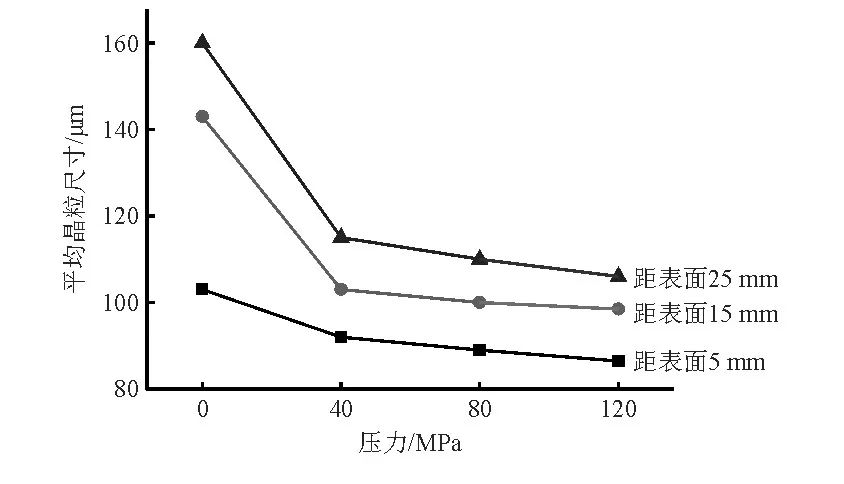
In the study focusing on Mg-14Zn-3Al alloy (ZA143), squeeze casting experiments were conducted with varying pressures (0, 40, 80, and 120MPa) to investigate their effects on microstructure, microporosity, and mechanical properties. Results showed that increasing pressure effectively eliminated casting defects, enhancing the density and mechanical properties of the alloy.

Under no pressure (gravity casting), the α-Mg dendrites were coarse, and the second phase at the grain boundaries was discontinuously distributed with a small area fraction. As pressure increased to 40MPa, α-Mg dendrites refined, the second phase increased, and its distribution at grain boundaries changed from discontinuous to continuous, with a tendency of refinement in the internal distribution of granular second phase (ε-MgZn). With further pressure increase, the refinement trend of α-Mg dendrites diminished, and the second phase exhibited a continuous reticulated distribution at grain boundaries, while the internal distribution of fine granular second phase continued to increase.

Additionally, it was observed that microporosity occurred when no pressure was applied. As the pressure increased, especially at 80MPa and 120MPa, microporosity was not observed. Without pressure, microporosity in ZA143 magnesium alloy castings mainly concentrated in the upper-middle part, forming "bands" symmetrically distributed around the center, while there was less microporosity on the side and bottom surfaces. With increasing pressure, microporosity in ZA143 magnesium alloy castings at 40MPa and 80MPa decreased and no longer exhibited dense clustering but rather a larger "V-shaped" distribution. This was attributed to the chilling effect on the mold surface, causing the molten metal at the casting edge to solidify first, forming a solid shell. The solid shell underwent plastic deformation under pressure, subjecting the molten metal to isostatic pressure. In the early stages of squeeze casting, the thin solid shell was prone to plastic deformation, resulting in high isostatic pressure on the molten metal, inhibiting the formation of microporosity on the side and bottom surfaces. However, as the solidification progressed, the thickness of the solid shell increased, and the energy consumed by plastic deformation of the solid shell under pressure increased. Consequently, the isostatic pressure on the molten metal in the central region decreased, making it susceptible to microporosity formation.


In summary:
-
Squeeze casting refines the α-Mg dendrites, increases the second phase, and transforms the microstructure of Mg-14Zn-3Al alloy from α-Mg matrix, long block-shaped τ-Mg32(Al,Zn)49 phase, to granular or skeletal ε-MgZn phase, with a transition from discontinuous to continuous distribution at grain boundaries.
-
Increasing squeeze casting pressure reduces microporosity in Mg-14Zn-3Al alloy castings. The microporosity area fraction decreases from 15.67% at 0MPa to 0.81% at 120MPa.
-
The increase in squeeze casting pressure enhances the overall performance of Mg-14Zn-3Al alloy. At 120MPa, the alloy's tensile strength and elongation are 218.1MPa and 5.2%, respectively, representing a 13.2% increase in tensile strength and a 333% increase in elongation compared to gravity casting.
Commonly Used Metal Weight Calculation Formulas
Merry Christmas and a Happy New Year 2024
Related Article



