
Who Invented the 3D Printer and Its Value for Industrial Sampling
Author: SZTC
2026-08-28


Samuel Song Your service representative
Specializing in zinc-aluminum-magnesium alloy die-casting processing, CNC milling, CNC turning, 3D printing, injection molding and sheet metal processing. Manufacturing services.
-----------------------------------------------------------------------------------------------------------------------------------------------------------------------------------------------------------------------------------------------------------------------------------------------------------------------------------------------
3D printing has become a mainstream solution for fast sample production in plastic mold and hardware processing industries. Many factory engineers constantly ask who invented the 3D printer. Understanding its inventor and technical origin helps manufacturers recognize how this technology solves traditional slow and high-cost prototyping challenges.
1. Early Theoretical Exploration of 3D Printing
To fully answer who invented the 3D printer, we need to review the early technical pioneers who laid the foundation.
1.1 Hideo Kodama’s Foundational Concept
In 1981, Japanese researcher Hideo Kodama proposed the core principle of layered photopolymer curing and built an original prototype. His research proved the feasibility of additive manufacturing. However, without formal patent authorization, his design was not applied to industrial production.
1.2 Limitations of Early Exploration
Kodama’s prototype only achieved basic molding functions. It lacked precise control systems and stable performance, so it could not meet the strict tolerance requirements of plastic mold cavities and precision hardware samples.
2. The Official Inventor of Modern 3D Printers
The universally recognized answer to who invented the 3D printer is American engineer Chuck Hull, the father of industrial 3D printing.
2.1 Formal Technical Invention
In 1983, Chuck Hull officially invented Stereolithography (SLA), the first complete and practical 3D printing technology. He developed a systematic device that uses UV lasers to cure resin layer by layer, steadily converting digital models into solid industrial parts.
2.2 Patent and Commercial Realization
Hull obtained an official U.S. patent in 1986 and founded 3D Systems. The launch of the SLA-1 commercial printer in 1988 officially brought 3D printing from laboratory research into real manufacturing scenarios.
3. Industrial Application in Mold and Hardware Processing
Reviewing who invented the 3D printer reflects the profound significance of this technological innovation.
3.1 Continuous Technological Iteration
Based on Hull’s core invention, 3D printing has evolved into mature processes including SLA, SLS and metal printing. Modern printers feature higher precision, faster speed and richer material options for industrial use.
3.2 Empower Rapid Sample Production
Today, 3D printing greatly optimizes the sampling workflow of plastic molds and hardware parts. It shortens R&D cycles, reduces mold modification risks and cuts trial production costs, bringing huge efficiency improvements to processing enterprises.
In short, Chuck Hull officially invented the modern 3D printer on the basis of early theoretical exploration. Knowing who invented the 3D printer helps the manufacturing industry better inherit and apply this mature technology to achieve efficient rapid prototyping.
Who Invented the 3D Technology for Mold and Hardware Rapid Sampling
Who Invented the First 3D Printer for Industrial Rapid Sampling
Related Article

Chinese manufacturing has built mature industrial clusters across the Pearl River Delta, Yangtze River Delta and inland industrial zones, serving global customers in consumer electronics, automotive, new energy, communication equipment, lighting, medical devices and industrial machinery.
china factory

Factories based in Shenzhen and the surrounding Pearl River Delta are well-known for fast response and integrated manufacturing. They serve global customers in consumer electronics, automotive, new energy, communication equipment, lighting and industrial machinery.
shenzhen factory
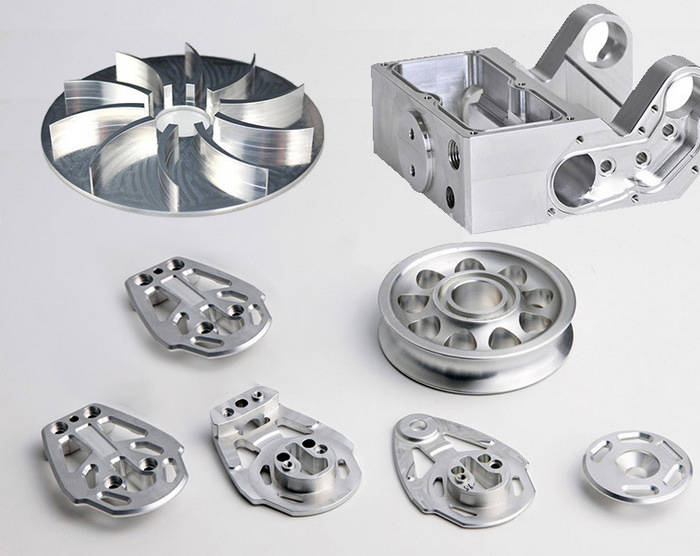
Die casting factories in the Shenzhen and Dongguan manufacturing corridor serve a wide range of sectors, including automotive parts, consumer electronics, communication hardware, pump and valve components, lighting housings and industrial brackets.
shenzhen die casting factory

Are Shenzhen die casting workshop facilities a good choice for your custom metal casting projects? It is a frequent question for purchasing managers, mechanical designers and quality engineers who source high-volume aluminum, zinc and magnesium die cast parts. Shenzhen has developed a complete industrial chain for die casting, mold making, CNC secondary machining and surface finishing.
shenzhen die casting workshop