
Who Invented 3D Printing and Its Impact on Mold & Hardware Sampling
Author: SZTC
2026-09-03


Samuel Song Your service representative
Specializing in zinc-aluminum-magnesium alloy die-casting processing, CNC milling, CNC turning, 3D printing, injection molding and sheet metal processing. Manufacturing services.
-----------------------------------------------------------------------------------------------------------------------------------------------------------------------------------------------------------------------------------------------------------------------------------------------------------------------------------------------
Nowadays, 3D printing is widely adopted for rapid sampling within plastic mold and hardware processing industries. Engineers frequently ask who invented 3d printing when evaluating additive manufacturing for prototype validation. Knowing its origin helps manufacturing teams appreciate how this technology transformed traditional slow trial‑production workflows.
1. Key Figures Behind the Birth of 3D Printing
To properly answer who invented 3d printing, we need to look at multiple pioneers rather than a single creator.
1.1 Early Concept and Experimental Prototypes
In the early 1980s, Hideo Kodama developed the first functional layer‑by‑layer photopolymer curing device. Though his work laid critical theoretical groundwork, it did not grow into commercial products at that time. His idea proved that objects could be built layer upon layer, opening doors for future industrial prototyping.
1.2 The First Commercial 3D‑Printing Patent
Chuck Hull filed the well‑known patent for stereolithography in 1984 and released the first commercial 3D printer in 1987. He is widely recognized as the main inventor of practical 3D printing. His system turned laboratory concepts into usable hardware, making rapid sample creation possible for manufacturing sectors.
2. How the Invention Reshaped Mold and Hardware Workshops
Beyond knowing who invented 3d printing, factories care about real‑world industrial value.
2.1 Shortened Prototype Iteration Cycles
Before 3D printing, mold and hardware samples relied heavily on CNC machining or temporary mold opening, which took days or weeks. Modern additive manufacturing delivers functional samples within hours, supporting fast design checks for mold structures and custom hardware parts.
2.2 Lower Cost for R‑D Sampling
3D printing cuts material waste compared with subtractive processing. Small‑volume test pieces, mold inserts and fixture prototypes can be produced without expensive tooling investment, greatly benefiting small‑and‑medium processing enterprises.

3. Continuous Evolution for Industrial Applications
The story of who invented 3d printing does not end with the original patent.
3.1 Technology Expansion for Metal and High‑Performance Resin
Later researchers expanded material choices from basic resin to engineering plastics and metal powders. These upgrades enable higher‑strength samples that meet real testing requirements for hardware components and mold‑related verification work.
3.2 Widespread Adoption in Modern Manufacturing
Today’s workshops combine 3D printing with traditional CNC and mold‑making processes. It serves not as a full replacement, but as a powerful auxiliary tool to accelerate product development.
Overall, understandingwho invented 3d printing shows how decades‑old innovation has become an everyday tool for fast sampling in plastic mold and hardware processing fields.
Do I Need a Computer for a 3D Printer for Industrial Rapid Sampling
Can You Print a 3D Printer With a 3D Printer for Industrial Sampling
Related Article
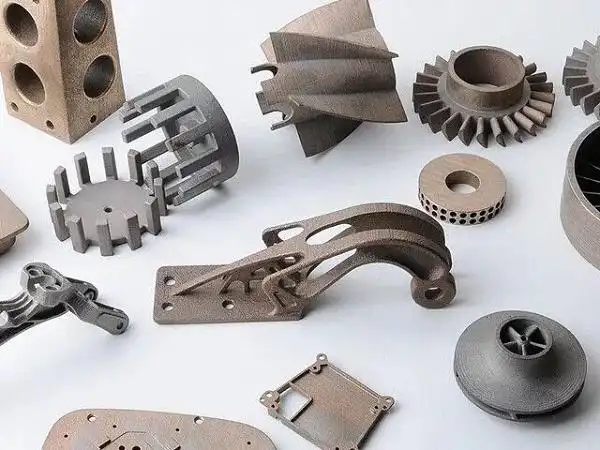
Fast sampling is the fastest way to win business in the hardware machining and plastic mold industries. Customers want a working sample in days, and a 3D printer delivers it, but only if the files that feed the printer are made correctly.
how to make files for 3d printing

Wondering how to learn 3D printing from scratch as a beginner? This complete guide sorts out clear learning paths, practical beginner resources and common pitfalls to avoid, helping you master 3D printing skills step by step.
How to Learn 3D Printing: A Practical Path for Hardware and Plastic Mold Fast Sampling

Wondering how to get a free 3D printer for your creative projects? This guide sorts out all legitimate ways including brand giveaways, community events and official beginner programs, helping you get a scam-free 3D printer at no extra cost.
How to Get a Free 3D Printer: Smart Ways to Start Fast Sampling in Hardware and Mold Shops
Wondering how to design your own 3D prints from scratch? This beginner-friendly guide breaks down the full design workflow, recommends practical tools and shares actionable tips to help you create custom 3D-printable works easily.
How to Design Your Own 3D Prints: An Industrial Guide for Hardware and Plastic Mold Fast Sampling