
What Does 3D Printing Do? A Practical Guide for Hardware & Plastic Processing Professionals
Author: SZTC
2026-03-19


Samuel Song Your service representative
Specializing in zinc-aluminum-magnesium alloy die-casting processing, CNC milling, CNC turning, 3D printing, injection molding and sheet metal processing. Manufacturing services.
-----------------------------------------------------------------------------------------------------------------------------------------------------------------------------------------------------------------------------------------------------------------------------------------------------------------------------------------------
For businesses in the hardware and plastic processing industry, we rely on injection molding, CNC machining, stamping and other traditional processes to mass-produce parts, but these methods often come with long lead times, high mold costs and limited flexibility for complex designs. That’s where 3D printing, also known as additive manufacturing, steps in as a game-changing complementary technology. Many industry partners ask us a core question: What does 3D printing do, and how does it fit into real-world hardware and plastic production workflows? This blog breaks down the core functions, practical applications and unique value of 3D printing, tailored specifically to our daily operations, project needs and industry pain points.
1. Core Function: The Fundamental Role of 3D Printing in Manufacturing
1.1 Defining the Core Purpose of 3D Printing
At its most basic level, 3D printing converts digital 3D CAD models into physical, three-dimensional solid parts by building materials layer by layer, rather than cutting or removing material like traditional subtractive manufacturing. Unlike 2D printing that only produces flat graphics, 3D printing creates tangible, functional components with custom shapes, precise dimensions and complex structures that are hard to make with standard tooling. For the hardware and plastic industry, this means turning design files directly into physical parts without dedicated molds, fixtures or complex machining setups, solving the biggest bottlenecks in small-batch production and rapid prototyping.
1.2 Key Operational Capability: Layer-by-Layer Additive Fabrication
The defining function of 3D printing is its additive layering process, which sets it apart from every traditional processing method we use. It only uses the exact amount of raw material—whether thermoplastic, engineering resin, metal powder or composite blends common in our industry—to build parts from the bottom up, eliminating nearly all material waste. This core capability allows 3D printing to create parts with internal cavities, undercuts, interlocking structures and irregular geometries that would require multiple molds or complex assembly with traditional techniques, making previously unmanufacturable designs fully achievable.
2. Practical Applications: What 3D Printing Does for Hardware & Plastic Processing
2.1 Rapid Prototyping for Product Development & Validation
One of the most vital functions of 3D printing for hardware and plastic processors is accelerating product prototyping and design validation. In traditional workflows, developing a plastic or metal hardware prototype requires custom mold fabrication, which takes weeks or even months and costs thousands of dollars. 3D printing changes this entirely: it can print a fully functional prototype in hours or days, directly from our existing CAD design files. We use this capability to test part fit, assembly compatibility, structural strength and appearance before investing in expensive production molds, drastically cutting design revision time and avoiding costly mold reworks. This is especially critical for custom plastic enclosures, metal hardware fittings and precision plastic components that require strict dimensional accuracy.
2.2 Small-Batch & On-Demand Part Production
3D printing fills a critical gap in our industry for low-volume, on-demand and customized part production, a scenario where traditional injection molding and stamping are not cost-effective. For small-batch orders (usually 1 to 500 pieces), replacement parts for legacy equipment, custom hardware accessories or specialized plastic components, 3D printing requires no upfront mold investment, no long production setup time and no minimum order quantity. This function is incredibly valuable for serving niche clients, fulfilling urgent orders and maintaining inventory of rare replacement parts, helping us expand service scope without adding heavy production costs. For engineering-grade plastics and lightweight metal hardware, industrial 3D printers can produce parts with durability matching traditionally manufactured components.
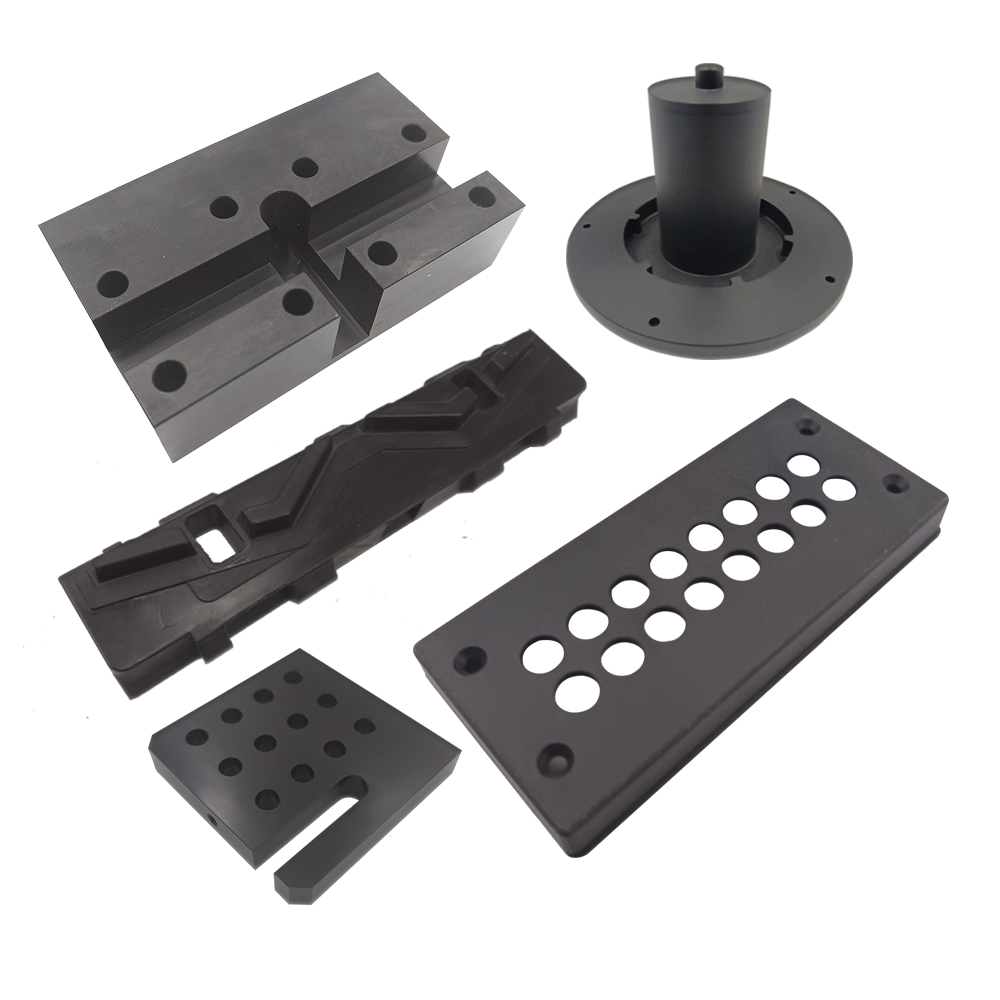
2.3 Custom Tooling, Jigs & Fixtures for Production Lines
Beyond making final parts, 3D printing excels at producing custom tooling, jigs, fixtures and auxiliary components for our daily processing lines—a function that boosts overall production efficiency and reduces manual errors. In hardware and plastic processing, we often need specialized jigs for assembly, positioning fixtures for CNC machining, or testing tools for quality inspection. Traditional tooling is time-consuming and expensive to machine, but 3D printing lets us design and print fully customized fixtures in a short time, tailored to specific part shapes and production needs. These lightweight, durable tools improve workflow efficiency, reduce labor time and ensure consistent product quality across all production stages.

3. Specialized Functions: Advanced 3D Printing Capabilities for Industrial Use
3.1 High-Precision Part Manufacturing for Tight Tolerances
Advanced 3D printing technologies like SLA (Stereolithography), DLP (Digital Light Processing) and SLS (Selective Laser Sintering) deliver high-precision capabilities for hardware and plastic parts that require tight tolerances and smooth surface finishes. SLA/DLP printing produces ultra-fine plastic parts with smooth surfaces, perfect for precision plastic inserts, small hardware components and detailed prototype parts that match injection-molded quality. SLS printing works with engineering plastics and metal powders, creating high-strength, heat-resistant parts for functional hardware applications that need to withstand mechanical stress and daily wear. This precision function makes 3D printing suitable for both prototype testing and end-use part production.
3.2 Complex Geometry & Lightweight Part Optimization
Another key function of 3D printing is optimizing part design for weight reduction, material savings and performance improvement, which is highly sought after in modern hardware and plastic processing. Traditional manufacturing limits design flexibility due to mold constraints, but 3D printing supports lattice structures, hollow interiors and integrated multi-part designs, allowing us to create lightweight yet strong parts without compromising durability. For plastic components and lightweight metal hardware, this means reducing material usage, lowering product weight and improving overall product performance—all while cutting production costs and meeting modern industry demands for efficient, sustainable manufacturing.
4. The Unique Value of 3D Printing for Our Industry
To sum up, what 3D printing does for the hardware and plastic processing industry goes far beyond just making parts: it streamlines product development, cuts upfront costs, expands production flexibility and solves the limitations of traditional manufacturing. It is not a replacement for injection molding or CNC machining, but a powerful supplementary tool that adapts to fast-changing market demands, custom orders and efficient prototyping needs. As additive manufacturing technology continues to evolve, it will become an even more essential part of modern hardware and plastic processing workflows, helping businesses stay competitive and innovative.
If you’re looking to integrate 3D printing into your production line for prototyping, small-batch production or custom tooling, understanding its core functions and industry-specific applications is the first step to unlocking its full potential for your business.
What Is a 3D Printer? The Fast Sampling Workhorse for Hardware & Plastic Mold Industries
What Are 3D Printers? A Complete Guide for Hardware & Plastic Processing Professionals
Related Article

Fast sampling is the fastest way to win business in the hardware machining and plastic mold industries. Customers want a working sample in days, and a 3D printer delivers it, but only when you know how to print in 3d correctly.
how to print in 3d

Fast sampling is the fastest way to win business in the hardware machining and plastic mold industries. Customers often send an STL file and expect a working sample in days.
how to print an stl file

