
What 3D Printing Is Used for: Fast Sampling Solutions for Hardware & Plastic Mold Industries
Author: SZTC
2026-04-01


Samuel Song Your service representative
Specializing in zinc-aluminum-magnesium alloy die-casting processing, CNC milling, CNC turning, 3D printing, injection molding and sheet metal processing. Manufacturing services.
-----------------------------------------------------------------------------------------------------------------------------------------------------------------------------------------------------------------------------------------------------------------------------------------------------------------------------------------------
In the competitive landscape of hardware processing and plastic mold manufacturing, speed, precision, and cost-efficiency are the cornerstones of success. As 3D printing becomes increasingly mainstream in industrial settings, many manufacturers ask: what 3D printing is used for, especially when it comes to fast sample production—the most critical need for accelerating product development and winning client orders?
Unlike consumer-grade 3D printing, which is often used for hobbies or small crafts, industrial 3D printing is a powerful tool tailored to solve real-world manufacturing pain points. This blog will answerwhat 3D printing is used for in the hardware and plastic mold industries, breaking down its core applications, practical use cases, and tangible value—all centered around the fast sampling needs that drive these sectors forward.
1. Core Applications of 3D Printing in Hardware Processing Industry
For hardware manufacturers, 3D printing is far more than a novelty—it’s a solution to traditional processing bottlenecks. To understand what 3D printing is used for here, we focus on its most impactful applications, all tied to fast, high-quality metal sampling and production flexibility.
1.1 Fast Prototyping of Metal Hardware Parts
The primary use of 3D printing in hardware processing is rapid metal prototyping—a game-changer for product development. Traditional CNC machining of metal parts (brackets, fasteners, mechanical fittings, or custom hardware) takes 3–15 days, requiring expensive tooling and repeated programming. 3D printing eliminates these barriers by producing functional metal samples in 6–24 hours, using industrial-grade materials like 17-4PH stainless steel, AlSi10Mg aluminum, and H13 hot-work mold steel.
This application is critical for testing design feasibility, dimensional accuracy, and structural strength before mass production. For example, aerospace-grade hardware components can be 3D printed with internal to reduce weight by 30% or more, while maintaining high strength—something traditional machining cannot achieve efficiently. It also supports fast design iterations: if a sample fails testing, engineers can update the CAD file and reprint a revised version the same day, cutting development cycles by over 80%.
1.2 Small-Batch & Custom Hardware Production
Another key answer to what 3D printing is used for in hardware processing is small-batch and custom production. Many hardware orders are low-volume (1–100 pieces) or custom-designed (e.g., special-shaped fittings for heavy machinery, personalized industrial hardware), which is cost-prohibitive with traditional tooling-intensive methods.
3D printing excels here: it requires no custom molds or fixtures, allowing manufacturers to produce small batches or one-off custom parts on demand. For example, using binder jetting technology, 3D printers can efficiently produce standard五金件 like gears and hinges in small batches, with lower costs than CNC machining and near-perfect precision. It also supports the production of complex parts with internal channels or hollow structures that traditional processes struggle to create, opening up new design possibilities for custom hardware.
1.3 Hardware Mold & Tool Repair
3D printing is also used for repairing worn or damaged hardware molds, tools, and components—an often-overlooked but highly valuable application. Traditional repair methods are time-consuming and costly, often requiring replacement of the entire part. With 3D printing, manufacturers can use cold喷涂技术 or laser melting to "rebuild" worn areas of molds or tools, extending their lifespan and reducing downtime. For example, worn guide pillars or mold inserts can be repaired with 3D-printed metal layers, saving the cost of purchasing new parts and minimizing production delays.
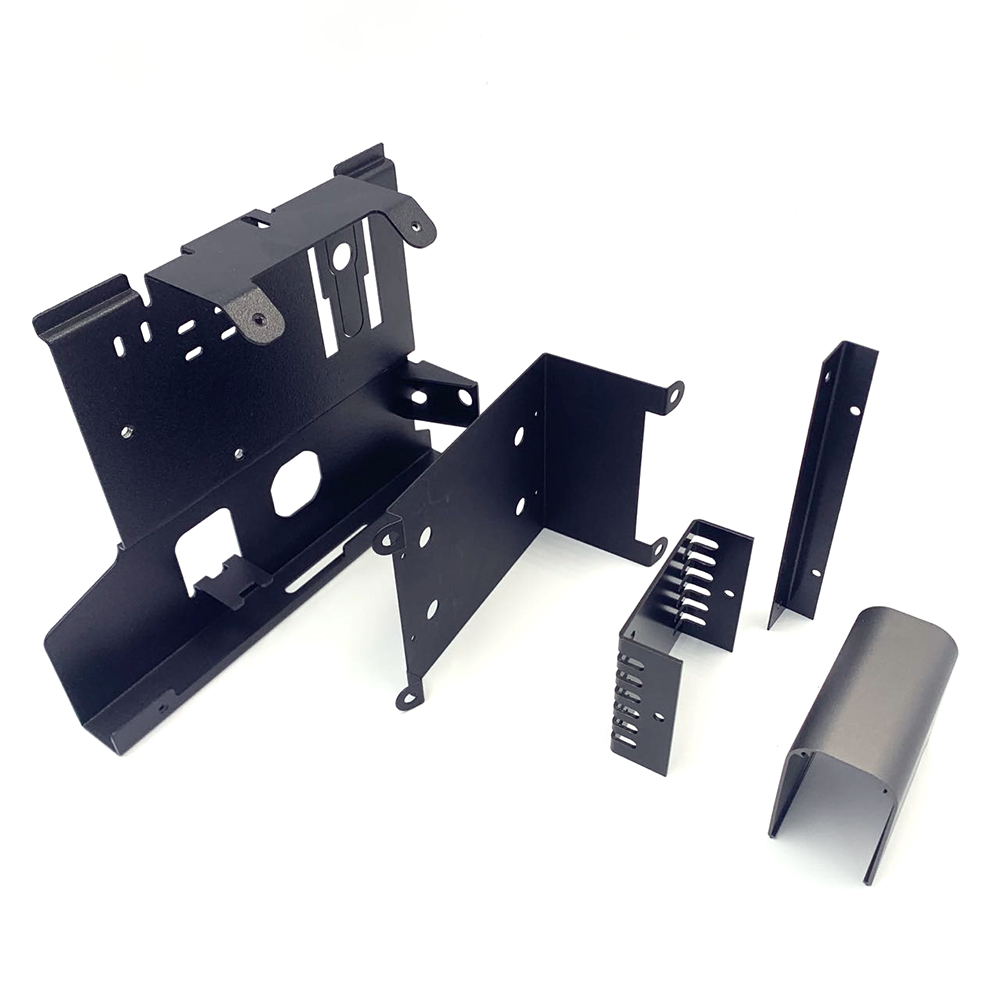
2. Core Applications of 3D Printing in Plastic Mold Industry
In the plastic mold industry, where mold development is high-risk, time-consuming, and costly, 3D printing solves critical pain points. When asking what 3D printing is used for here, the answer revolves around fast trial molds, design validation, and cost reduction—all centered on rapid sampling.
2.1 Rapid Trial Molds & Mold Insert Sampling
The most common use of 3D printing in plastic mold manufacturing isfast trial mold production. Traditional steel mold opening takes 2–4 weeks and costs tens of thousands of dollars; if design flaws are found, rework is expensive and time-consuming. 3D printing creates high-precision trial molds, mold cores, and cavity inserts in 4–12 hours using high-temperature resistant resins or engineering plastics (e.g., Rigid 10K Resin, glass-filled nylons) that can withstand preliminary injection molding tests.
These trial molds allow designers to verify draft angles, part release, and cooling efficiency before investing in formal steel molds—avoiding costly rework and shortening mold development cycles by 50% or more. For example, a smart wearable device manufacturer used 3D printed trial molds to reduce product shell validation time from 15 days to 3 days, with design modification response times compressed to 12 hours.
2.2 Complex Mold Structure Manufacturing
3D printing is uniquely suited for creating complex mold structures that traditional machining cannot achieve—another key answer to what 3D printing is used for in plastic molds. Molds with intricate cooling channels, undercuts, or integrated features are critical for improving injection molding efficiency and product quality, but they are difficult or impossible to machine with traditional methods.
With 3D printing, manufacturers can print these complex mold parts in one piece, without assembly. For example, 3D-printed molds with can shorten injection molding cycles by 20–40% and improve product surface quality, while also reducing mold weight by 40% compared to traditional molds. This application is especially valuable for high-precision molds in industries like automotive, consumer electronics, and medical devices.
2.3 Small-Batch Plastic Part Production
For small-batch plastic part production (1–500 pieces), 3D printing is a cost-effective alternative to traditional injection molding. Many plastic mold manufacturers use 3D printing to produce small batches of plastic parts directly, eliminating the need for expensive steel molds and reducing lead times from weeks to days. This is ideal for custom plastic components, prototype batches for client approval, or short-run production of niche products.
For example, a car manufacturer used 3D printed molds to produce personalized中控台装饰件, with the same mold adaptable to 5 different designs—improving mold reuse rate by 300% and reducing production costs by 60% compared to traditional methods. It also supports quick customization: changing the design only requires updating the digital file, with no need for new tooling.

3. Cross-Industry Applications: Beyond Fast Sampling
While fast sampling is the primary driver for 3D printing in hardware and plastic mold industries, it has broader cross-industry applications that add value beyond prototyping. Understanding these helps answer what 3D printing is used for in a holistic way, showing its long-term value for manufacturers.
3.1 Design Validation & Client Presentation
3D printing is used to create high-quality, functional samples for design validation and client presentations. For both hardware and mold manufacturers, a physical sample is far more persuasive than a digital design—clients can touch, test, and verify the part’s fit and functionality before approving mass production or mold development. This reduces miscommunication, speeds up client approval, and minimizes the risk of costly design changes later.
3.2 Tooling & Fixture Production
3D printing is also used to produce custom tooling, fixtures, and jigs for both industries. For example, hardware manufacturers can 3D print custom fixtures to hold parts during CNC machining or assembly, improving efficiency and precision. Plastic mold manufacturers can print custom jigs for mold assembly or injection molding setup, reducing setup time and human error. These tooling parts can be produced in hours, at a fraction of the cost of traditional tooling.
3.3 Sustainable & Cost-Efficient Manufacturing
A growing application of 3D printing is sustainable manufacturing. Unlike traditional subtractive processing, which generates 30–50% material waste for metal parts, 3D printing is an additive process with material utilization close to 100%—saving expensive metals and plastics, and reducing environmental impact. This not only cuts material costs but also helps manufacturers meet ESG (environmental, social, and governance) standards, which are increasingly important for market access and client partnerships.
Final Recap: To answer what 3D printing is used for in the hardware processing and plastic mold industries, the core lies in solving fast sampling pain points and driving efficiency. For hardware, it’s used for rapid metal prototyping, small-batch/custom production, and tool repair. For plastic molds, it’s used for fast trial molds, complex mold manufacturing, and small-batch plastic part production. Beyond that, it supports design validation, custom tooling, and sustainable manufacturing. 3D printing is no longer a niche technology—it’s an essential tool that helps manufacturers reduce costs, shorten lead times, and stay competitive in a fast-paced market where speed and precision make all the difference.
What Are Some 3D Printing Websites? A Guide for Hardware & Plastic Mold Fast Sampling
How to Print Using 3D Printer: A Practical Guide for Hardware & Plastic Mold Fast Sampling
Related Article

Fast sampling is the fastest way to win business in the hardware machining and plastic mold industries. Customers want a working sample in days, and a 3D printer delivers it, but only when you know how to print in 3d correctly.
how to print in 3d

Fast sampling is the fastest way to win business in the hardware machining and plastic mold industries. Customers often send an STL file and expect a working sample in days.
how to print an stl file

