
Don't Get Lost In Aerospace Parts Processing: 5 Key Points Of Aerospace Parts Cutting Processing, Comprehensive Explanation From Material Selection To Cutting Parameter Optimization
Author: SZTC
2024-12-17

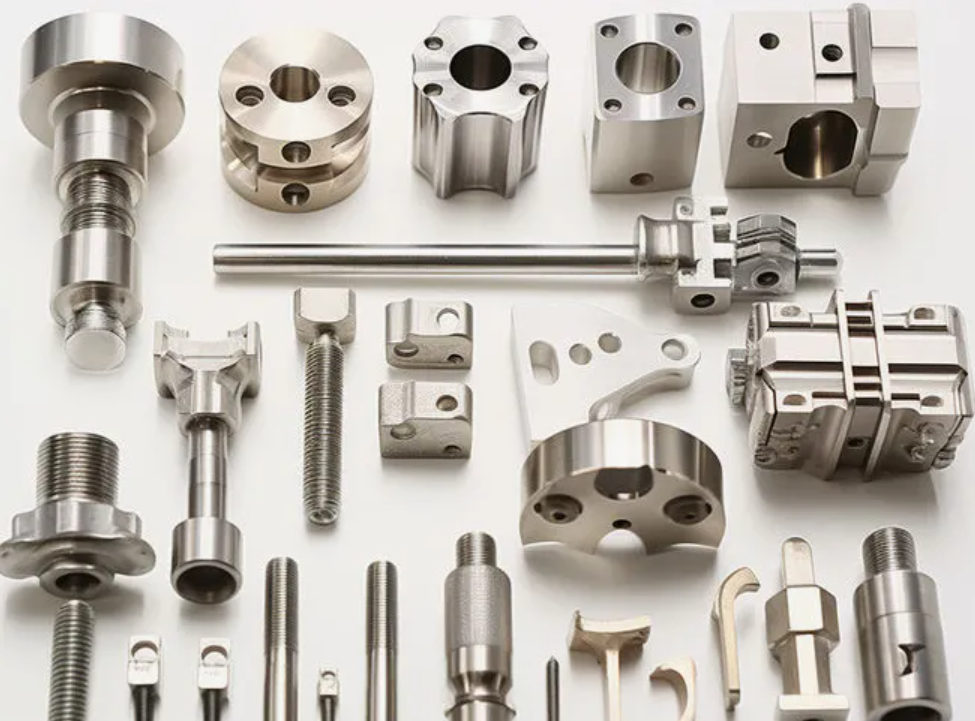
In the aerospace industry, the processing and manufacturing of parts requires a high degree of precision and reliability. Cutting processing, as a common metal removal processing method, has a direct impact on the quality of aerospace parts. This article will comprehensively introduce the key points of aerospace parts cutting processing, including processing material selection, process planning, cutting parameter optimization, etc., and explore the latest cutting technology development trends to provide readers with a full range of aerospace parts cutting processing knowledge.
1
Processing material selection
The materials used for aerospace parts usually have the characteristics of high strength, high hardness, high thermal stability, etc., mainly including:
1
Titanium alloy
Aluminum alloy is the most commonly used metal material in the aerospace industry, such as 2024, 6061, 7075, etc., with the advantages of low density, high strength, and good corrosion resistance. Different aluminum alloy elements and heat treatment processes will affect their mechanical properties.
Titanium alloys such as Ti-6Al-4V have high strength-to-weight ratio and good corrosion resistance, and are widely used in high-temperature and high-stress parts such as aircraft engines. However, the processing difficulty is high and special processing is required.
2
Stainless steel
300 series and 400 series stainless steels are also used in the aerospace field, such as 304 and 17-4PH, which have excellent corrosion resistance and certain high-temperature strength.
3
Special alloys
Nickel-based high-temperature alloys, cobalt-based high-temperature alloys, etc. are used to manufacture high-temperature parts such as turbine blades and guide blades of aircraft engines, and the processing difficulty is extremely high.
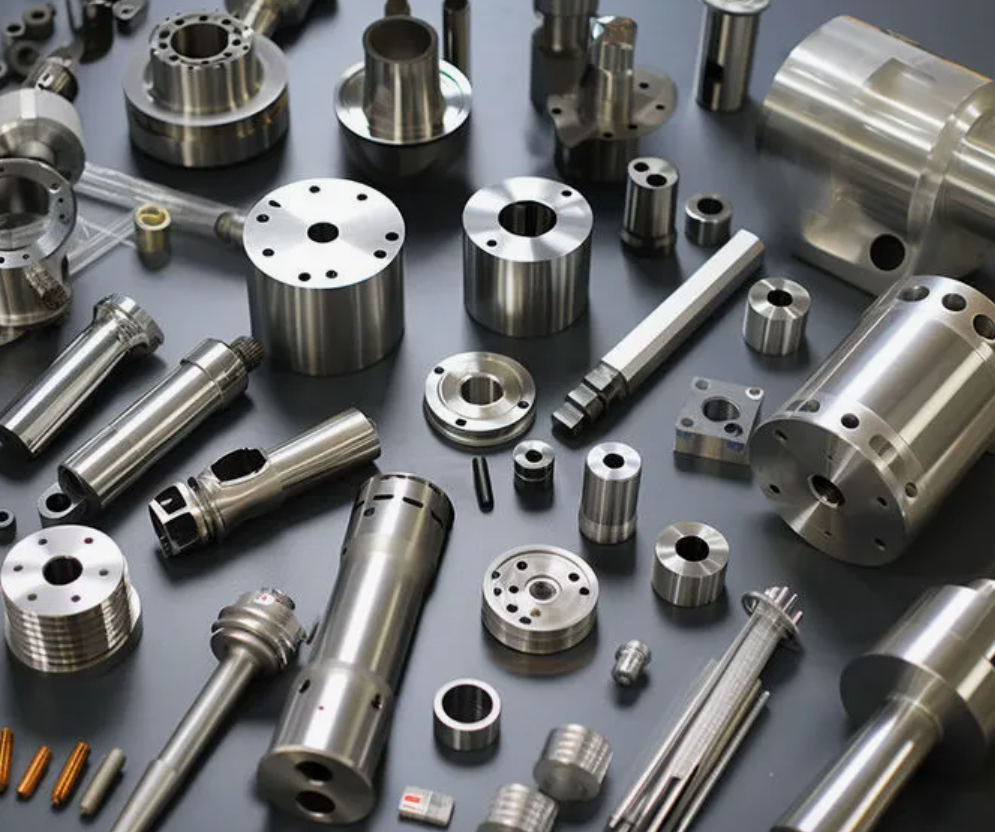
Different materials need to match the appropriate tool material, cutting parameters and cutting fluid during cutting to obtain good processing surface quality and processing efficiency.
2
Process flow planning
The cutting of aerospace parts usually requires multiple processes, including roughing, semi-finishing, finishing, etc. Each process corresponds to different cutting methods, tools, fixtures and processing parameters.
1
Rough machining
Rough machining aims to quickly remove excess material and pursue high cutting efficiency. Traditional rough machining methods include side milling (sideways), shoulder milling, and end milling. In recent years, the emerging cycloidal (whirlwind) milling process has gradually replaced the traditional layer milling process and become the preferred solution for aerospace rough machining.
Semi-finishing
Further improve the machining accuracy on the basis of rough machining, usually using end or side machining methods, and make appropriate adjustments to the cutting parameters.
2
3
Finishing
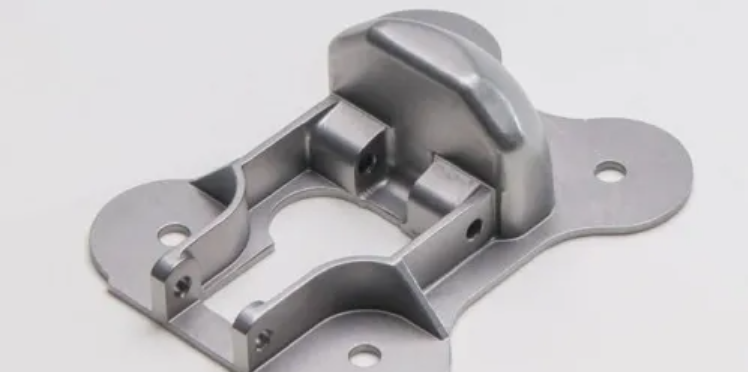
Fine machining of parts to obtain the required high-precision dimensions and excellent surface roughness, often using end milling processing methods, and with appropriate cutting parameters.
Fine machining of parts to obtain the required high-precision dimensions and excellent surface roughness, often using end milling processing methods, and with appropriate cutting parameters.
Aerospace parts cutting Fine machining of parts to obtain the required high-precision dimensions and excellent surface roughness, often using end milling processing methods, and with appropriate cutting parameters.
Composite machining
Some complex curved parts are difficult to achieve with a single cutting method. They need to be combined with multiple processing methods such as gear hobbing and grinding to ensure size and surface quality.
Some complex curved parts are difficult to achieve with a single cutting method. They need to be combined with multiple processing methods such as gear hobbing and grinding to ensure size and surface quality.
4
In addition to machining process planning, the process flow also needs to consider issues such as fixture design, thermal deformation control, and chip discharge to obtain stable machining quality.
In addition to machining process planning, the process flow also needs to consider issues such as fixture design, thermal deformation control, and chip discharge to obtain stable machining quality.
3
Cutting parameter optimization
Cutting parameters include spindle speed, feed speed, cutting depth, cutting width, etc., which are key factors affecting machining accuracy, surface roughness and machining efficiency. The cutting of aerospace parts has extremely strict requirements on machining surface quality, and it is necessary to fully optimize the cutting parameters.
Surface roughness optimization
Surface roughness is a key indicator for measuring the quality of machining surfaces. The main factors affecting surface roughness are cutting speed, feed rate, cutting depth and the workpiece material itself. System optimization methods such as Taguchi experimental method and response surface method can be used to find the best combination of cutting parameters and obtain the ideal surface roughness value.
Machining efficiency optimization
Improving cutting efficiency can shorten the machining cycle and reduce production costs. The main methods include increasing feed speed, cutting depth and width. However, excessive cutting parameters will aggravate tool wear and affect processing quality. Therefore, it is necessary to balance processing efficiency and tool life to find the optimal cutting parameter range.
Improving cutting efficiency can shorten the machining cycle and reduce production costs. The main methods include increasing feed speed, cutting depth and width. However, excessive cutting parameters will aggravate tool wear and affect processing quality. Therefore, it is necessary to balance processing efficiency and tool life to find the optimal cutting parameter range.
Thermal deformation control
During the processing of aerospace parts, the cutting thermal effect will cause thermal deformation of the workpiece, affecting the dimensional accuracy and shape stability of the parts. The cutting thermal effect can be controlled and thermal deformation can be reduced by optimizing cutting parameters, using reasonable cutting fluid types and supply amounts, etc.
The optimization of cutting parameters requires comprehensive consideration of multiple factors such as processing accuracy, surface quality, efficiency and cost to find the best balance point. Traditional trial cutting methods and theoretical calculation methods have certain limitations. Modern aerospace companies prefer to use finite element simulation technology and artificial intelligence optimization algorithms to achieve intelligent optimization of cutting parameters.
4
Cutting technology development trend
The aerospace manufacturing field has always led the development of cutting processing technology. New cutting technologies and processing methods are constantly being studied and applied to meet the increasingly stringent design and manufacturing needs of aerospace products.
Cutting technology for difficult-to-process materials
The cutting technology for difficult-to-process materials such as titanium alloy, stainless steel, and high-temperature alloy has been a hot topic in recent years, mainly including improving the performance of cutting fluids, developing new cemented carbide and superhard tool materials, and optimizing cutting parameters.
Precision micro-machining technology
Some key parts in aerospace products have small processing sizes and subtle and complex shapes. Traditional processing has some limitations, so precision micro-machining technology has received much attention, such as micro-milling, micro-turning, and micro-milling/drilling integrated processing.
Arsenic-free processing technology
Traditional metal processing usually requires the use of toxic and harmful cutting fluids. In recent years, arsenic-free processing technology has received widespread attention, such as dry cutting, giving the tool surface nano-level lubrication properties, and using biodegradable cutting fluids, which are beneficial to environmental protection and human health.
Intelligent cutting technology
Emerging technologies such as artificial intelligence and the Internet of Things are gradually penetrating into the field of cutting processing. Based on the real-time collection of cutting process data by sensors, the cutting process is modeled through machine learning algorithms
Compound processing technology
As the design of aerospace parts becomes increasingly complex, a single processing method is difficult to meet the requirements, and compound processing technology has emerged. For example, combining cutting processing with roll forming, stamping forming and other functions can not only achieve precision processing, but also complete complex overall forming, greatly improving processing flexibility and efficiency.
Digital virtual cutting technology
Digital virtual cutting technology is based on the modeling and simulation of cutting mechanical behavior, predicting and optimizing cutting process parameters in a virtual environment, avoiding expensive physical trial cutting, and improving process design efficiency. Combined with artificial intelligence algorithms, the automated design of cutting processes can be realized in the future.
Integration of additive manufacturing and cutting processing
Additive manufacturing technologies such as laser selective melting can produce prefabricated parts with complex shapes, and then achieve size and surface quality requirements through precision cutting processing, which is expected to replace some traditional cutting processing processes and shorten the manufacturing cycle.
Aerospace cutting processing technology is developing in the direction of being more efficient, more precise, more intelligent and more environmentally friendly. In the future, there will be more disruptive new technologies and methods to promote the leapfrog progress of aerospace manufacturing technology.
5
Development of cutting equipment
Advanced cutting equipment is an important foundation for achieving efficient and precise machining. In recent years, aerospace machining equipment has made great progress in automation, intelligence, and integration.
1
High-speed and high-precision CNC machine tools
The emergence of high-speed CNC machine tools has greatly improved machining efficiency. The five-axis linkage machining center in the aerospace field can achieve a spindle speed of up to 30,000rpm, and has extremely high motion accuracy and stability, meeting the needs of efficient cutting of complex surfaces.
2
Intelligent machining unit
Traditional machining centers have the defects of low integration and limited automation. The new generation of intelligent machining units realizes intelligent machining by integrating sensing systems, online monitoring, automatic process planning, automatic fault diagnosis and other functions, and improves machining stability and reliability.
3
Intelligent fixture system
Due to the complex shape and high rigidity requirements of aerospace parts, the requirements for fixture systems are extremely strict. Intelligent electric clamps have the advantages of high rigidity and high precision of repeated loading and unloading. They can automatically switch different clamping methods according to process requirements to improve processing flexibility.
4
High-performance cutting tools
The material, geometric parameters and coating design of cutting tools directly affect the processing quality and tool life. New nano-gradient composite ceramic tools, intelligent adjustable geometric tools, etc. make it possible to cut difficult-to-process materials, further improving cutting performance.
5
Intelligent sensing and monitoring system
Intelligent sensing and monitoring system
The intelligent sensing and monitoring system of the processing process can monitor key parameters such as processing load, thermal effect, vibration, etc. in real time. Once an abnormality occurs, it will issue an early warning and adjust the cutting parameters in time to avoid processing quality defects and tool damage, ensuring stable and reliable processing.
6
Digital virtual processing platform
Integrating technologies such as CAD/CAM/CAE/CAPP into a virtual environment, the comprehensive digital design of the entire process such as process planning, process simulation, processing programming, and process management can be completed online, greatly shortening the manufacturing preparation cycle.
It can be foreseen that the future aerospace cutting processing will develop in the direction of intelligence, integration, visualization and unmanned operation, and the intelligence level of cutting processing equipment will continue to improve, helping aerospace manufacturing technology to move towards a new stage of automation and intelligence.
In short, the processing and manufacturing of aerospace parts has extremely strict requirements on cutting technology and equipment. It is necessary to control all aspects such as material selection, process design, parameter optimization, new technology application and intelligent equipment upgrade to obtain high-precision and high-reliability processing and manufacturing capabilities, and provide strong guarantees for ensuring the performance and safety and reliability of aerospace products. This article systematically summarizes the key contents in this field, hoping to provide theoretical reference and practical guidance for relevant personnel.
Process Measures And Operating Skills To Reduce The Deformation Of Aluminum Parts Processing
Principles, Characteristics And Application Scenarios Of 19 Surface Treatment Methods For Common Materials
Related Article

Fast sampling is the fastest way to win business in the hardware machining and plastic mold industries. Customers want a working sample in days, and a 3D printer delivers it, but only when you know how to print in 3d correctly.
how to print in 3d

Fast sampling is the fastest way to win business in the hardware machining and plastic mold industries. Customers often send an STL file and expect a working sample in days.
how to print an stl file

