
Slope Surface Design Of The Ejector Pin: Fine Craftsmanship In Mold Design
Author: SZTC
2024-11-04
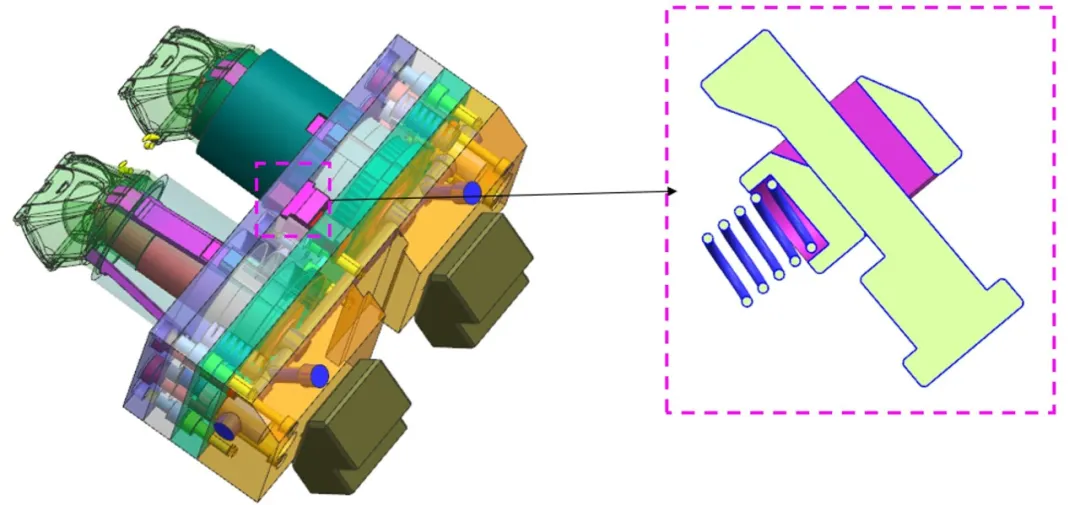
In the design of plastic injection molds, the ejector pin is a common demolding mechanism used to help plastic parts to be smoothly removed from the mold. The slope surface design of the ejector pin is one of the key factors to ensure that the plastic parts can be smoothly demolded. This article will explore in depth the principles, influencing factors and details that need to be paid attention to in the design process of the slope surface design of the ejector pin.
Principles of slope surface design of the ejector pin

1. Slope surface angle design
The slope surface angle of the ejector pin is an important parameter in the design, which directly affects the ease of demolding. The slope surface angle is usually determined according to the geometry and material properties of the plastic part.
Angle selection: The angle of the slope surface is generally designed between 3° and 10°, and the specific angle depends on the draft angle of the plastic part and the fluidity of the material.
Material influence: For plastics with good fluidity, such as ABS or polypropylene, the slope surface angle can be designed to be smaller; while for plastics with poor fluidity, such as polycarbonate, a larger angle may be required.
2. Surface treatment of the bevel surface
The surface roughness and finish of the bevel surface have an important influence on the smoothness of demolding.
The surface roughness and finish of the bevel surface have an important influence on the smoothness of demolding.
Surface finish: A high-finish bevel surface can reduce the friction during demolding, making it easier for the plastic part to be removed from the mold.
Surface treatment: The surface performance of the bevel surface can be improved by polishing, electroplating or coating.
3. The contact area between the bevel surface and the plastic part
The area where the bevel surface contacts the plastic part needs to be specially designed to ensure that the plastic part will not be deformed or damaged during demolding.
The area where the bevel surface contacts the plastic part needs to be specially designed to ensure that the plastic part will not be deformed or damaged during demolding.
Contact area: The area where the bevel surface contacts the plastic part should be as uniform as possible to avoid local stress concentration.
Rounded corner design: Designing appropriate rounded corners at the edge where the bevel surface contacts the plastic part can reduce stress concentration and protect the surface of the plastic part.
Factors affecting the design of the bevel surface
1. Plastic material
Different plastic materials have different shrinkage and fluidity, and these characteristics will affect the design of the bevel surface.
1. Plastic material
Different plastic materials have different shrinkage and fluidity, and these characteristics will affect the design of the bevel surface.
2. Plastic part geometry
The complexity of the geometric shape of the plastic part determines the difficulty of the design of the bevel surface. Complex geometries may require a more sophisticated bevel design.
The complexity of the geometric shape of the plastic part determines the difficulty of the design of the bevel surface. Complex geometries may require a more sophisticated bevel design.
3. Mold temperature
Mold temperature affects the demolding of plastic parts. A high temperature mold helps to demold the plastic parts, but it may also require a larger bevel angle.
Mold temperature affects the demolding of plastic parts. A high temperature mold helps to demold the plastic parts, but it may also require a larger bevel angle.
4. Injection pressure
High injection pressure may cause deformation of the plastic parts, so a reasonable bevel needs to be designed to balance the injection pressure and demolding force.
High injection pressure may cause deformation of the plastic parts, so a reasonable bevel needs to be designed to balance the injection pressure and demolding force.
Details to pay attention to during the design process
1. Matching of bevel surface with ejector pin
The bevel surface needs to be precisely matched with the ejector pin to ensure that the plastic parts can be smoothly pushed out of the mold during demolding.
1. Matching of bevel surface with ejector pin
The bevel surface needs to be precisely matched with the ejector pin to ensure that the plastic parts can be smoothly pushed out of the mold during demolding.
2. Strength of bevel surface
The bevel surface is subjected to greater forces during demolding, so it needs to have sufficient strength to prevent deformation or damage.
The bevel surface is subjected to greater forces during demolding, so it needs to have sufficient strength to prevent deformation or damage.
3. Cooling of bevel surface
The cooling effect of the bevel surface in the mold needs to be considered, and uneven cooling may make it difficult to demold the plastic parts.
The cooling effect of the bevel surface in the mold needs to be considered, and uneven cooling may make it difficult to demold the plastic parts.
4. Maintenance of bevel surface
The bevel surface needs to be maintained and inspected regularly to ensure its performance and extend the service life of the mold.
The bevel surface needs to be maintained and inspected regularly to ensure its performance and extend the service life of the mold.
Conclusion
The design of the slope surface of the inclined top is a key link in mold design, which involves the demoulding of plastic parts, the durability of the mold and production efficiency. Through the fine design of the slope angle, surface treatment, contact area, etc., it can ensure the smooth demoulding of plastic parts, improve production efficiency and reduce the defective rate. Mold designers need to consider a variety of factors, use professional knowledge and experience, and make reasonable slope surface design. With the development of plastic processing technology, the requirements for slope surface design are also constantly increasing, which requires designers to continue to learn and innovate to adapt to the ever-changing market demand.
The design of the slope surface of the inclined top is a key link in mold design, which involves the demoulding of plastic parts, the durability of the mold and production efficiency. Through the fine design of the slope angle, surface treatment, contact area, etc., it can ensure the smooth demoulding of plastic parts, improve production efficiency and reduce the defective rate. Mold designers need to consider a variety of factors, use professional knowledge and experience, and make reasonable slope surface design. With the development of plastic processing technology, the requirements for slope surface design are also constantly increasing, which requires designers to continue to learn and innovate to adapt to the ever-changing market demand.
Why Is The First Article Inspection So Important?
The Role Of Various Elements In Aluminum Alloys
Related Article

Fast sampling is the fastest way to win business in the hardware machining and plastic mold industries. Customers want a working sample in days, and a 3D printer delivers it, but only when you know how to print in 3d correctly.
how to print in 3d

Fast sampling is the fastest way to win business in the hardware machining and plastic mold industries. Customers often send an STL file and expect a working sample in days.
how to print an stl file

