is additive manufacturing the same as 3d printing ?
Is Additive Manufacturing the Same as 3D Printing?
Understand how the terms differ and how rapid prototyping supports hardware manufacturing, CNC machining, and plastic mold development.
Is Additive Manufacturing the Same as 3D Printing?
In manufacturing, the terms additive manufacturing and 3D printing are often used interchangeably. Both describe processes that build parts by adding material rather than cutting it away. But are they exactly the same?
The short answer is that 3D printing is a type of additive manufacturing. Additive manufacturing is the broader term used across engineering and industrial production, while 3D printing is the phrase most people use when talking about making a physical object from a digital design.
For hardware manufacturers and plastic mold makers, understanding the difference helps when choosing a process for rapid prototyping, design validation, and production planning.
What Is 3D Printing?
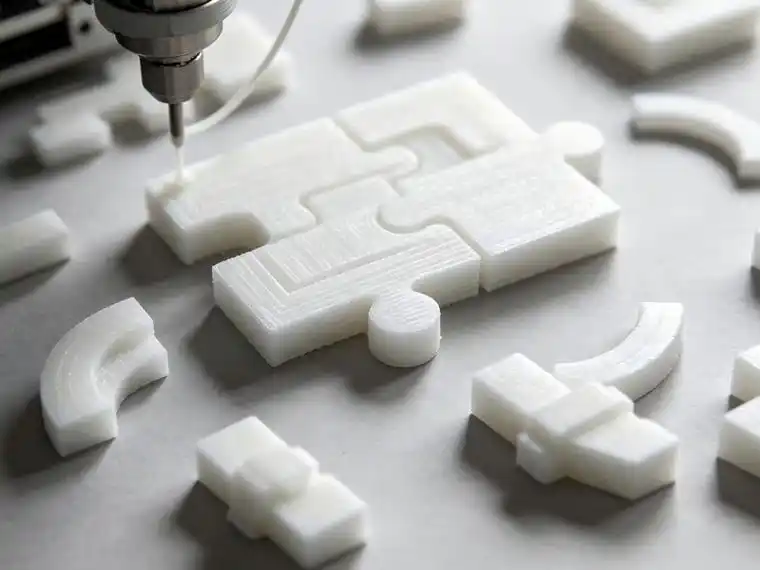
3D printing creates a three-dimensional object from a digital model. A printer builds the part layer by layer, following instructions generated from a CAD file.
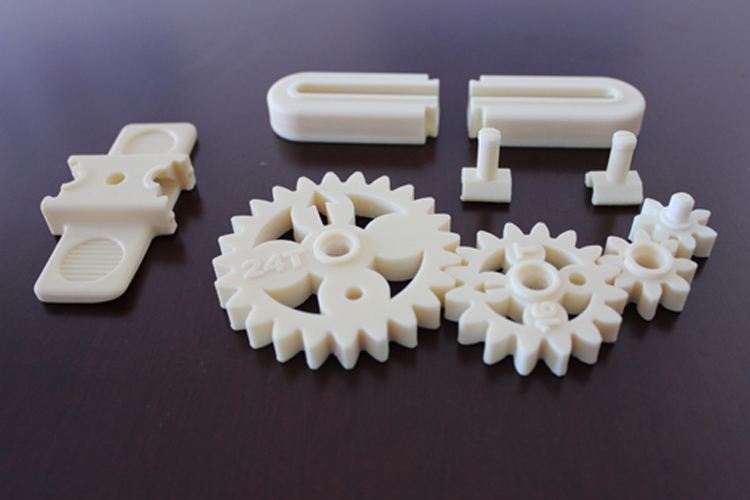
Depending on the technology, the printer may melt plastic filament, cure liquid resin with light, or fuse metal powder. The process is useful for producing prototypes, fixtures, sample parts, and complex geometries that would be difficult or expensive to machine.
What Is Additive Manufacturing?
Additive manufacturing is the industrial term for producing parts by adding material in successive layers. It includes 3D printing technologies, but it also covers the engineering work required to make printed components suitable for manufacturing use.
That work may involve material selection, design optimization, process control, inspection, and post-processing. In short, 3D printing describes the act of printing a part; additive manufacturing often describes the complete production approach.
Why the Terms Matter in Manufacturing
A simple printed model may only need to show the shape of a component. An industrial prototype may also need to meet requirements for strength, dimensional accuracy, surface finish, or fit with other parts.
For this reason, manufacturers often use additive manufacturing when discussing engineering applications and 3D printing when referring to the equipment or process itself.
How 3D Printing Supports Hardware Manufacturing
Rapid prototyping allows engineers to check a design before committing to production tooling or a machining run. It can shorten the feedback loop between design, testing, and revision.
Checking Fit and Assembly Before CNC Machining
For metal hardware, a printed plastic sample can help verify dimensions, mounting positions, assembly sequence, and clearance between components. Engineers can identify design issues before machining a part from aluminum, stainless steel, brass, or another production material.
A printed sample is not a substitute for a final metal component. It is a practical way to confirm the design’s basic form and function before investing in more expensive manufacturing steps.
Testing Complex Shapes and Design Changes
Additive manufacturing is particularly useful when a part includes internal channels, curved surfaces, or other features that are difficult to machine. It also makes design revisions easier: engineers can update the CAD model and print a new sample without waiting for a dedicated tool.
When CNC Machining Is Still the Better Choice
CNC machining remains important when a prototype needs to represent the final metal material, tight tolerances, or a specific surface finish. A printed model can confirm the shape, but machining is usually required to evaluate the actual performance of a metal part.
The two methods work well together. 3D printing can be used for early design checks, followed by CNC machining for functional testing and production.

The Role of 3D Printing in Plastic Mold Development
Plastic injection molding requires investment in mold design, tooling, and trial production. Printing sample parts before building a mold can help reduce uncertainty during development.
Reviewing a Plastic Part Before Tooling
A 3D-printed sample allows a team to examine the part’s overall shape, assembly features, and user-facing details. It can also help confirm whether the design is ready for a mold review.
For example, a printed housing can be checked for screw locations, mating surfaces, and general fit with nearby components. If a feature needs to change, the CAD model can be revised before the mold is manufactured.
Understanding the Limits of Printed Samples
A printed plastic part may behave differently from an injection-molded part. The material, layer direction, surface texture, and manufacturing process can affect strength and dimensional stability.
A printed sample therefore cannot fully predict how a molded component will perform. Mold flow, shrinkage, cooling, and production material properties still need to be considered during tooling and validation.
When to Move from Printing to Injection Molding
3D printing is well suited to early samples and low-volume evaluation. Injection molding becomes more appropriate when the design is stable and the project requires repeatable parts, production materials, and larger quantities.
Using printed samples early can help identify design changes while they are still relatively inexpensive to make.
Choosing the Right Process for a Prototype
The best method depends on what the team needs to learn from the sample.
Use 3D Printing for Early Design Review
Choose 3D printing when the main goal is to check shape, fit, assembly, or appearance. It is often a fast and cost-effective way to produce a first sample, especially when the design may change.
Use CNC Machining for Material and Precision Checks
Choose CNC machining when the prototype needs to represent the final metal material or when dimensional accuracy and surface quality are critical to the test.
Use Injection Molding for Production-Representative Plastic Parts
Choose injection molding when the design is ready for tooling and the team needs to evaluate parts made through the intended production process.
A Practical Prototype Workflow
- Create or update the CAD model.
- Print an initial sample to review shape and assembly.
- Revise the design based on feedback.
- Machine a functional prototype or proceed to mold development, depending on the project.
- Validate the production process and final specifications.
Final Thoughts: Is Additive Manufacturing the Same as 3D Printing?
Yes, in many everyday conversations the terms are used to describe the same process. More precisely, 3D printing is one part of additive manufacturing, which can include the wider engineering and production workflow.
For hardware machining and plastic mold development, the distinction is useful but practical: 3D printing helps teams make and review samples quickly, while CNC machining and injection molding provide production methods for specific materials, tolerances, and volumes.
Used at the right stage, rapid prototyping can help manufacturers find design issues earlier, reduce unnecessary tooling changes, and move from concept to production with greater confidence.
Planning a Hardware or Plastic Component?
Shenzhen Zhongzhu Technology supports custom manufacturing projects involving CNC machining, sheet metal fabrication, zinc and aluminum die casting, and plastic injection molding. Contact our team to discuss your drawings, materials, and production requirements.
Contact Our Teamwhere to use a 3d printer?
is 3d printing hard
Related Article