where was 3d printing invented
Where Was 3D Printing Invented? The History Behind Modern Prototyping
From early stereolithography research to modern rapid prototyping, discover how 3D printing developed and why it remains valuable for hardware manufacturers, plastic mold makers, and product development teams.
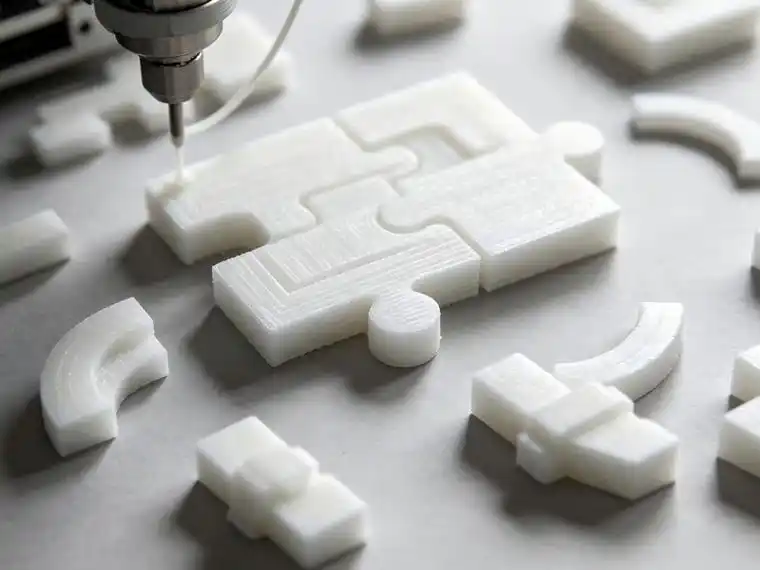
From a Digital Drawing to a Physical Sample
For hardware manufacturers and plastic mold makers, 3D printing has become a practical way to turn a CAD drawing into a physical prototype without investing in expensive tooling upfront. Need to check dimensions, verify assembly, or identify design issues before cutting a mold? A printed sample can often provide the answers within hours.
But where was 3D printing invented, and how did it become such an important tool in modern manufacturing?
The story began in the early 1980s, when engineers were looking for a faster, more flexible way to produce prototypes. Understanding how the technology developed also helps explain why it remains so useful for product development, mold testing, and custom hardware manufacturing today.
Valencia, California: Where Commercial 3D Printing Took Off
Modern commercial 3D printing is closely associated with Valencia, California, where American engineer Chuck Hull developed stereolithography (SLA).
At the time, producing a prototype often involved machining, manual fabrication, or building temporary tooling. These methods could be expensive and time-consuming, particularly when a design needed several rounds of revision.
Hull approached the problem differently. His process used ultraviolet light to solidify liquid photopolymer resin layer by layer, gradually building a three-dimensional object from digital design data.
He successfully produced an early prototype in 1983, filed a patent in 1984, and received the patent in 1986. In 1986, he also founded 3D Systems, helping bring stereolithography from the laboratory into commercial manufacturing.
There was earlier research, too. Japanese researcher Hideo Kodama published work on light-cured polymer models in 1981, exploring concepts similar to those behind modern additive manufacturing. However, Hull's work played a decisive role in establishing a commercially viable 3D printing system.
So, when people ask where 3D printing was invented, the answer depends partly on what they mean: early research took place in multiple locations, while Valencia, California, became a major birthplace of commercial 3D printing.
How the First Commercial 3D Printer Changed Prototyping
Following the development of SLA, 3D Systems introduced the SLA-1, widely recognized as the first commercial stereolithography machine.
For manufacturers, this represented a significant change in the product development process. Instead of waiting for a machined sample or investing in prototype tooling, engineers could create a physical model directly from a digital file.
Hull also developed the STL file format, which became a widely used standard for transferring 3D geometry to printing software.
These developments helped establish the rapid prototyping workflow that manufacturers still use today: design a component, print a sample, inspect the result, revise the model, and repeat until the design is ready for production.
For hardware and mold manufacturers, that workflow can save considerable time before committing to CNC machining or permanent tooling.
From SLA to FDM and SLS
Stereolithography was only the beginning. Other additive manufacturing technologies soon expanded the range of materials, costs, and applications available to manufacturers.
Fused Deposition Modeling (FDM), developed by Scott Crump in the United States, builds parts by extruding thermoplastic filament layer by layer. Its relatively low equipment and material costs have made it popular for basic prototypes, dimensional checks, and assembly verification.
Selective Laser Sintering (SLS), developed through research at the University of Texas at Austin, uses a laser to fuse powdered material into solid parts. It can produce complex geometries without the same support structures often required by other processes, making it useful for functional prototypes and intricate components.
Each technology serves a different purpose. SLA is often selected for fine details and smooth surfaces, FDM for economical concept models, and SLS for more demanding functional prototypes.
Why 3D Printing Matters in Hardware and Mold Manufacturing
Knowing where 3D printing was invented is interesting, but its practical value becomes clearer when you consider how it fits into today's manufacturing workflow.
Imagine receiving a new enclosure design from a customer. Before machining the mold, your engineering team needs to verify mounting holes, assembly clearances, wall thickness, and overall dimensions.
A 3D-printed prototype allows the team to check these features early, identify potential problems, and revise the CAD model before investing in expensive tooling.
This does not mean 3D printing replaces CNC machining, die casting, or injection molding. Each process has its own strengths. Rather, 3D printing provides a useful bridge between digital design and production, helping manufacturers reduce unnecessary revisions and make better-informed decisions.
It is particularly valuable when developing custom hardware, plastic components, mechanical assemblies, and mold concepts that require several rounds of customer approval.
The Lasting Impact of 3D Printing
So, where was 3D printing invented? Its history involves several early researchers, but Chuck Hull's work in Valencia, California, helped turn stereolithography into a commercially practical technology in the 1980s.
Today, the same basic idea continues to influence manufacturing: make a physical part from digital data, evaluate it quickly, and improve the design before moving into full production.
For hardware manufacturers and mold makers, that means faster design validation, more efficient communication with customers, and fewer costly surprises during tooling development.
The technology has evolved considerably since the first SLA machines, but its original purpose remains relevant: helping manufacturers move from an idea to a workable product with less time, cost, and uncertainty.
Need a Reliable Partner for Your Next Hardware Project?
From CNC machining and metal stamping to zinc and aluminum die casting and plastic injection molding, Shenzhen Zhongzhu Technology supports custom component manufacturing for a range of industrial applications. Contact our team to discuss your drawings, material requirements, and production needs.
Contact Our Team
where was the 3d printer invented
Related Article