
Complete Surface Treatment Selection Guide For Aluminum Alloy Parts

Aluminum alloy die cast components are widely adopted in automotive, 5G telecommunication, consumer electronics and medical equipment, thanks to lightweight properties, good thermal conductivity and competitive cost. However, raw aluminum surfaces easily oxidize, scratch and corrode under harsh working environments. Surface treatment acts as protective barrier and decorative layer. Different finishing processes deliver distinct performance on hardness, corrosion resistance, appearance, cost and tolerance impact. Improper selection will cause excessive budget, delayed delivery or failed product reliability tests.
This guide systematically introduces mainstream surface treatments for aluminum alloy parts, including applicable alloy grades, functional advantages, limitations, typical applications and selection tips for your die casting projects.
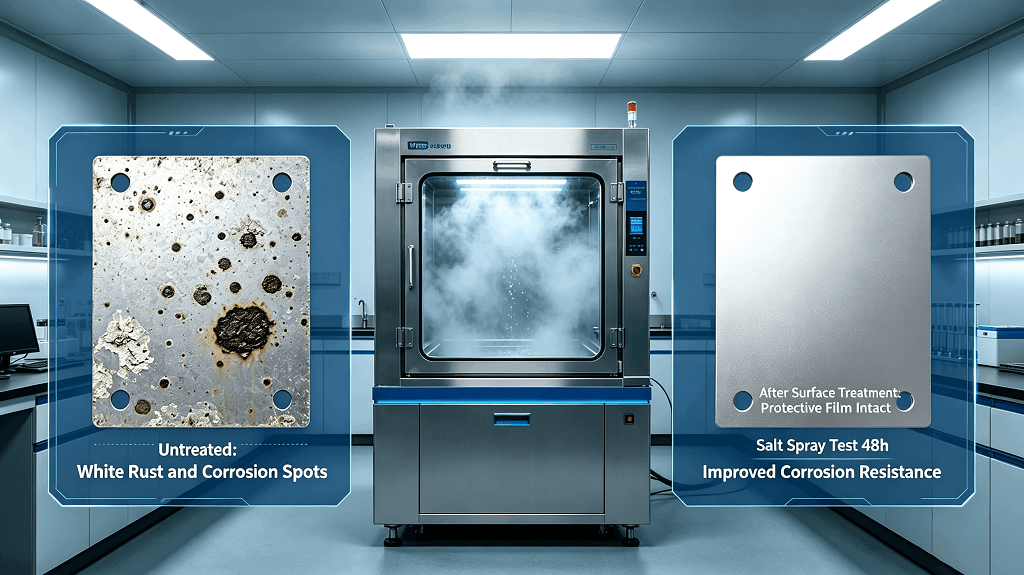
1. Sandblasting
Sandblasting is a pretreatment & surface finishing method using high-speed abrasive media to impact workpiece surface.
- Advantages: Remove casting burrs, oxidation scale, mold marks; form uniform matte texture; improve adhesion for subsequent coating/anodizing.
- Limitations: No anti-corrosion capability alone; cannot cover pores or surface defects.
- Suitable alloys: ADC12, A380, A413, 6061, 7075
- Common use: Electronic housings, heat sinks, pre-treatment before anodizing or powder coating
2. Chromate Conversion Coating (Alodine / Passivation)
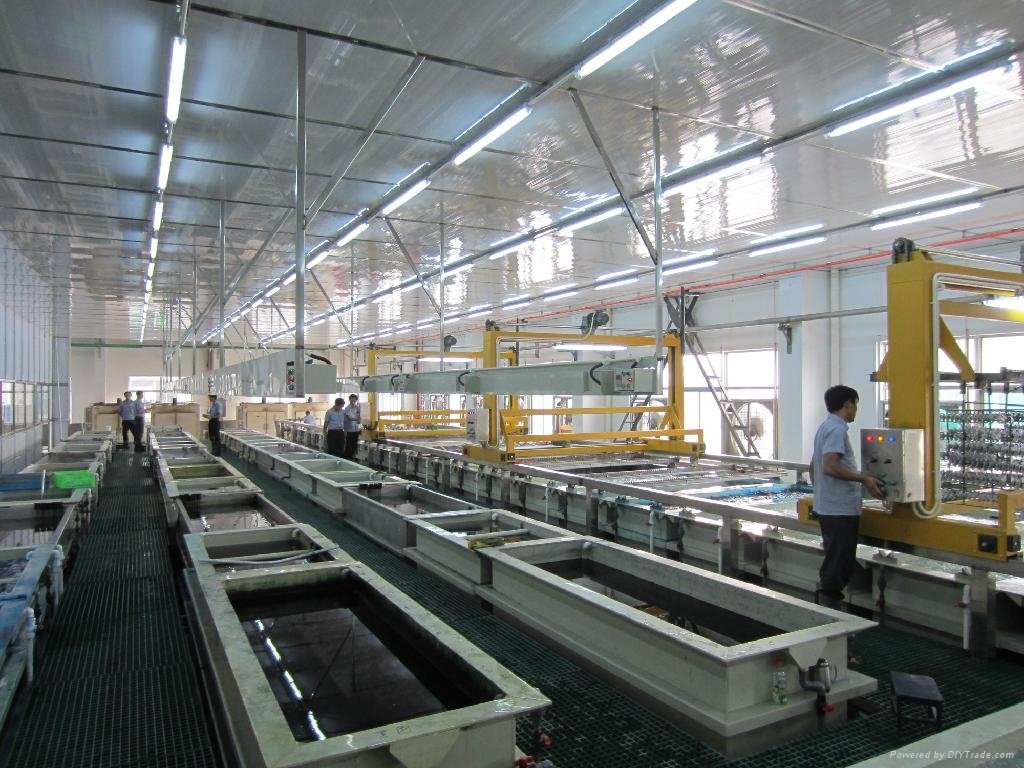
Conversion coating creates a thin chemical film on aluminum surface.
- Advantages: Low cost, thin film thickness (almost no dimension change), excellent base layer for painting; moderate corrosion resistance. RoHS compliant yellow & clear passivation available.
- Limitations: Not wear-resistant; cannot be used as standalone long-term protection in outdoor environments.
- Typical applications: Internal structural parts, RF components, assemblies requiring tight tolerance.
3. Anodizing (Type I / Type II / Type III Hard Anodizing)
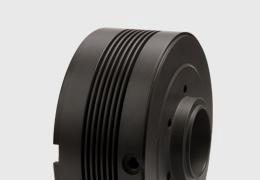
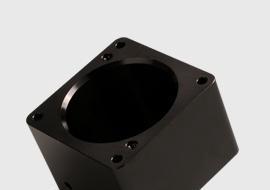
Type III Type I
Anodizing is the most popular surface treatment for aluminum. It builds controlled aluminum oxide layer electrochemically.
Type II Sulfuric Acid Anodizing (Conventional Anodizing)
- Film thickness: 5–25μm
- Features: Rich color options (black, silver, grey, blue); good corrosion resistance; decorative appearance.
- Restriction: Not recommended for high silicon aluminum die cast alloy such as ADC12 (uneven coloring risk).
Type III Hard Anodizing (Hardcoat Anodizing)
- Film thickness: 25–80μm
- Features: Extremely high surface hardness, strong wear resistance, good heat resistance.
- Limitation: Limited color choices, higher cost; tight process control required.
- Application: Automotive structural parts, hydraulic components, machinery sliding parts, heat sinks.
Important Reminder: High-silicon die casting aluminum (ADC12, A380) is difficult to achieve uniform decorative anodizing. We suggest chromate passivation or powder coating for these materials.
4. Powder Coating
Dry powder electrostatic spraying and high-temperature curing.
- Advantages: Thick coating layer, outstanding outdoor anti-corrosion performance, abundant matte/gloss colors, scratch-resistant.
- Limitations: Larger layer thickness (50–120μm), will affect precision tolerances; high-temperature process may cause slight workpiece deformation.
- Ideal for: Outdoor equipment, automotive housings, equipment enclosures.
5. Electrophoretic Coating (E-Coating)
- Features: Uniform thin coating, excellent coverage on complex inner cavities; stable anti-corrosion performance.
- Application: Complex-shaped aluminum die cast parts with hidden structures, automotive accessories.
6. Polishing (Brushed & Mirror Polishing)
- Brushed finish: Linear texture, classic industrial look, hide minor surface scratches.
- Mirror polishing: High-gloss decorative surface.
- Note: Polished aluminum must match secondary protection (anodizing or clear coating), otherwise it oxidizes rapidly.
7. Nickel Plating / Chrome Plating
Metal electroplating on aluminum base.
- Advantages: Bright metallic appearance, superior hardness and corrosion resistance.
- Limitations: Higher cost; complicated pre-treatment procedure.
- Usage: High-end decorative components, parts requiring low contact resistance.
Quick Selection Checklist
- Require decorative colorful appearance & medium protection → Type II Anodizing (6061/6063)
- Need wear resistance & heavy-duty service → Type III Hard Anodizing
- ADC12 / A380 aluminum die cast parts, tight tolerance → Clear/Yellow Chromate Passivation
- Outdoor usage, long anti-corrosion demand → Powder Coating
- Complex inner cavity structure with uniform coating requirement → E-Coating
- Only pretreatment before other finishing → Sandblasting
Key Factors You Must Consider Before Confirming Surface Treatment
- Base alloy composition: Silicon content directly decides anodizing feasibility
- Dimensional tolerance: Film thickness will change part overall size
- Working environment: Indoor / outdoor, humidity, chemical exposure
- Functional demands: Wear resistance, thermal conductivity, conductivity, salt spray requirement
- Aesthetic requirement: Matte, gloss, color, texture
- Budget and mass production lead time
Conclusion
There is no universal surface treatment solution for all aluminum alloy components. Every project needs to balance appearance, mechanical performance, environmental compliance and manufacturing cost. Our engineering team provides DFM suggestion at early stage. We will recommend the most suitable finishing process according to your alloy material, drawing tolerance and end-use working conditions, avoiding costly modification after mold completion.
CTA
Send your 3D drawings, alloy specification and surface requirements to Zhongzhu Technology. We offer sample testing of different aluminum surface treatments and formal quotation for mass die casting production.
Blog Tags
#AluminumSurfaceTreatment #Anodizing #HardAnodizing #PowderCoating #AluminumDieCast #MetalFinishing #Passivation
Type I/II/III Hard Anodizing: Hardness, Color & Cost Difference


For more questions please
contact us

+86 755 28280203


315 PING 'AN AVENUE, PINGHU STREET, LONGGANG DISTRICT, SHENZHEN CITY, GUANGDONG PROVINCE