China Aluminum Industry's 3D Printing Industry
3D printing technology, also known as additive manufacturing, originated in the United States. The light-curing technology was originally developed by Charles Hoole in 1986 and 3D Systems was established. Since then, after more than 20 years of development, 3D printing technology has improved day by day, and sales of related products and services have continued to rise. According to statistics from Wohlers Associates, from 1992 to 2017, the compound annual growth rate of 3D printing products and related services business revenue was 25.4%. In the world, the country that produces and purchases the most 3D printers in the United States, and my country's share is very small. In 2020, the world's 3D printing market share will reach approximately US$12 billion, with the United States accounting for approximately 50%, Europe accounted for approximately 25%, my country and Japan each accounting for approximately 10%, and other countries and regions accounting for approximately 5%.
The 3D printing industry is a versatile industry that can manufacture almost any product, and the materials used can be metal or non-metal. Among the metal materials used, aluminium alloy is used the most. 3D printing technology can be used for all parts, articles, equipment, etc. that can be manufactured with traditional technology. Starting in 2019, my country's 3D printing industry has accelerated its development speed and has already been at the global leading level in some products. However, there are still some gaps compared with advanced countries in general, and it may become a global leader by about 2025.

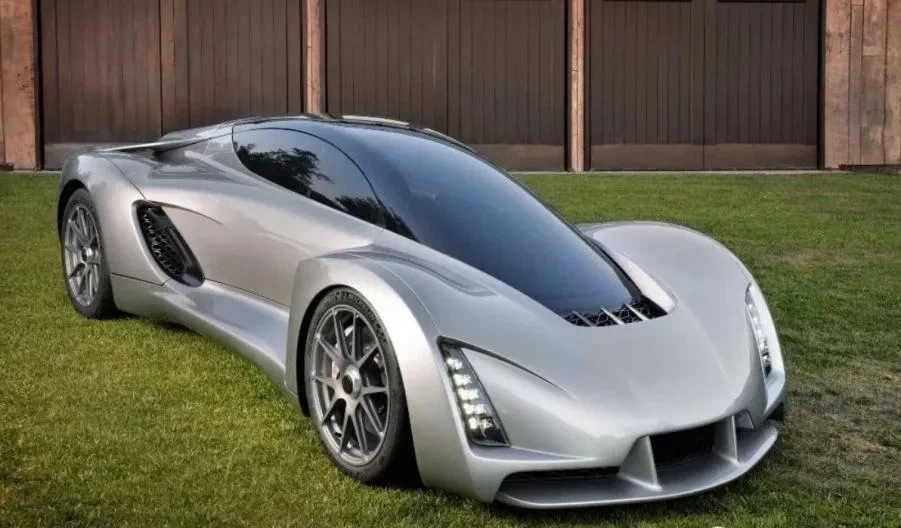
3D printed the world's first super sports car
3D printed car engine cylinders are available
In 2014, the world's first 3D printed car was launched on the market. More than 40 parts on the car body are printed with aluminium alloy. In 2015, the American Divergent Microfactories (DM) launched the world's first 3D printed super sports car "Blade".
In order to promote the application of 3D printing technology in the automotive industry, Ford and ExOne formed a research team composed of engineers, materials scientists and manufacturing experts in 2019. The 6061 aluminium alloy was used as the material and 3D printing technology to print out the prototype of the automobile engine block (engine block). The performance of this sample is better than expected, more than 30% of raw materials are saved, and the manufacturing period is greatly shortened.
6061 alloy is a kind of wrought aluminium alloy with a long history and good comprehensive properties. Its calibrated composition (mass%): Si0.40-0.8, Fe0.7, Cu0.15-0.40, Mn0.15, Mg0.8-1.2, Cr0.04-0.35, Zn0.25, Ti0.15, other impurities are 0.05 individually, totalling 0.15, and the rest is Al. 6061 alloy is a kind of Al-Mg-Si alloy, its strengthening phase is Mg2Si, and its Mg2Si content is ≥1.4%. In order to improve the strong performance, 0.25% Cu is added, and 0.2 is added to offset the adverse effect of Cu on corrosion resistance. %Cr. The alloy can obtain higher strength after heat treatment, but due to its high quenching sensitivity, it needs to be re-solution treated and quenched in water to obtain higher strength after extrusion. The quenching temperature of 6061 alloy is 515℃-525℃. It is better to artificially age as soon as possible after quenching (160℃-170℃, 8h-12h, T6) to obtain higher strength, but after quenching, if it is left at room temperature for more than 30min, then ageing The words are very detrimental to the strength. Alloys with Mg2Si greater than 1% are left at room temperature for 24 hours, and their strength is about 10% lower than that of alloys that are aged immediately after quenching. This phenomenon is called the "parking effect" or "aging lag". However, for alloys with Mg2Si less than 0.9%, along parking time is beneficial to the strength. This effect is related to the nucleation ability of the vacancy-solute atom group formed during room temperature parking and the critical nucleation temperature TC. The Tc of the high-concentration Al-Mg2Si alloy is greater than 170°C, and the vacancy-solute group formed at room temperature is small, which does not reach the critical size, and also causes the reduction of the supersaturation of the base. Therefore, there are only a few size clusters during artificial aging. It is transformed into a precipitated phase, and because the concentration of the matrix decreases after the formation of the group, a new crystal nucleus cannot be formed independently, so only a coarse precipitated phase and low strength can be obtained. On the contrary, when the low-concentration alloy is artificially aged after being parked, a highly dispersed precipitation phase is obtained, which is beneficial to the strength. This may be related to the different nucleation conditions of low-concentration alloys. Adding Cu less than 0.4% can reduce the adverse effects of the parking effect because Cu can reduce the natural aging speed of the AI-Mg-Si alloy.
Fe is a harmful impurity of AI-Mg-Si alloy, which is not good for strength. A small amount of Zn impurity has almost no effect on strength. Trace rare earth element RE can significantly improve the casting, processing and heat treatment process performance of Al-Mg-Si alloy for conductive wire. Adding 0.1% RE to the Al-0.6Mg-0.6Si alloy not only improves the quality of the ingot, but also improves the wire drawing process, and increases the yield. It can be quenched directly after hot rolling, eliminating the need for solution treatment, saving energy and labour After aging (165℃/4h), the strength can be increased by about 15 MPa, and the resistance can be reduced by more than 2%.
Typical mechanical properties of 6061 alloy: tensile strength 316MPa, yield strength 281MPa, elongation 12%.
Typical 3D printing products in my country Ranked among the world's most advanced
In recent years, my country has made extraordinary achievements in 3D printing aluminium alloy products, and some 3D printing products have ranked among the world's advanced.
Aluminium alloy has excellent low-temperature properties, and various mechanical properties increase simultaneously with the decrease of temperature. It is an excellent material for manufacturing low-temperature equipment. If Japan and the United States launch spacecraft with liquid hydrogen (-252.8°C) and liquid oxygen (-183°C), the fuel tank will be welded with 2219 alloy plate, so the author believes that my country’s liquid fuel tank and tank body The connecting ring can also be made of 2219 alloy.

On August 4, 2006, a giant aluminium alloy ring with a diameter of 5m was rolled by Southwest Aluminum (Group) Co., Ltd.
10m-class high-strength aluminium alloy heavy-duty launch vehicle connecting ring prototype 2219 aluminium alloy 3D printed parts were released in January this year
The 10m-class high-strength aluminium alloy heavy-duty launch vehicle connecting ring sample is the world's first 10m-class high-strength aluminium alloy heavy-duty launch vehicle connecting ring sample made by the National Additive Manufacturing Innovation Center and the team of Academician Lu Bingheng of Xi’an Jiaotong University using 3D printing technology. . The prototype uses the integrated manufacturing technology of arc fuse increase and decrease materials, and has achieved major technological breakthroughs in the overall manufacturing process stability, precision control, deformation and stress control.
The 10m super large aluminium alloy ring is the key structure connecting the tube section, the front and rear bottom of the heavy launch vehicle tank and the space between the rocket box. The 10m super-large aluminium alloy ring has a mass of about 1t and adopts multi-filament collaborative process equipment. The printing process is greatly simplified, the cost is greatly reduced, and the manufacturing cycle is greatly shortened, which only took 30 days. At present, the successful completion of the super large ring with the integrated printing technology of adding and subtracting materials used this time is the first in the world. This achievement will help 3D printing continue to develop my country's aerospace industry, and at the same time provide technical support for the rapid preparation of major parts in my country's aerospace industry.
3D printing wire can use 2219 aluminium alloy. 2219 aluminium alloy is a kind of Al-Cu series high-strength aluminium alloy, which has been widely used in aerospace and national defence and military industries. Its calibrated composition (mass%): Si0.2, Fe0.3, Cu5.8-6.8, Mn0 .2-0.4, Mg0.02, Zn0.1, Ti0.02-0.1, V0.05-0.15, Zr0.1-0.25, other impurities are 0.05, a total of 0.15, the rest is AI, now it has developed to 4 alloys, The other three are 2319, 2419, 2519.
The 2219 aluminium alloy was formed in 1985. The typical mechanical properties are shown in Table 1, and the relationship between mechanical properties and temperature is shown in Table 2.
Table 1 Typical tensile properties of 2219 aluminium alloy

Table 2 The relationship between the mechanical properties of 2219 aluminium alloy and temperature


Note: The test shall be carried out after the specimen is kept at the test temperature for 10000h without load. During the test, before reaching the yield strength, apply a stress rate of 35MPa/min to the sample, and then perform the test at a strain rate of 15%/min until it breaks.
The coating alloy of 2219 aluminium alloy sheet is 7072, and its composition (mass%): Cu0.1, Mn0.1, (Si+Fe)0.7, Zn0.8-1.3, Mg0.1, other impurities are 0.05 individually, 0.15 in total, and the rest Is Al. The application temperature range of 2219 aluminium alloy is -269℃-300℃, which is one of the alloys with the widest applicable temperature range. The fracture toughness is also high, and the material has a high resistance to stress corrosion cracking in the T8 state, and the density at 20°C is 2.84g/cm3.
The team of academician Wang Huaming took the lead in breaking through the laser 3D printing process of large key main bearing components such as aircraft titanium alloy and aluminium alloy, complete equipment, internal quality and mechanical performance control and key engineering applications. This is the key technology of Beihang University for large metal The component additive manufacturing engineering laboratory has achieved fruitful results after more than 20 years of unremitting research. Since 2005, 3D printing titanium alloy, aluminium alloy aircraft fuselage main bearing frame, wing root ribs, landing gear and other large overall key load-bearing components have been important in aerospace and aerospace such as domestically produced new generation fighters, large transport aircraft, and carrier rockets. It has been widely used in equipment development and production. On January 16, 2016, the project "Laser Forming Technology for Large-scale and Complex Integral Components of Aircraft Titanium Alloy" hosted by Academician Wang Huaming won the first prize in National Technology Invention.
At present, the manufacturing process of the dual-performance integral blisk technology mainly adopts the welding method, and the blades and discs with different performances are welded into a whole through techniques such as linear friction welding. However, the biggest disadvantage of the welding method is that the connection area tends to become the weak link of the entire component, becoming a fatal hazard to the engine. With the development and maturity of 3D printing technology, people propose to print blades directly on the disk body, through the coaxial powder feeding laser cladding process, pre-processed bosses on the edge of the titanium alloy disk body and stack them layer by layer into titanium alloy blades.
The first 3D printed landscape bridge in China will meet with a large audience on January 11, 2021, in Tapu Central Greenland, Putuo District, Shanghai
The landscape bridge is the first pioneering attempt to use 3D printing technology to transform the design blueprint into a real object in the field of construction engineering in my country and put it into actual use. 3D printing breaks through the constraints of bridge design and incorporates parametric construction methods. It can not only manufacture complex shapes, but also use moulding technology to feedback calculations and interact with designers, making the design more free, flexible, and more flexible. Multi-space changes.
The printing material used for the bridge is polymer PSA, but some glass fibres are added to increase the strength. Of course, aluminium alloy powder can also be used for printing. PSA has high weather resistance, elastic modulus, yield strength and impact strength, and can withstand long-term sunlight and rain while meeting the requirements of 3D printing materials and building materials. The bridge is 15m long and is superimposed layer by layer. It takes 8 hours to print one layer, and it can be completed with a thickness of 4mm and a length of 15m. The load-bearing capacity of the bridge is 250kg/m2, and at least 4 adults per square meter can cross the bridge at the same time.
In addition, Shanghai also added two 3D printed bridges in March this year, a concrete one in the Wisdom Bay Science and Technology Park at No. 6 Yunchuan Road. The bridge is 26.3m long and 3.6m wide, making it the longest bridge in the world. The bridge draws lessons from the structure of the ancient Zhaozhou Bridge in my country, and its shape is elegant. The overall project of the bridge uses 2 robotic arm 3D printing systems. It only takes 450h to be manufactured, and the cost is 34% lower than that of ordinary bridges, which greatly saves. It saves time, manpower and material costs.
The other 3D printed bridge is my country's first retractable bridge, named "Wan Nianlun". In July this year, it was installed in the "Starry Sky Elevated Park" in the Science and Innovation Bay of Wisdom Bay, Baoshan Jiaoyun. The pontic is printed by recyclable carbonic acid polyester composite material. The length is 9.34m, the width is 1.5m, and the height is 1.1m. The total mass is 850kg. It can carry 20 adults and is divided into 9 stretchable segments. It only needs to be opened and closed. 1min can be controlled by mobile phone Bluetooth. When the bridge deck is opened, the 9 panels are lined up. When the bridge deck is retracted, the 9 panels are folded in order to form a full moon shape. Especially at night, the LED lights in the panel handrails light up, which is extremely dazzling.
my country is the only country in the world that has mastered the laser rapid prototyping technology of aircraft titanium alloy large main bearing structural parts and realized the installed application.
In the development of new military aircraft such as carrier-based aircraft and fourth-generation aircraft, 3D printing technology has played an important role in the trial production of titanium alloy and aluminium alloy main load-bearing components including landing gear. On May 5, 2020, my country’s successful first flight of the Long March 5B carrier rocket carried a new generation of manned spacecraft test ship with a "3D printer" on board. This is my country's first space 3D printing experiment and the first international 3D printing experiment of continuous fibre-reinforced composite materials in space.
Typical foreign 3D printed aluminium alloy products
One of the huge advantages of 3D printers is the ability to manufacture items in real-time. Another advantage is that the items they manufacture can be customized, so the design can be easily edited for personalization and adjustment.
●The 6061 aluminium alloy ring was made by the American Meld Corporation (MELD). In 2019, the company used its original 3D printing technology to print large rings with a diameter of more than 1400mm with 6061 aluminium alloy powder, which is a milestone in the field of 3D printing. The ring is printed using a solid-state process, the material will not reach the melting temperature during the processing, the residual stress in the product is very low, and the size and shape are very refined.
●Russian 3D printed drones. In June 2015, the Russian Technology Corporation used 3D printing technology to create an aluminium drone prototype. The printing time is 31h, the mass is 3.8kg, the wingspan is 2400mm, the flying speed is 90-100km/h, and the endurance is 1-1.5h.
●Boeing is the first international aerospace vehicle manufacturing company to use 3D printing technology for aircraft design and manufacturing. It has used 3D printing technology to print hundreds of different small parts. In 2012, General Electric Company (GE) acquired Morris Technologies, which specializes in the development of laser sintering metal powder technology, to manufacture parts for its Leap series engines. Pratt & Whitney invested millions of dollars to establish a 3D printing centre in conjunction with the University of Connecticut. NASA is using 3D printers to produce spacecraft engine parts and plans to launch the printing equipment to the International Space Station, hoping that astronauts can use the materials in the space station to directly produce what they need and change the supplementary model that is completely dependent on ground supplies.
The 3D printing technology market cannot be underestimated
According to the Japanese data research company Fuji Economic Research, the global 3D printing market with resin and metal as raw materials will grow from 118.6 billion yen in 2019 to 183.3 billion yen by 2025, an increase of as much as 50%.
According to an analysis by professional magazines, the use of 3D printing technology has increased six or seven times in 2020. The United States, the United Kingdom, and Germany are the most used countries. In 2020 alone, the sales of 3D printers will exceed 2 million units, and it is estimated that by 2028, its sales will exceed 15 million units. Printers are much cheaper, speeds have increased significantly, and regulatory agencies have provided more and more convenience and support for the popularization of this technology... The various obstacles that initially hindered the promotion and application of this technology are gradually disappearing. For example, the US Food and Drug Administration has issued guidelines for the 3D printing of medical equipment. In Europe, 3D printing-related commissioned processing services are becoming popular.
However, it should be pointed out that despite the huge potential of 3D printing technology, it is far from being capable of replacing traditional craftsmanship with existing technical conditions, and it is impossible to achieve this in the foreseeable period. In terms of craftsmanship, it is a very good and powerful supplement. Of course, if you look at it from a long-term perspective, it is difficult to say, and it is very possible in individual fields. As "The Economist" said: The impact of great inventions was unpredictable at that time, such as the steam engine in 1750, printing in 1450, and transistors in 1950. We still cannot predict how 3D printers will change the world in a long time.
The era of 3D printing is here
Related project construction should follow closely
The 3D printing era has really come. Many departments are fully prepared to keep up with the world’s advanced level. In some areas, my country’s 3D printing has reached the leading level, such as China’s titanium alloy laser fast Molding technology is already in the leading position in the world. Worldwide, the United States will still produce and purchase the most 3D printers in 2020, and my country is the second country, surpassing Japan and Germany. According to the prediction of relevant agencies, the global 3D printing industry will maintain an average annual growth rate of more than 20% before 2025. The author believes that China's annual compound growth rate may reach 30% or higher.
According to statistics from relevant departments, the industrial applications of 3D printing technology are mainly consumer electronics, automotive, medical, aerospace, construction, scientific research and other fields. From the perspective of specific application links, 3D printing technology is still mainly used for design samples, display models and mould manufacturing. The proportion of direct parts processing has also risen rapidly from less than 4% in 2003 to about 50% in 2020. It is estimated that it will account for more than 80% in 2025.
At present, my country's 3D printing industry has entered the parallel run stage from the follow-up stage before 2018. It may become the global leader in this industry in 2025. In order to achieve this goal, the author believes that the following points should be done:
●Strengthen investment and scientific research. Several more national R&D units such as the National Engineering Laboratory and Research Institute of Metal Component Additive Manufacturing of Beijing University of Aeronautics and Astronautics will be established, and the elite team will be led by academicians or scientists to conduct research and development because the key to the development of the 3D printing industry lies in the development of talents. nourish.
●The establishment of some high-precision 3D printing enterprises under the guidance of the socialist market economy in a planned way, such as the connecting ring of the fuel tank of the spacecraft, the upper and lower end caps, and even the box body can be printed with 2219 aluminium alloy, and the aircraft landing gear is zero. The parts can be printed with titanium alloys and aluminium alloys. There are nearly 50 parts manufactured by traditional craftsmanship in the entrance door of civil aircraft. If they are manufactured by 3D printing technology, they can be integrated into one large part; auto parts are a big industry and can be built. For the production line, it is best to cooperate with automobile manufacturers to establish some independent 3D printing enterprises. You can also build production workshops or production lines in existing aluminium processing plants, automobile factories, etc., whether it is a fuel vehicle or a new energy vehicle, there are many parts and components available in 3D. Process printing, many parts of the new energy vehicle engine can be 3D printed, and the battery box can also be 3D printed with aluminium alloy.
The automobile industry is one of the most important application areas of 3D printing technology, and it will account for 25% of the world market share in 2020. From the perspective of specific uses, the basic focus is on designing prototype manufacturing and mould processing in the production process. Most of the materials are aluminium alloy. With the aid of 3D printing technology to assist design and testing, the product development cycle can be significantly shortened, and trial production and testing costs can be reduced. For example, General Motors (GM) has printed more than 50,000 parts and moulds with 3D printing technology by 2020, and Hyundai of South Korea and BMW of Germany have already applied 3D printing technology. New car development.
●The medical equipment and "bioprinting" market is looking forward to
The medical industry is a large market with individualized customization demand, and it is difficult to carry out standardization and mass production. This is precisely the advantage of 3D printing technology. Today, 3D printing technology has been successfully applied in the fields of hearing aid manufacturing, orthodontics and restoration, and artificial limb manufacturing, and is quite mature. 3D printed dental bridges are more precise and precise and are more convenient and faster than traditional preparation processes. Similarly, the use of 3D printing technology can well realize the reproduction of the remaining limbs, and the manufactured prostheses are more in line with the human body. As of 2020, there have been more than 48,000 patients using 3D printed titanium alloy bones in Europe. A hospital in the United States has replaced up to 75% of the damaged bones of patients with 3D printed skulls, which has no effect on the normal life of patients.
3D printing technology can also be used to understand the patient's condition and assist doctor-patient communication. For example, a 3D printer can print a three-dimensional bone model of a patient. Doctors can use the model to discuss the treatment process and communicate the surgical plan with the patient; medical staff can also learn about the internal structure of the patient’s organs through the 3D printed replicas, and can also perform on these replicas Simulate surgery.
3D printed models or inanimate prostheses are just the beginning. The most fascinating thing is to directly print active tissues and organs, that is, "bioprinting". Specifically, the skeleton is printed, and stem cells are cultivated on the skeleton to induce the formation of tissues; A further method is to directly print out tissues and organs for transplantation; even a further method is to directly print active tissues and active organs in the human body, even the implantation process can be omitted.
●There are more and more 3D printed buildings in the world. Buildings are a big thing, but a house can be built in 10 days using 3D printing technology. 3D printing technology was originally mainly used for the manufacture of design models, but now it can print out complex structures, which greatly expands the designer's imagination. In January 2014, several 3D printed buildings were unveiled in Suzhou Industrial Park, including a 1100m2 villa and a 6-story residential building. Their walls are superimposed and painted by large 3D printers, and the "ink" used for printing is made of construction waste; on July 17, 2015, 3D printed modular new material villas appeared in Xi'an. This hardcover villa only takes 3 hours to print, and you can move in with your bags as long as you put on the furniture.
3D printed buildings produce almost no construction waste, and each residential unit printed can reduce carbon emissions by 2-3 tons. Some architectural 3D printing systems can complete the work of 10-20 workers in multiple different industries and can work 24 hours a day without rest, which can save developers more time and cost.
The above only introduces a few aspects of the application of 3D printing technology. In fact, there are countless items that can be printed, such as living robots, manufacturing various food and beverages, artificial meat, etc. You can put a printer in the kitchen to make personalized food. The 3D printed vegetarian steak from Redefine Meat, Israel; there are countless components that can be printed in the field of electronic devices. The first 3D printed laptop was launched in 2015, and anyone can print it in their living room. Own items and the price is only 50% of traditional products; printed clothing and apparel, clothing made with 3D technology, not only has a novel appearance, but also a comfortable fit, the design and printing of underwear and high heels are extremely imaginative.
In short, 3D printing technology is a kind of high-tech with great development potential. my country attaches great importance to it. In August 2015, Li Keqiang, member of the Standing Committee of the Political Bureau of the CPC Central Committee and Premier of the State Council, chaired a special lecture by the State Council to discuss speeding up the development of advanced manufacturing and 3D printing, etc. problem. Since then, governments at all levels and enterprises and institutions have been earnestly implementing the instructions of the Party Central Committee and the State Council, vigorously developing 3D printing technology, and have achieved fruitful results.
The manufacturing technology of D-printing products has ranked first in the world, but in general, there is still a certain gap with the United States, Germany, Japan, Israel and other countries, and it needs to be surpassed, especially in R&D and innovation. Around 2025, my country will become the world's largest, most advanced and most advanced country in 3D printer manufacturing and 3D printing products in various fields.
The Role Of Elements In 7A03, 7A04, 7A09 And 7005, 7075, 7475, 7050, 7055 Alloys
Flow Pattern Of Injection Defect
Related Article