
How Much Does Injection Molding Cost? A Comprehensive Breakdown
Author: SZTC
2025-04-15
Injection molding is a widely used manufacturing process for producing plastic parts in large quantities. If you're considering using injection molding for your product, one of the first questions that comes to mind is likely, "How much does injection molding cost?" The answer isn't straightforward as it depends on several factors. Let's break it down.

Material Costs
Type of Plastic
The type of plastic material you choose plays a significant role in the overall cost. Commodity plastics like polyethylene (PE) and polypropylene (PP) are relatively inexpensive. For example, PE might cost around \(1 - \)3 per pound. On the other hand, engineering plastics such as polycarbonate (PC) or acrylonitrile - butadiene - styrene (ABS) are pricier, with PC costing approximately \(3 - \)6 per pound. High - performance plastics like PEEK (polyether ether ketone) can be extremely costly, sometimes upwards of $50 per pound. This is because they require more complex manufacturing processes and have unique properties such as high heat resistance and chemical inertness.
Material Quantity
The amount of material needed for your injection - molded parts also impacts the cost. Larger parts or a higher volume of production will naturally require more material. If you're producing a small run of 100 parts that each weigh 0.1 pounds, you'll need 10 pounds of material. However, if you scale up to 10,000 parts, you'll need 1,000 pounds. Economies of scale often come into play here. Suppliers may offer discounts for larger material purchases, which can help offset the cost per part.
Tooling (Mold) Costs
Mold Complexity
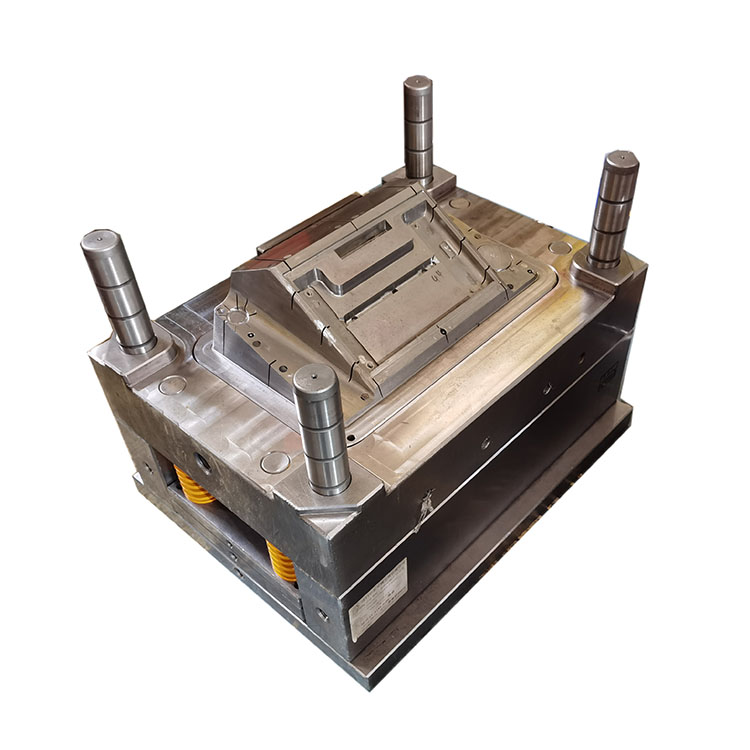
The complexity of the mold is a major cost driver. A simple two - plate mold for a basic, flat - shaped plastic part is relatively inexpensive to manufacture. It might cost anywhere from \(1,000 - \)5,000. However, if your part has intricate details, undercuts, or multiple cavities, the mold will be much more complex. A multi - cavity mold with complex geometries can cost upwards of $50,000 or even more. This is because more precision machining, specialized tooling, and additional design work are required to create a mold that can accurately replicate the part's shape.
Mold Material
The material used to make the mold also affects the cost. Aluminum molds are generally less expensive than steel molds. Aluminum molds can cost around \(2,000 - \)15,000, depending on complexity. They are suitable for low - volume production runs as they are lighter and easier to machine. Steel molds, on the other hand, are more durable and can withstand higher production volumes. But they come at a higher cost, typically starting at around $5,000 and going up significantly for complex designs. High - quality steel alloys may be used for molds that need to produce hundreds of thousands or even millions of parts, which can drive the cost even higher.
Processing Costs
Machine Size and Capacity
The size and capacity of the injection - molding machine used for your parts can impact the cost. Smaller machines with lower clamping forces are less expensive to operate. For example, a small machine with a clamping force of 50 - 100 tons might have an hourly operating cost of around \(30 - \)50. Larger machines with higher clamping forces, say 500 - 1000 tons, are needed for bigger parts or parts that require more pressure to fill the mold cavities. These larger machines can have an hourly operating cost of \(100 - \)200 or more. This is because they consume more energy, require more maintenance, and are generally more expensive to purchase and install.

Cycle Time
The cycle time, which is the time it takes to complete one injection - molding cycle (from injecting the plastic into the mold, cooling, and ejecting the part), affects the processing cost. Shorter cycle times mean more parts can be produced in an hour, reducing the cost per part. For simple parts, the cycle time might be as short as 10 - 20 seconds. But for more complex parts with thick walls or parts made from materials that require longer cooling times, the cycle time could be 60 seconds or more. If the hourly rate of the machine is \(50, and the cycle time is 10 seconds, you can produce 360 parts per hour, and the cost per part for machine time is approximately \)0.14. However, if the cycle time is 60 seconds, you can only produce 60 parts per hour, and the cost per part for machine time jumps to $0.83.
In conclusion, the cost of injection molding can vary widely depending on factors such as material, tooling, and processing. By understanding these components, you can make more informed decisions to optimize the cost - effectiveness of your injection - molding project.
How to Make Injection Molds: A Comprehensive Guide
how does injection molding work?
Related Article

Fast sampling is the fastest way to win business in the hardware machining and plastic mold industries. Customers want a working sample in days, and a 3D printer delivers it, but only when you know how to print in 3d correctly.
how to print in 3d

Fast sampling is the fastest way to win business in the hardware machining and plastic mold industries. Customers often send an STL file and expect a working sample in days.
how to print an stl file

