WHY DO WE NEED 5G?
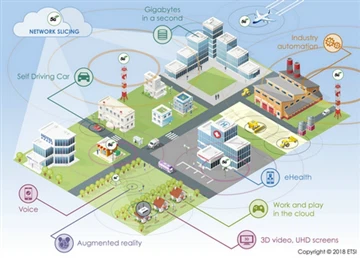
The majority of the increase in mobile data usage is due to video streaming.
Each user has an increasing number of connections as they use numerous devices.
Networks will need to support billions more gadgets as a result of the Internet of Things.
Mobile devices and networks both need to become more energy efficient due to the rising number of mobile devices and the rise in data traffic.
Because consumers have grown accustomed to flat rate tariffs and don't want to pay more, network operators are under pressure to cut running costs.
The mobile communication technology can offer up new use cases, new applications, and new income streams for the industry (such as for ultra-low latency or high reliability cases).
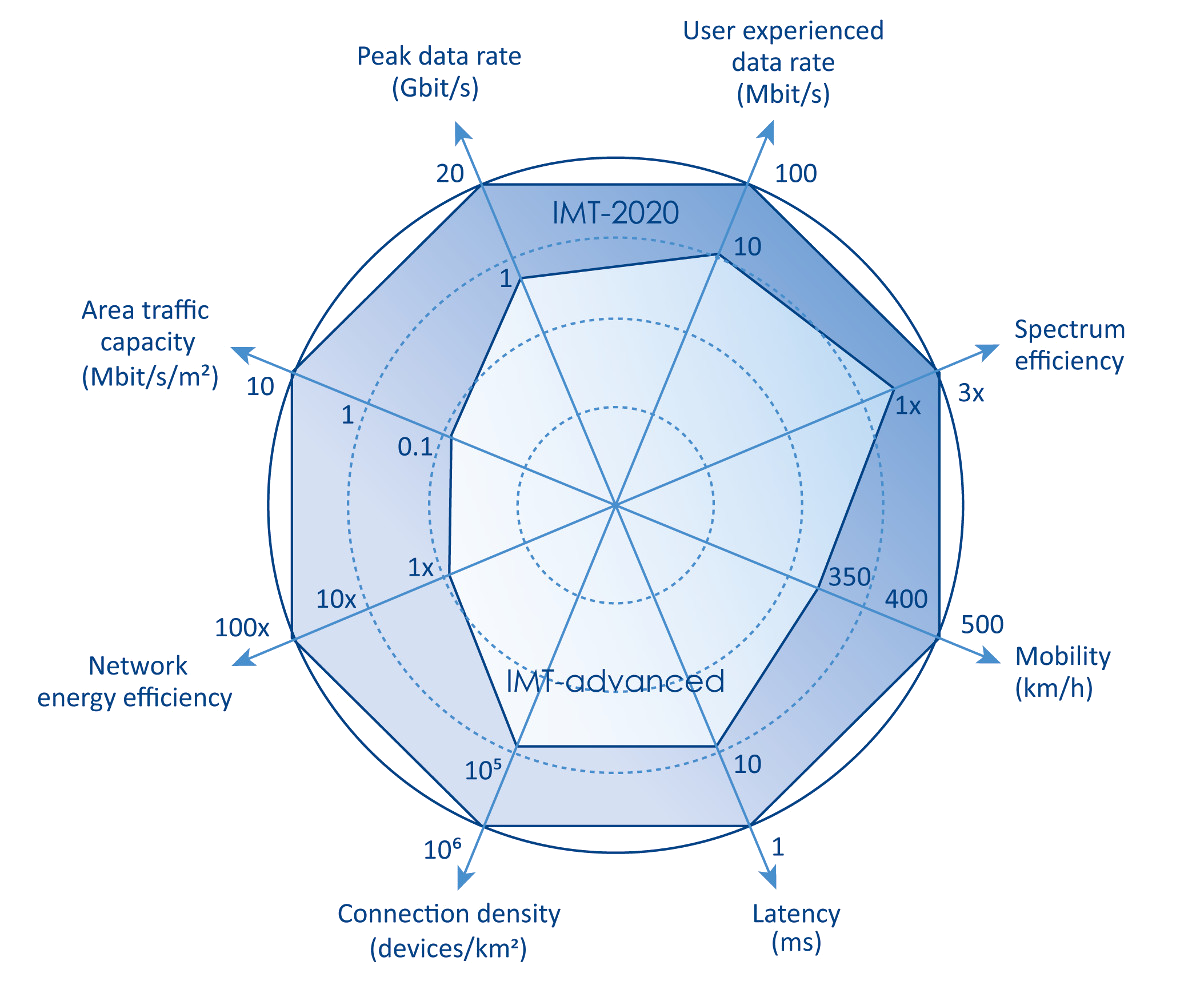
Therefore, 5G should provide both an improved user experience and greatly improved operational performance (e.g., increased spectral efficiency, higher data rates, and low latency) (near to fixed network but offering full mobility and coverage). While maintaining acceptable levels of energy consumption, equipment expense, and network implementation and operation costs, 5G must support the widespread deployment of the Internet of Things. It must be able to support a broad range of services and applications.
According to ITU-R M.2083, the following important capabilities of IMT-Advanced (4th generation) and IMT-2020 (5th generation) are compared:
WHO IS ATTRACTION TO 5G USE?
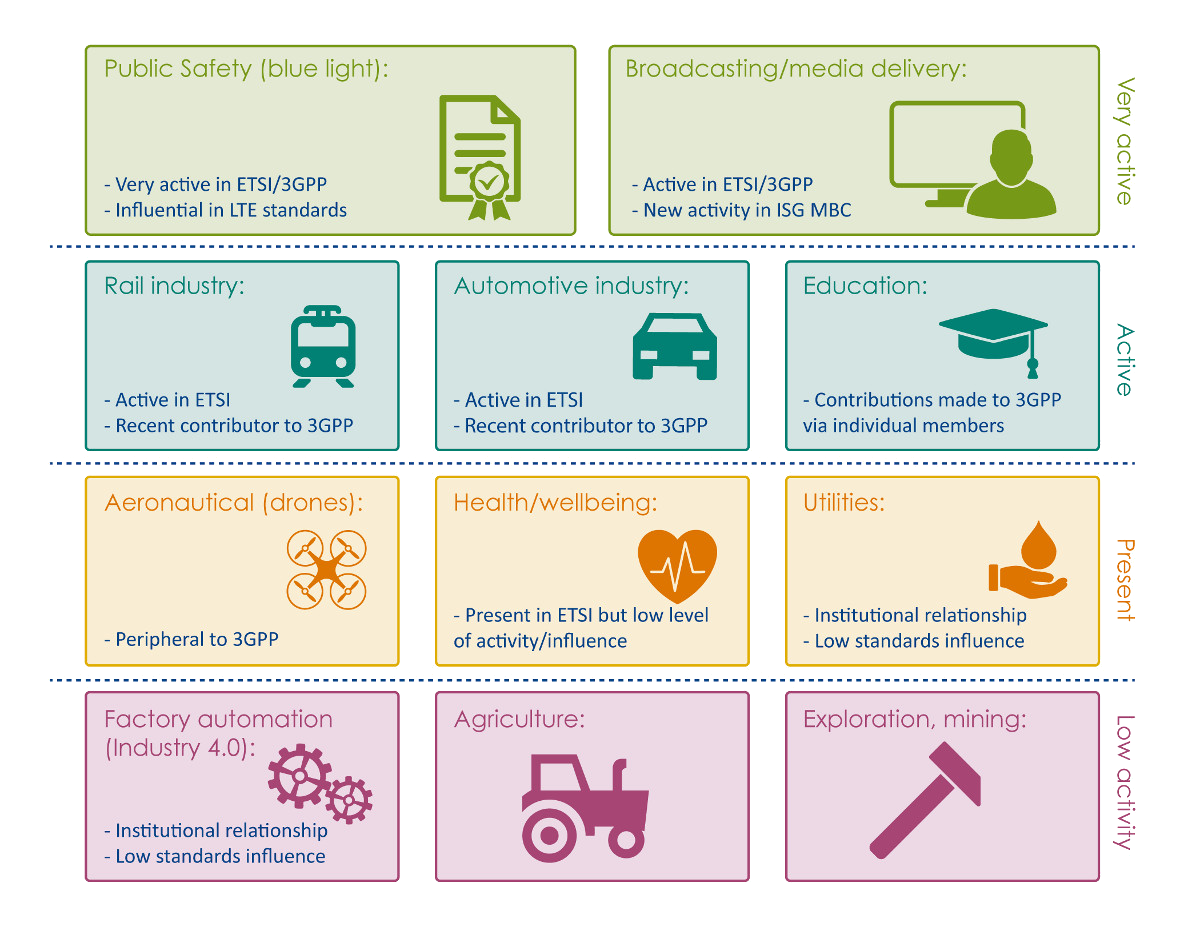
Network operators have the opportunity to provide new services to new user groups thanks to 5G.
WHERE DOES THE 5G STANDARD COME FROM?
In order to define the next generation of mobile communication networks for 2020 and beyond, ITU-R has established a project named IMT-2020 with the following timetable:
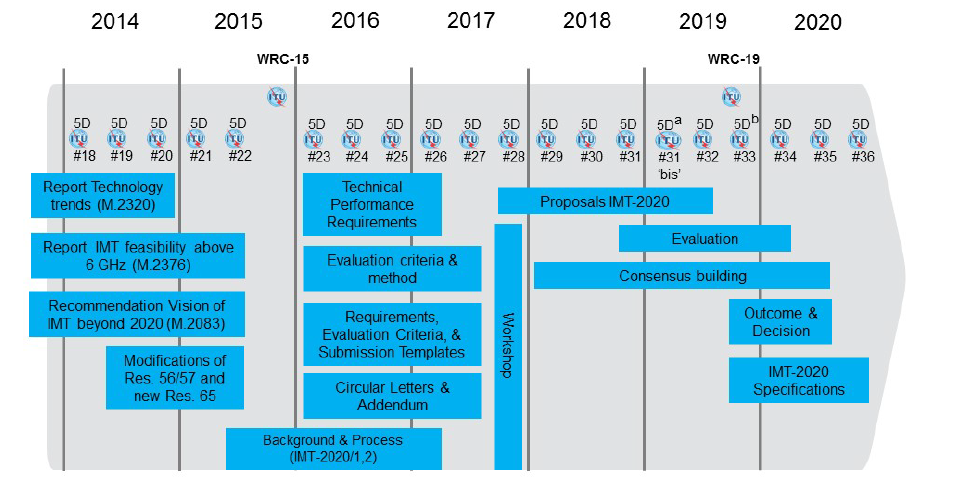
See also the IMT-2020 schedule and process.
At TSG #67 in March 2015, 3GPP formulated with SP-150149 a 3GPP timeline on how to contribute to the 5th generation of mobile networks.
In connection with RAN #69 in Sep. 2015, 3GPP held a workshop in Phoenix, USA in order to inform 3GPP about the ITU-R IMT-2020 plans and to share the visions and priorities of the involved companies concerning the next generation radio technology /ies.
The chair's summary (RWS-150073) formulated 3 next steps:
preparation of channel modeling for high frequencies
a study to develop scenarios and requirements for next generation radio technology
a study for RAN WGs to assess technology solutions for next generation radio technology
At RAN #69 in Sep.15, 3GPP started a Rel-14 study item (FS_6GHz_CH_model, RP-160210) “Study on channel model for frequency spectrum above 6 GHz”. This study completed at RAN #72 in June 2016 with the 3GPP TR 38.900.
Note 1: LTE-Advanced was so far aggregating spectra of up to 100MHz and was so far operating in bands below 6GHz. This study looks at the frequency range 6-100GHz and bandwidths below 2GHz.
Note 2: The whole contents of this TR was later transferred into 3GPP TR 38.901 "Study on channel model for frequencies from 0.5 to 100 GHz" covering the whole frequency range.
At RAN #70 in Dec. 2015, 3GPP started already a Rel-14 study item (FS_NG_SReq, RP-160811) "Study on Scenarios and Requirements for Next Generation Access Technologies" with the goal to identify the typical deployment scenarios (associated with attributes such as carrier frequency, inter-site distance, user density, maximum mobility speed, etc.) and to develop specific requirements for them for the next generation access technologies (taking into account what is required for IMT-2020).
2016 with the 3GPP TR 38.913 which describes scenarios, key performance requirements as well as requirements for architecture, migration, supplemental services, operation and testing.
In March 2016, ITU-R invited for candidate radio interface technologies for IMT-2020 in a Circular Letter. The overall objectives of IMT-2020 were set via ITU-R M.2083 and the requirements were provided in ITU-R M.2410 like e.g.:
The minimum requirements are:
For peak data rate: Downlink: 20Gbit/s, Uplink: 10Gbit/s
for peak spectral efficiencies: Downlink: 30 bit/s/Hz, Uplink: 15 bit/s/Hz
User plane latency (single user, small packets): 4ms for eMBB, 1ms for URLLC
control plane latency (idle => active): 10-20ms
Other requirements:
Maximum aggregated system bandwidth: at least 100MHz, up to 1GHz in higher frequency bands (above 6GHz)
mobility: up to 500km/h in rural eMBB
At RAN #71 in March 2016, 3GPP started a Rel-14 study item (FS_NR_newRAT, RP-170379) "Study on New Radio (NR) Access Technology" with the goal to identify and develop the technology components to meet the wide range of use cases (including enhanced mobile broadband, massive MTC, critical MTC) and the additional requirements defined in 3GPP TR 38.913. This study completed at RAN #75 in March 17 with the Rel-14 3GPP TR 38.912 which is a collection of features for new radio access technologies together with the studies of their feasibility and their capabilities.
Note: Included in this study item were also some RAN Working Group(WG) specific 3GPP internal TRs: 38.802 (RAN1), 38.804 (RAN4), 38.801 (RAN3), 38.803 (RAN4).
At RAN #75 in March 17, 3GPP started a Rel-15 work item (NR_newRAT, RP-181726) on "New Radio Access Technology". Over time this WI got split into 3 phases addressing different network operator demands:
“early Rel-15 drop”: focus on architecture option 3, also called non-standalone NR (NSA NR) which could be considered as the first migration step of adding NR base stations (called gNB) to an LTE-Advanced system of LTE base stations (eNB) and an evolved packet core network (EPC) i.e. in this option no 5G core network (5GC) is involved; functional freeze: Dec.17, ASN.1 freeze in March 18
"regular Rel-15 freeze": focus on the standalone NR architecture option 2 which would be a network of NR base stations (gNB) connected to the 5G core network (5GC) without any LTE involvement; 1 freeze in Sep.18;
Note: Originally all other architecture options were assumed to be completed in this regular freeze phase as well. However, due to the extremely challenging time plan apart from option 2 only architecture option 5 (an LTE base station can be connected to a 5GC) was completed in this phase as well.
“late Rel-15 drop”: architecture option 4 (this would be like adding an LTE base station to an SA NR network where the control plane is handled via the NR base station) and architecture option 7 (this would be like adding an LTE base station to an SA NR network where the control plane is handled via the LTE base station) plus NR-NR Dual Connectivity; functional freeze: Dec.18; ASN.1 freeze in March 19;
note
1: Illustrations of the different architecture options can be found in 3GPP TR 38.801 (with the caveat that the terminology was not yet stable during this study phase).
Note 2: Rel-15 is distinguishing 2 frequency ranges: FR1: 450 MHz – 6000 MHz and FR2: 24250 MHz – 52600 MHz; while LTE is operating only in FR1, NR can operate in FR1 and FR2; that's why FR1 is considered for NSA NR and FR2 are considered for SA NR.
As LTE-Advanced can fulfill parts of the IMT-2020 requirements for certain use cases the 3GPP input (called "5G") to IMT-2020 has 2 submissions:
SRIT (set of radio interface technologies): component RIT NR + component RIT E-UTRA/LTE (incl. standalone LTE, NB-IoT, eMTC, and LTE-NR Dual Connectivity)
RIT (radio interface technology) NR
Note: The terms RIT and SRIT are discussed and explained in RP-171584.
WHEN WAS THE 5G STANDARD READY?
Splitting Rel-15 into multiple drops turned out to be very challenging, e.g.
NSA NR had still non-backward compatible Change Requests in Sep.18
inserting ASN.1 into an already frozen specification requires very high quality change requests which is difficult under high time pressure
WGs that require stable pre-work from other WGs (like RAN4 for RF/RRM and RAN5 for Testing) are working on instable grounds and struggle even more to stay in the time plan
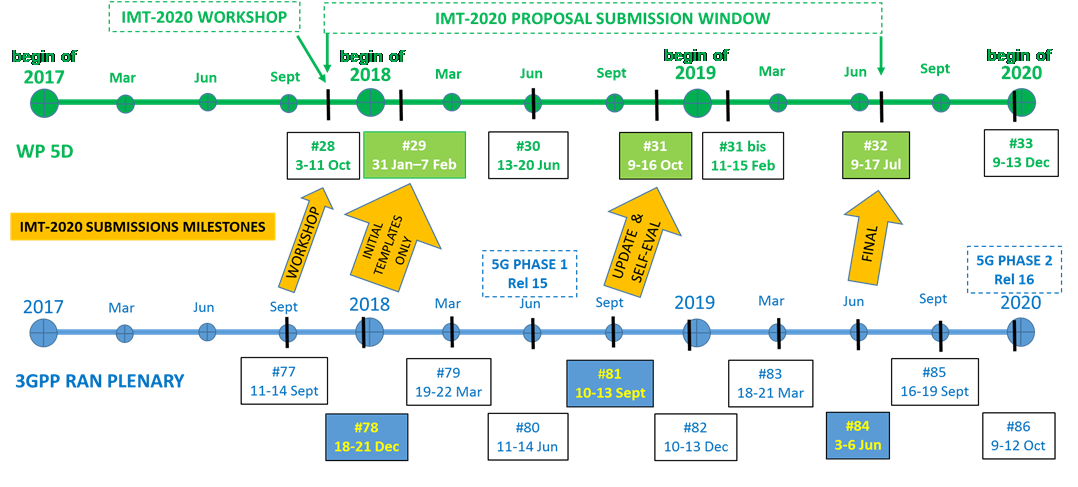
Nevertheless, 3GPP contributed in time to the IMT-2020 schedule shown below:
in Jan. 2018 via PCG40_11 with initial characteristics of the NR RIT and NR+LTE SRIT
in Sep./Oct.2018 via PCG41_08 with the characteristics of the NR RIT and NR+LTE SRIT, the preliminary self-evaluation and link budget results and the compliance templates
in June 2019 via PCG43_07 with the 3GPP 5G candidate submissions of NR RIT and NR+LTE SRIT including characteristics, compliance and link budget templates and the 3GPP self evaluation TR 37.910 (this submission includes further Rel-16 enhancements of IMT steps 3) to the -2020 process
Note: The characteristics templates give a good overview about the considered technology.
in June 2020 the final overviews of the 3GPP specifications via PCG45_07 for NR+LTE SRIT and PCG45_08 for NR RIT and in July 2020 the final specification sets of 2020-06 (Release 15 & 16) for the transposition of the 3GPP OPs
FURTHER 5G ENHANCEMENTS
Rel-16 considered e.g. the following NR enhancements:
eNB(s) Architecture Evolution for E-UTRAN and NG-RAN
Enhancements on MIMO for NR
NR positioning support
5G V2X with NR sidelink
Cross Link Interference handling and Remote Interference Management for NR
NR-based access to unlicensed spectrum
2-step RACH for NR
L1 enhancements for NR Ultra-Reliable and Low Latency Communication (URLLC)
UE Power Saving in NR
NR mobility enhancements
Multi-RAT Dual-Connectivity and Carrier Aggregation enhancements (LTE, NR)
Integrated access and backhaul for NR
Single Radio Voice Call Continuity from 5G to 3G
Optimisations on UE radio capability signalling – NR/E-UTRA Aspects
Support of NR Industrial Internet of Things (IoT)
Private Network Support for NG-RAN
NG interface usage for Wireless Wireline Convergence
RF requirements for NR frequency range 1 (FR1)
Add support of NR DL 256QAM for frequency range 2 (FR2)
NR RF requirement enhancements for frequency range 2 (FR2)
Self-Organising Networks and Minimization of Drive Tests support for NR
NR support for high speed train scenario
RRM requirement for CSI-RS based L3 measurement in NR
NR RRM enhancement
Transfer of Iuant interface specifications from 25-series to 37-series
Direct data forwarding between NG-RAN & E-UTRAN nodes for inter-system mobility
Introduction of capability set(s) to the multi-standard radio specifications
The Rel-16 stage 3 and ASN.1 freeze was carried out in June 2020.
Rel-17 considered e.g. the following NR enhancements:
Further enhancements on MIMO for NR
NR Sidelink enhancement
NR Dynamic spectrum sharing (DSS)
Enhanced Industrial Internet of Things (IoT) and ultra-reliable and low latency communication (URLLC) support for NR
Solutions for NR to support non-terrestrial networks (NTN)
UE power saving enhancements for NR
NR multicast and broadcast services
Enhancements to Integrated Access and Backhaul (IAB) for NR
NR small data transmissions in INACTIVE state
Multiple Input Multiple Output (MIMO) Over-the-Air (OTA) requirements for NR UEs
Enhancement of Private Network support for NG-RAN
Introduction of DL 1024QAM for NR FR1
Enhanced NR support for high speed train scenario for frequency range 1 (FR1)
NR support for high speed train scenario in frequency range 2 (FR2)
Further enhancements of NR RF requirements for frequency range 2 (FR2)
RF requirements enhancement for NR frequency range 1 (FR1)
NR positioning enhancements
NR coverage enhancements
Support of reduced capability NR devices
NR repeaters
Introduction of bandwidth combination set 4 (BCS4) for NR
NR Sidelink Relay
NR Uplink Data Compression (UDC)
Enhancement of RAN slicing for NR
NR QoE management and optimizations for diverse services
Introduction of UE TRP (Total Radiated Power) and TRS (Total Radiated Sensitivity) requirements and test methodologies for FR1 (NR SA and EN-DC)
Introduction of UE high power classes (1.5 and 2) for various bands and Carrier Aggregation combinations
Introduction of various new bands and Carrier Aggregation/Dual Connectivity band combinations
Although most RAN1/2/3 led Rel-18 features were already approved in December 21 and further RAN4 led Rel-18 were approved in March 22, the WGs will focus on the Rel-17 completion and start Rel-18 work in RAN1 only after March 22 and in RAN2/3/4 only after June 22.
The Rel-18 stage 3 freeze is planned for December 23 and a corresponding Rel-18 ASN.1 freeze is intended for March 24.
Like with GERAN, UMTS and LTE in the past, 5G will be further evolved in the future to address the industry and customer demands.
WHERE TO FIND THE CORRESPONDING 5G SPECIFICATIONS?
A list of all 5G related specs (incl. core network and system aspects) is provided in 3GPP TR 21.205 or use this URL on the 3GPP website.
Radio related specifications addressing only NR: 38 series specifications.
Radio related specifications addressing only LTE: 36 series specifications.
Radio related specifications addressing aspects affecting both LTE and NR: 37 series specifications.
Service requirements for next generation new services and markets: 3GPP TS 22.261.
System Architecture for the 5G system (stage 2): 3GPP TS 23.501.
Procedures for the 5G System (stage 2): 3GPP TS 23.502.
NR; NR and NG-RAN Overall Description (stage 2): 3GPP TS 38.300.
NR; Multi-connectivity; Overall description (stage 2): 3GPP TS 37.340.
NG-RAN; Architecture description: 3GPP TS 38.401.
ETSI'S 5G BUILDING BLOCKS
ETSI has a number of component technologies which will be integrated into future 5G systems: Network Functions Virtualization (NFV), Multi-access Edge Computing (MEC), Millimetre Wave Transmission (mWT) and Non-IP Networking (NIN).
Related Committees
3GPPBROADCASTMSGRelated News
ETSI releases first O-RAN specificationProfessor Liu Jing's Team At Wuhan University Of Science And Technology: The Effect Of Wire Arc Additive Manufacturing On The Fatigue Behavior Of Ta15 Titanium Alloy
Mastering the Injection Moulding Process Step by Step
Related Article