
Who Invented 3D Printers and Their Industrial Sampling Value
Author: SZTC
2026-09-04


Samuel Song Your service representative
Specializing in zinc-aluminum-magnesium alloy die-casting processing, CNC milling, CNC turning, 3D printing, injection molding and sheet metal processing. Manufacturing services.
-----------------------------------------------------------------------------------------------------------------------------------------------------------------------------------------------------------------------------------------------------------------------------------------------------------------------------------------------
3D printing has become an indispensable solution for fast sample production in plastic mold and hardware processing industries. Many factory engineers and technicians often ask who invented 3D printers to understand the technical origins of modern rapid prototyping. The invention of 3D printers stems from early theoretical exploration and formal industrial technological breakthroughs.

1. Early Theoretical Exploration of 3D Printing
To fully answer who invented 3D printers, we must first mention the earliest technical pioneer.
1.1 Hideo Kodama’s Foundational Research
In 1981, Japanese researcher Hideo Kodama proposed the core principle of layered photopolymer curing and developed the first original additive manufacturing prototype. His research proved that digital models could be converted into solid objects layer by layer, laying the theoretical foundation for modern 3D printing technology.
1.2 Limitations of Early Prototypes
Although Kodama created the initial prototype, he failed to complete formal patent commercialization. His equipment only stayed in laboratory stages and could not meet the precision and stability requirements for industrial mold and hardware sample production.
2. Official Inventor of Modern 3D Printers
The universally recognized answer to who invented 3D printers is American engineer Chuck Hull, the father of commercial 3D printing.
2.1 Core Technological Breakthrough
In 1983, Chuck Hull officially invented Stereolithography (SLA), the first complete and practical 3D printing technology. He utilized UV lasers to cure liquid resin layer by layer, realizing stable conversion from digital designs to high-precision physical parts.
2.2 Patent and Industrial Commercialization
Hull applied for a formal U.S. patent in 1984 and founded 3D Systems in 1986. The launch of the first commercial SLA printer officially brought 3D printing from laboratory research into global industrial manufacturing fields.

3. Industrial Influence on Mold and Hardware Industry
Understanding who invented 3D printers helps manufacturers recognize the value of rapid sampling technology.
3.1 Continuous Technological Iteration
Based on Hull’s original invention, 3D printing has expanded into FDM, SLS and metal printing processes. Diversified printing technologies now support various materials for different industrial sampling scenarios.
3.2 Empower Efficient Rapid Prototyping
Modern 3D printing greatly shortens the R&D cycle of plastic mold cavities and custom hardware prototypes. It reduces trial production costs and avoids repeated mold modifications, greatly improving the market response speed of processing enterprises.
In conclusion, Chuck Hull officially invented modern commercial 3D printers based on early theoretical research. Knowing who invented 3D printers allows the mold and hardware industry to better apply additive manufacturing for efficient and low-cost rapid sample production.
Who Created 3D Printing for Modern Industrial Rapid Sampling
Who Created the 3D Printer and Its Industrial Prototyping Value
Related Article

Fast sampling is the fastest way to win business in the hardware machining and plastic mold industries. Customers want a working sample in days, and a 3D printer delivers it, but only if the files you make are correct. Knowing how to make your own 3D print files turns a rough idea into a clean, accurate sample on the first attempt, without depending on anyone else's design.
how to make your own 3d print files

Fast sampling is the fastest way to win business in the hardware machining and plastic mold industries, and a 3D printer is also a business opportunity in its own right. Knowing how to make money 3D printing turns a useful tool into a dependable revenue stream that supports your shop.
how to make money 3d printing
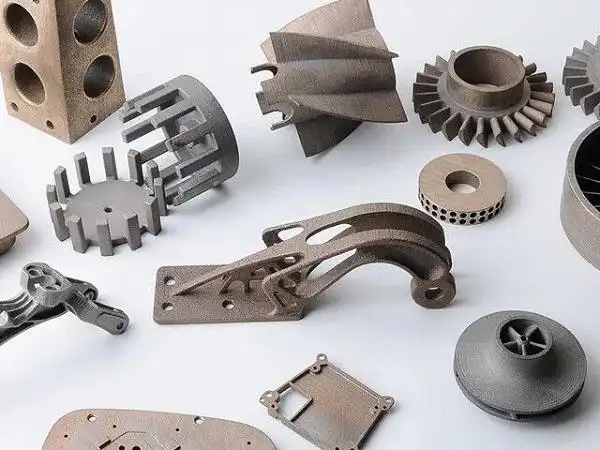
Fast sampling is the fastest way to win business in the hardware machining and plastic mold industries. Customers want a working sample in days, and a 3D printer delivers it, but only if the files that feed the printer are made correctly.
how to make files for 3d printing
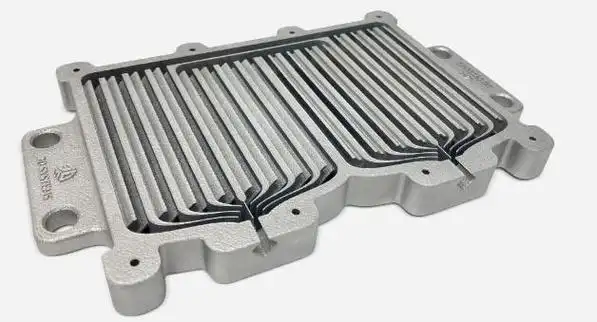
Fast sampling is the fastest way to win business in the hardware machining and plastic mold industries. Customers want a working sample in days, and a 3D printer delivers it. But what if your shop could grow its printing capacity without buying another machine?
how to make a 3d printer with a 3d printer