
What Is 3D Printing? A Guide for Hardware Processing & Plastic Mold Industries
Author: SZTC
2026-03-13


Samuel Song Your service representative
Specializing in zinc-aluminum-magnesium alloy die-casting processing, CNC milling, CNC turning, 3D printing, injection molding and sheet metal processing. Manufacturing services.
-----------------------------------------------------------------------------------------------------------------------------------------------------------------------------------------------------------------------------------------------------------------------------------------------------------------------------------------------
For professionals in the hardware processing and plastic mold industries, 3D printing is no longer a distant technology—it’s a game-changer that streamlines production, reduces costs, and unlocks new possibilities. If you’ve ever wondered how this technology integrates with your daily operations, or exactly what 3D printing is and how it benefits your industry, this blog is for you. We’ll break down the basics of 3D printing, its core process, and its practical applications in hardware processing and plastic mold manufacturing, all structured with clear three-level headings.
1. What Is 3D Printing, Exactly? (Industry-Focused Definition)
1.1 The Basic Concept for Manufacturing
3D printing, also called additive manufacturing (AM), is a revolutionary production process that creates three-dimensional solid objects from a digital design file. Unlike traditional subtractive manufacturing—used widely in hardware processing (e.g., cutting, milling metal blocks) and plastic mold making (e.g., carving mold cavities from steel)—3D printing builds objects layer by layer. It adds material (such as metal powder, engineering plastic filaments, or resin) precisely where it’s needed, rather than removing excess material. This key difference solves many pain points in hardware and mold industries, such as complex part manufacturing and high mold development costs.
1.2 A Simple Analogy for Industry Professionals
Think of 3D printing like assembling a precision mold or a custom hardware component layer by layer, instead of carving it from a single block. Just as a mold maker builds a cavity step by step to match a product’s shape, 3D printing lays down thin layers of material (as thin as 10-50 micrometers) one on top of the other, each bonding to the layer below. For example, a plastic mold’s intricate cavity or a custom hardware fastener with complex grooves can be 3D printed directly, without the need for expensive cutting tools or time-consuming manual processing.
1.3 Key Term: Additive Manufacturing in Hardware & Mold Industries
In industrial settings—especially hardware processing and plastic mold manufacturing—“additive manufacturing” is often used interchangeably with “3D printing.” This term highlights the core advantage for your industry: adding material incrementally to create complex, custom parts with minimal waste. Unlike traditional methods that generate significant scrap (e.g., milling a metal mold from a large steel block), 3D printing reduces material waste by up to 90%, making it cost-effective and environmentally friendly for both small-batch hardware production and mold prototyping.
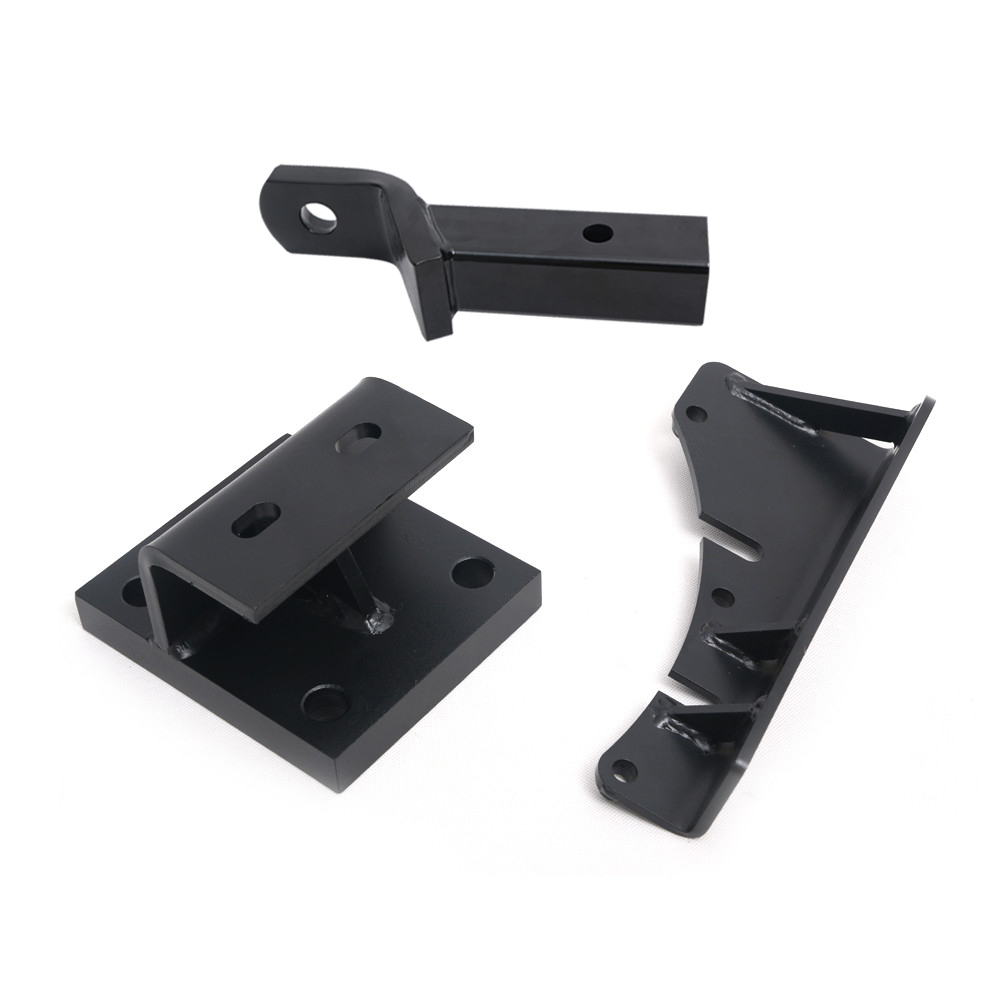
2. How Does 3D Printing Work? The Core Process for Manufacturing
2.1 Step 1: Create a Digital 3D Model (Tailored to Your Industry)
The first step in 3D printing for hardware and mold industries is designing a digital 3D model of the part or mold you need. This is done using computer-aided design (CAD) software—popular tools in your industry include SolidWorks, AutoCAD, or UG—that lets you precisely model hardware components (e.g., gears, brackets) or plastic mold parts (e.g., cavity inserts, core pins). If you don’t have in-house design capabilities, you can scan existing parts or molds to create digital models, or download industry-specific templates from online libraries. The final model is saved as an STL file, which contains all the data the 3D printer needs to build the object.
2.2 Step 2: Prepare the Model (Slicing for Industrial Precision)
Once you have your STL file, you need to “slice” it using industrial-grade slicing software (e.g., Cura, PrusaSlicer). This software breaks the 3D model into hundreds or thousands of thin horizontal layers and converts it into G-code—a set of precise instructions that tells the 3D printer how to move, how much material to extrude, and at what temperature. For hardware and mold applications, this step is critical: you can adjust layer thickness for precision (e.g., 10 micrometers for mold cavities) or speed (e.g., 50 micrometers for hardware prototypes), ensuring the final product meets your industry’s strict tolerance requirements.
2.3 Step 3: Print the Object (Industry-Specific Materials & Outputs)
With the sliced file loaded into an industrial 3D printer, the printing process begins. The printer follows the G-code instructions, laying down material layer by layer. For hardware processing, common materials include metal powders (e.g., stainless steel, aluminum) for functional components, and engineering plastics (e.g., ABS, PETG) for prototypes. For plastic mold manufacturing, resin or metal is used to print mold inserts, prototypes, or even full mold cavities. The process can take anywhere from 30 minutes (for small mold inserts) to several hours (for large hardware parts or complex molds). After printing, the object is removed from the printer bed, and any support structures (used for overhanging mold features or hardware grooves) are trimmed away, resulting in a ready-to-use part or mold component.

3. 3D Printing in Hardware Processing & Plastic Mold Industries: Uses & Benefits
3.1 Popular 3D Printing Technologies for Your Industry
Not all 3D printing technologies are suited for hardware and plastic mold applications. Below are the most widely used types in your industry, each tailored to specific needs:
-
Fused Deposition Modeling (FDM): Ideal for low-cost prototyping of hardware parts (e.g., brackets, handles) and plastic mold prototypes. It uses thermoplastic filaments (ABS, PLA) and is easy to integrate into small to medium-sized manufacturing facilities. FDM is perfect for testing design iterations before investing in expensive metal molds or hardware production.
-
Stereolithography (SLA): Used for high-precision plastic mold components (e.g., cavity inserts, mold details) and small hardware parts with intricate features. It uses liquid resin cured by UV light, producing smooth, precise surfaces that meet the strict tolerance requirements of mold manufacturing.
-
Powder Bed Fusion (SLS/SLM): The go-to technology for functional hardware parts and metal mold components. It uses a laser to fuse metal powders (stainless steel, titanium) into solid objects, creating durable, high-strength parts that can replace traditionally machined hardware or mold inserts. This is especially useful for complex mold cavities or custom hardware that’s difficult to machine.
3.2 Practical Applications in Hardware Processing & Plastic Mold Manufacturing
3D printing has transformed how hardware and mold professionals work, with applications that save time, reduce costs, and improve product quality:
-
Hardware Processing: 3D printing is used to create custom hardware components (e.g., custom fasteners, gears, brackets) for small-batch production, eliminating the need for expensive cutting tools and reducing lead times. It also allows for rapid prototyping of new hardware designs, letting you test functionality before mass production. Here are two specific application cases that reflect the practical value of 3D printing in the hardware processing industry: Case 1: Custom Electric Tool Housing Manufacturing. A hardware manufacturer specializing in electric tools adopted SLS (Selective Laser Sintering) 3D printing technology to produce nylon glass fiber housings for industrial electric tools. Compared with traditional metal housings, the 3D-printed housings achieved a 25% weight reduction, integrated mounting points and heat dissipation fins into one piece, reducing the number of parts by 40% and shortening assembly time by 50%. After application, the pass rate of drop tests for the electric tools increased by 30%, and the manufacturer could quickly realize customized production of multiple models, greatly enhancing its market responsiveness. Case 2: Rapid Iteration of Equipment Maintenance Parts. A hardware processing factory encountered frequent jamming problems when debugging new packaging equipment, which was caused by unreasonable structural design of the paper folding component. According to the conventional process, optimizing and processing this component would take 2-3 weeks, which seriously affected the equipment debugging progress. The factory used FDM 3D printing technology, adopted PLA material to redesign the component with a streamlined arc structure (replacing the original folded angle path) to reduce conveying resistance, and completed two design iterations in one afternoon to determine the optimal size. The trial production cost of a single component was controlled within 0.5 yuan, and the development cycle was shortened by 90%, successfully solving the equipment jamming problem. For example, a hardware manufacturer can 3D print a prototype gear in a day, instead of waiting weeks for a machined sample.
-
Plastic Mold Manufacturing: 3D printing revolutionizes mold development by enabling rapid prototyping of mold inserts, cavity cores, and even full molds. This reduces mold development time from weeks to days—for instance, a plastic mold insert that would take 5-7 days to machine can be 3D printed in 24 hours. It also allows for complex mold designs (e.g., internal channels, undercuts) that are impossible with traditional machining, improving the quality of plastic parts and reducing mold maintenance costs.
In summary, 3D printing is more than just a “new technology”—it’s a practical tool that empowers hardware processing and plastic mold industries to be more efficient, innovative, and cost-effective. By understanding what 3D printing is and how it integrates with your operations, you can stay ahead of the competition and unlock new possibilities for your business.
A 3D Printed Future: Transforming Hardware Processing & Plastic Mold Industries
How to Metal Bend: Mastering the Subtle Art of Precision
Related Article

Fast sampling is the fastest way to win business in the hardware machining and plastic mold industries. Customers want a working sample in days, and a 3D printer delivers it, but only when you know how to print in 3d correctly.
how to print in 3d

Fast sampling is the fastest way to win business in the hardware machining and plastic mold industries. Customers often send an STL file and expect a working sample in days.
how to print an stl file

