Lightweight and Strong? New Material is 5% as Dense as Steel but 10 Times Stronger
2023-06-12

A research team at the Massachusetts Institute of Technology (MIT) has investigated one of the strongest lightweight materials yet with a multi-material 3D printer. By compressing and melting graphene sheets, they created a material that is 5 percent as dense as steel and 10 times stronger.
picture
By compressing the graphene sheets with heat and pressure, the researchers ended up with a structure that was strong and stable, a bit like coral. Immediately, the scientists discovered that it was this unusual, coral-like shape that made the compressed graphene so strong, rather than the properties of the material itself. So by replicating this 3D form on other cheaper materials like plastic, scientists can achieve graphene-like strength at a lower cost.
picture
When compressing the graphene structure to the limit, the researchers found they had an incredibly strong material that was 5 percent as dense as steel but 10 times stronger. By analyzing the geometric arrangement of compressed graphene sheets, the researchers were able to partially reproduce the strongest material with a 3D printer.
picture
Graphene has such excellent properties, will it replace steel?
Graphene heat is on the rise
The topic of graphene has been heating up since Dr. Constantine isolated graphene from graphite by adhesive tape in 2004.
In recent years, the overwhelming reports of various media have finally pushed graphene to the forefront of the topic-medical, real estate, automobile, computer, biological and other industries are all related to this. For a while, graphene has almost become synonymous with cutting-edge technology. It seems that if graphene is not included in external publicity, it is not considered a high-tech industry. Why is graphene so popular? Will it really become the fourth largest material for human beings after "coal, steel, and silicon"? Let reality develop to give us the answer.
The first material to consist of a single layer of atoms
The carbon atoms are connected to each other in a hexagonal grid. The graphite used in pencils is equivalent to countless layers of graphene stacked together, and carbon nanotubes are graphene rolled into a cylinder.
picture
Due to the nature of the chemical bonds between carbon atoms, graphene is tenacious: it can be bent to large angles without breaking, and it can resist very high pressures. And because there is only one layer of atoms, the movement of electrons is confined to one plane, which brings it completely new electrical properties. Graphene is transparent under visible light, but not gas-impermeable. These characteristics make it suitable as a raw material for protective layers and transparent electronics.
The emergence of graphene is no less than a small energy revolution
Graphene's special physical structure brings it excellent electrical and thermal conductivity, so it is also the material with the smallest resistivity in the world. Therefore, the energy density of batteries made of graphene will be as high as 600Wh/kg, while the current most advanced lithium batteries are only 180Wh/kg. Public account: Mechanical Knowledge Network, sharing knowledge and spreading value.
For example, a graphene battery can be charged for 5 minutes and talk for 24 hours.
Coupled with the fact that graphene batteries are one-eighth the weight and twice the lifespan of traditional lithium batteries, imagine the bottlenecks in the development of industries such as mobile phones and electric vehicles today...
In the most anticipated field in the future - the field of bioengineering, graphene may be a human superstar.
Boise State University in the United States published an article "Graphene Foam Provides a Three-dimensional Platform for Myotube Growth", which studied the application of graphene foam in muscle tissue. The results indicate that graphene foam is suitable as a scaffold material for growing functional muscle tissue. Graphene itself is a thin carbon layer, so it is considered as a two-dimensional planar material, while graphene foam is 3D graphene made from graphene.
Ultimately, the researchers used the unique properties of graphene and graphene foams to regenerate human organs. Past research has demonstrated that it is possible to grow bone and cartilage on graphene foam, but this is only the first step in the study of graphene foam's compatibility with muscle growth.
Estrada, an assistant professor in the School of Materials Science and Engineering at Boise State University, said: "We hope to use these results to investigate the basic chemical changes of life to advance to clinical applications." In the future, through the new material of graphene foam, It may become a switch to control muscles, similar to the nerves that control muscles, and it may not be a dream to bring benefits to the disabled.
picture
Light is one of the most mysterious things, and for a new way of producing light, everyone will bow down.
Researchers at the Massachusetts Institute of Technology in the United States have discovered a process similar to the sonic boom produced when an airplane exceeds the speed of sound: Charge flowing through graphene can, under certain circumstances, exceed the slowed speed of light, forming a light "boom", a An intensely focused beam of light.
This new way of converting electrical energy into visible radiation is highly controllable, fast and efficient. This approach could lead to a variety of new applications, the researchers say.
"Graphene traps light through what we call surface plasmons. Plasmons are virtual particles that represent the oscillations of electrons on the surface. These plasmons travel through graphene faster than the speed of light in free space," the researchers said. Hundreds of times slower." This property also opens up the possibility of graphene having the opposite effect: forming light instead of trapping it.
Many scientific studies have shown us the amazing properties of graphene, but there is a catch.
These wonderful properties place very high demands on sample quality. In order to obtain graphene samples with the best electrical and mechanical properties, a time-consuming, labor-intensive, and expensive method is required: the mechanical peeling method-first stick the graphite to the graphite with tape, and then peel the graphene off by hand.
Don't laugh, Novoselov and the others prepared graphene in this way in 2004.
Although the technical content is not high, the problem is that the success rate is not high. It is okay to get some samples for research, industrial production? Even if you have graphite mines all over the world, you can peel off a few pieces a day...
Can it only be glued over and over again with tape? Of course, now we also have many other ways to increase production and reduce costs.
Liquid phase exfoliation method: Put graphite or similar carbon-containing materials into a liquid with super high surface tension, and then ultrasonic bombing to blow off graphene "snowflakes".
Chemical vapor deposition method: let the carbon-containing gas condense on the copper surface, and then peel off the thin layer of graphene formed.
Direct growth method: directly try to grow a layer of graphene between two layers of silicon.
There is also a chemical oxidation-reduction method: the graphite sheets are separated by the insertion of oxygen atoms, and so on.
The trouble is that, using these methods, product quality cannot be guaranteed. It can be said that there are many methods, and each has its own scope of application, but so far there is no technology that is really suitable for industrialized large-scale production.
Graphene's "foaming" worries
In the past few years, graphene has developed rapidly in China, and people are amazed at the rapid development of the graphene industry and the good product performance. But behind these "auras" and surprises, people can't help but question. The graphene industry is currently a leading field, and has not really formed its own industry, and there are still certain difficulties and problems behind its development.
The current "booming" phenomenon of the graphene industry also reveals the excessive hype of capital. The concept of graphene has been hyped too much, and some news lacks objectivity, which has led to misunderstandings in the understanding of graphene by relevant departments or enterprises, creating an atmosphere that seems to be very simple, "short, flat and quick" to get rich overnight. Even some people still don't know the difference between graphene and graphite.
There is no doubt that graphene will play a huge role in the future. The future is bright, but the road still needs to be walked step by step. Especially in this era full of quick success and instant profit, bubbles are everywhere.
After several years of development, my country's graphene industry has basically formed an industrial structure with Jiangsu Province as the aggregation area and fragmented existence in many other places. According to statistics, my country's graphite ore reserves account for 75% of the world's total reserves, and its production accounts for 72% of the world's total output. It is one of the few minerals in my country with international competitive advantages. my country has achieved certain research results in the fields of graphene preparation, mobile phone touch screens, lithium-ion batteries, and composite materials, and is at the international advanced level in some fields.
At present, the development level of some leading graphene enterprises in my country ranks among the top in the world. For a long time, graphene, known as "black gold", has been mainly produced in small batches in gram units in laboratories, and the price per gram is as high as 5,000 yuan. In 2013, Changzhou Sixth Element Materials Technology Co., Ltd. developed the first large-scale macro-preparation and fully automatic control powder graphene production line in China, with an annual production capacity of 100 tons, resulting in a drop in the price of graphene to 13 yuan per gram. Large-scale industrial application of graphene becomes possible.
While the bright spots of industrial development are emerging frequently, some quick success and instant benefits are worthy of vigilance. At present, the international encourages the development of the new material industry, and graphene has become its strong support. Coupled with its huge commercial value, the high investment enthusiasm of government and enterprises has led to a large amount of capital flowing into the graphene field. The industry scale is rapidly expanding, and the tendency of "bubble" is beginning to appear. In addition to Jiangsu, Chongqing, Ningbo, Qingdao, Deyang, Hebei, Beijing and other places are also deploying graphene industry. Chongqing listed graphene as one of the top ten strategic emerging industries, and Ningbo released the "Ningbo City Graphene Technology Innovation and Industry Medium and Long-term Development Plan (2014-2023)", aiming to build the graphene industry into a 100-billion-dollar industry within 10 years. Advantages and characteristic industries with high-level output value scale? According to the "Economic Information Daily" report, in terms of capacity reduction, in addition to the coal and steel industry, other industries with backward production capacity will also enter the list of capacity reduction, including backward industries such as automobiles, new energy, and graphene. Production capacity may be listed.
Some experts believe that the current graphene craze is exactly the same as the shipbuilding and photovoltaic investment impulses of the year, reflecting the deep-rooted speculation of enterprises and governments. A person in charge of a graphene company even bluntly said that this is of course the blindness of entrepreneurs, but it is more of the GDP impulse of the local government, and the risk of "bubble" behind it cannot be underestimated.
picture
By compressing the graphene sheets with heat and pressure, the researchers ended up with a structure that was strong and stable, a bit like coral. Immediately, the scientists discovered that it was this unusual, coral-like shape that made the compressed graphene so strong, rather than the properties of the material itself. So by replicating this 3D form on other cheaper materials like plastic, scientists can achieve graphene-like strength at a lower cost.
picture
When compressing the graphene structure to the limit, the researchers found they had an incredibly strong material that was 5 percent as dense as steel but 10 times stronger. By analyzing the geometric arrangement of compressed graphene sheets, the researchers were able to partially reproduce the strongest material with a 3D printer.
picture
Graphene has such excellent properties, will it replace steel?
Graphene heat is on the rise
The topic of graphene has been heating up since Dr. Constantine isolated graphene from graphite by adhesive tape in 2004.
In recent years, the overwhelming reports of various media have finally pushed graphene to the forefront of the topic-medical, real estate, automobile, computer, biological and other industries are all related to this. For a while, graphene has almost become synonymous with cutting-edge technology. It seems that if graphene is not included in external publicity, it is not considered a high-tech industry. Why is graphene so popular? Will it really become the fourth largest material for human beings after "coal, steel, and silicon"? Let reality develop to give us the answer.
The first material to consist of a single layer of atoms
The carbon atoms are connected to each other in a hexagonal grid. The graphite used in pencils is equivalent to countless layers of graphene stacked together, and carbon nanotubes are graphene rolled into a cylinder.
picture
Due to the nature of the chemical bonds between carbon atoms, graphene is tenacious: it can be bent to large angles without breaking, and it can resist very high pressures. And because there is only one layer of atoms, the movement of electrons is confined to one plane, which brings it completely new electrical properties. Graphene is transparent under visible light, but not gas-impermeable. These characteristics make it suitable as a raw material for protective layers and transparent electronics.
The emergence of graphene is no less than a small energy revolution
Graphene's special physical structure brings it excellent electrical and thermal conductivity, so it is also the material with the smallest resistivity in the world. Therefore, the energy density of batteries made of graphene will be as high as 600Wh/kg, while the current most advanced lithium batteries are only 180Wh/kg. Public account: Mechanical Knowledge Network, sharing knowledge and spreading value.
For example, a graphene battery can be charged for 5 minutes and talk for 24 hours.
Coupled with the fact that graphene batteries are one-eighth the weight and twice the lifespan of traditional lithium batteries, imagine the bottlenecks in the development of industries such as mobile phones and electric vehicles today...
In the most anticipated field in the future - the field of bioengineering, graphene may be a human superstar.
Boise State University in the United States published an article "Graphene Foam Provides a Three-dimensional Platform for Myotube Growth", which studied the application of graphene foam in muscle tissue. The results indicate that graphene foam is suitable as a scaffold material for growing functional muscle tissue. Graphene itself is a thin carbon layer, so it is considered as a two-dimensional planar material, while graphene foam is 3D graphene made from graphene.
Ultimately, the researchers used the unique properties of graphene and graphene foams to regenerate human organs. Past research has demonstrated that it is possible to grow bone and cartilage on graphene foam, but this is only the first step in the study of graphene foam's compatibility with muscle growth.
Estrada, an assistant professor in the School of Materials Science and Engineering at Boise State University, said: "We hope to use these results to investigate the basic chemical changes of life to advance to clinical applications." In the future, through the new material of graphene foam, It may become a switch to control muscles, similar to the nerves that control muscles, and it may not be a dream to bring benefits to the disabled.
picture
Light is one of the most mysterious things, and for a new way of producing light, everyone will bow down.
Researchers at the Massachusetts Institute of Technology in the United States have discovered a process similar to the sonic boom produced when an airplane exceeds the speed of sound: Charge flowing through graphene can, under certain circumstances, exceed the slowed speed of light, forming a light "boom", a An intensely focused beam of light.
This new way of converting electrical energy into visible radiation is highly controllable, fast and efficient. This approach could lead to a variety of new applications, the researchers say.
"Graphene traps light through what we call surface plasmons. Plasmons are virtual particles that represent the oscillations of electrons on the surface. These plasmons travel through graphene faster than the speed of light in free space," the researchers said. Hundreds of times slower." This property also opens up the possibility of graphene having the opposite effect: forming light instead of trapping it.
Many scientific studies have shown us the amazing properties of graphene, but there is a catch.
These wonderful properties place very high demands on sample quality. In order to obtain graphene samples with the best electrical and mechanical properties, a time-consuming, labor-intensive, and expensive method is required: the mechanical peeling method-first stick the graphite to the graphite with tape, and then peel the graphene off by hand.
Don't laugh, Novoselov and the others prepared graphene in this way in 2004.
Although the technical content is not high, the problem is that the success rate is not high. It is okay to get some samples for research, industrial production? Even if you have graphite mines all over the world, you can peel off a few pieces a day...
Can it only be glued over and over again with tape? Of course, now we also have many other ways to increase production and reduce costs.
Liquid phase exfoliation method: Put graphite or similar carbon-containing materials into a liquid with super high surface tension, and then ultrasonic bombing to blow off graphene "snowflakes".
Chemical vapor deposition method: let the carbon-containing gas condense on the copper surface, and then peel off the thin layer of graphene formed.
Direct growth method: directly try to grow a layer of graphene between two layers of silicon.
There is also a chemical oxidation-reduction method: the graphite sheets are separated by the insertion of oxygen atoms, and so on.
The trouble is that, using these methods, product quality cannot be guaranteed. It can be said that there are many methods, and each has its own scope of application, but so far there is no technology that is really suitable for industrialized large-scale production.
Graphene's "foaming" worries
In the past few years, graphene has developed rapidly in China, and people are amazed at the rapid development of the graphene industry and the good product performance. But behind these "auras" and surprises, people can't help but question. The graphene industry is currently a leading field, and has not really formed its own industry, and there are still certain difficulties and problems behind its development.
The current "booming" phenomenon of the graphene industry also reveals the excessive hype of capital. The concept of graphene has been hyped too much, and some news lacks objectivity, which has led to misunderstandings in the understanding of graphene by relevant departments or enterprises, creating an atmosphere that seems to be very simple, "short, flat and quick" to get rich overnight. Even some people still don't know the difference between graphene and graphite.
There is no doubt that graphene will play a huge role in the future. The future is bright, but the road still needs to be walked step by step. Especially in this era full of quick success and instant profit, bubbles are everywhere.
After several years of development, my country's graphene industry has basically formed an industrial structure with Jiangsu Province as the aggregation area and fragmented existence in many other places. According to statistics, my country's graphite ore reserves account for 75% of the world's total reserves, and its production accounts for 72% of the world's total output. It is one of the few minerals in my country with international competitive advantages. my country has achieved certain research results in the fields of graphene preparation, mobile phone touch screens, lithium-ion batteries, and composite materials, and is at the international advanced level in some fields.
At present, the development level of some leading graphene enterprises in my country ranks among the top in the world. For a long time, graphene, known as "black gold", has been mainly produced in small batches in gram units in laboratories, and the price per gram is as high as 5,000 yuan. In 2013, Changzhou Sixth Element Materials Technology Co., Ltd. developed the first large-scale macro-preparation and fully automatic control powder graphene production line in China, with an annual production capacity of 100 tons, resulting in a drop in the price of graphene to 13 yuan per gram. Large-scale industrial application of graphene becomes possible.
While the bright spots of industrial development are emerging frequently, some quick success and instant benefits are worthy of vigilance. At present, the international encourages the development of the new material industry, and graphene has become its strong support. Coupled with its huge commercial value, the high investment enthusiasm of government and enterprises has led to a large amount of capital flowing into the graphene field. The industry scale is rapidly expanding, and the tendency of "bubble" is beginning to appear. In addition to Jiangsu, Chongqing, Ningbo, Qingdao, Deyang, Hebei, Beijing and other places are also deploying graphene industry. Chongqing listed graphene as one of the top ten strategic emerging industries, and Ningbo released the "Ningbo City Graphene Technology Innovation and Industry Medium and Long-term Development Plan (2014-2023)", aiming to build the graphene industry into a 100-billion-dollar industry within 10 years. Advantages and characteristic industries with high-level output value scale? According to the "Economic Information Daily" report, in terms of capacity reduction, in addition to the coal and steel industry, other industries with backward production capacity will also enter the list of capacity reduction, including backward industries such as automobiles, new energy, and graphene. Production capacity may be listed.
Some experts believe that the current graphene craze is exactly the same as the shipbuilding and photovoltaic investment impulses of the year, reflecting the deep-rooted speculation of enterprises and governments. A person in charge of a graphene company even bluntly said that this is of course the blindness of entrepreneurs, but it is more of the GDP impulse of the local government, and the risk of "bubble" behind it cannot be underestimated.
Complete Works of Machining Technology Fundamentals!
Shanghai Jiaotong University: Numerical Simulation And Performance Research Of Low Pressure Casting Magnesium Alloy Steering Knuckle
Related Article

Fast sampling is the fastest way to win business in the hardware machining and plastic mold industries. Customers want a working sample in days, and a 3D printer delivers it, but only when you know how to print in 3d correctly.
how to print in 3d
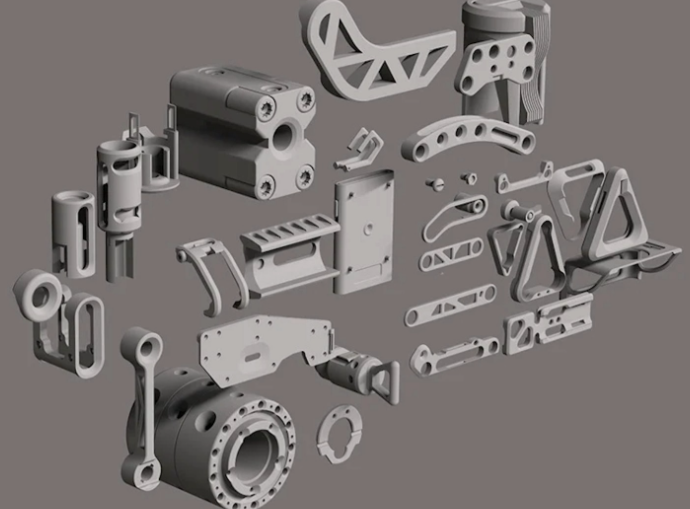
Fast sampling is the fastest way to win business in the hardware machining and plastic mold industries. Customers often send an STL file and expect a working sample in days.
how to print an stl file