How Does Oil Between Machine Parts Reduce Friction?
How Does Oil Between Machine Parts Reduce Friction? A Practical Guide to Industrial Lubrication and Mechanical Performance
A machine can have perfectly aligned shafts, precision-machined bearings and a powerful motor, yet still wear out prematurely if the surfaces moving against each other are not properly lubricated. The question how does oil between machine parts reduce friction is more important than it might initially sound. Oil does not simply make metal surfaces slippery. It creates a protective film, separates microscopic surface irregularities, helps control heat, and reduces direct metal-to-metal contact. In industrial equipment, that thin layer of lubricant can make the difference between stable operation and expensive mechanical failure.
This guide is written for mechanical engineers, industrial equipment buyers, maintenance professionals and manufacturing procurement teams. It explains how oil reduces friction, how different lubrication mechanisms work, which oil properties matter, and where lubrication is used in industrial machinery. It also examines why component geometry, surface finish, material selection and machining accuracy are just as important as the lubricant itself.
- How Does Oil Between Machine Parts Reduce Friction?
- How Lubrication Works Between Two Surfaces
- Three Main Types of Lubrication
- Important Properties of Machine Lubricating Oil
- Industrial Applications of Lubrication
- Why Precision Machining Matters for Friction Reduction
- How to Maintain an Effective Lubrication System
- FAQ: Oil, Friction and Machine Lubrication
- Conclusion and Custom Mechanical Parts Inquiry
How Does Oil Between Machine Parts Reduce Friction?
Oil reduces friction between machine parts by forming a lubricating film that separates moving surfaces and minimizes direct contact between their microscopic irregularities. When two metal components move against each other, their surfaces may look smooth to the naked eye, but microscopic peaks and valleys remain. These tiny high points are called asperities. Without sufficient lubrication, asperities can interact, causing friction, heat generation, material loss and eventually mechanical wear.
When oil enters the contact area, it forms a layer between the two surfaces. Instead of allowing the metal surfaces to rub directly against each other, the lubricant allows movement to occur through the oil film. Depending on the operating conditions, the film may completely separate the surfaces or partially reduce direct contact.
The process provides several important benefits:
1. Separating metal surfaces. The oil film reduces direct contact between microscopic surface irregularities. This helps prevent adhesive wear, scoring and surface damage, particularly in bearings, gears and sliding mechanisms.
2. Reducing resistance to movement. Oil allows the surfaces to move relative to each other with less resistance than direct metal-to-metal contact. The internal shear of the lubricant still creates some resistance, but a properly selected oil can significantly reduce overall friction losses.
3. Carrying away heat. Friction generates heat around moving components. Circulating oil absorbs heat from the contact area and transports it toward a sump, cooler or other heat-dissipation system. This helps maintain operating temperatures within the equipment's design limits.
4. Protecting against corrosion. Many lubricating oils contain additives that help protect metal surfaces from moisture and corrosive substances. The oil film can also provide a physical barrier against environmental contamination.
5. Removing or transporting contaminants. In circulating lubrication systems, oil carries particles and contaminants toward filters, where they can be removed before returning to critical components.
The key point is that oil does not eliminate every form of friction. It changes the contact conditions between moving surfaces, replacing much of the damaging direct surface interaction with controlled fluid-film resistance.
For industrial equipment, selecting the correct lubricant is only one part of the solution. The geometry, clearance, surface finish, material and loading conditions of the mechanical components also determine whether the oil film can perform effectively.
How Lubrication Works Between Two Surfaces
To understand how oil reduces friction, imagine two metal surfaces moving in opposite directions. Without lubrication, their microscopic high points come into contact. These contact points can deform, adhere to each other and break away during movement. This process increases resistance and gradually damages the surfaces.
With oil between the components, the lubricant occupies the space between the surfaces. When the machine operates, the oil can develop pressure and form a load-supporting film. The thickness and stability of this film depend on oil viscosity, movement speed, applied load, temperature, surface geometry and lubricant supply.
Viscosity is particularly important. It describes a fluid's resistance to flow. An oil that is too thin may not maintain an adequate film under certain operating conditions. An oil that is too thick may increase fluid resistance, cause additional energy losses and create problems during cold starts.
In a journal bearing, for example, the rotating shaft drags oil into the narrowing clearance between the shaft and bearing surface. This creates a pressure distribution within the lubricant film, allowing the oil to support the load and keep the shaft separated from the bearing under suitable operating conditions.
Gear systems work differently in terms of contact geometry, but the principle remains similar. Lubricant is carried into the contact area between gear teeth, helping reduce surface interaction, wear and heat generation.
It is also important to understand that lubrication performance changes with operating conditions. A machine starting from rest may initially experience boundary lubrication, while the same machine can develop a full fluid film after reaching its normal operating speed.
Three Main Types of Lubrication
Not all machine parts are lubricated in the same way. Engineers generally distinguish between boundary lubrication, mixed lubrication and hydrodynamic or elastohydrodynamic lubrication. The appropriate mechanism depends on the contact geometry, speed, load and lubricant characteristics.
Boundary lubrication. In boundary lubrication, the oil film is very thin compared with the surface roughness, so the surfaces may still experience some direct contact. Special lubricant additives can form protective layers on metal surfaces, reducing friction and wear under conditions where a complete fluid film cannot be maintained. This mechanism is especially important during startup, shutdown, low-speed movement and heavily loaded contacts.
Mixed lubrication. Mixed lubrication exists between boundary and full-film lubrication. Part of the load is supported by the lubricant film, while some load is carried through contact between surface asperities. This condition can occur in bearings, sliding guides and other mechanical systems when speed, load or oil viscosity changes.
Hydrodynamic lubrication. In hydrodynamic lubrication, the relative motion of the surfaces draws oil into a converging gap and generates sufficient pressure to support the applied load. The moving surfaces are separated by a continuous lubricant film under suitable operating conditions. This is a common operating principle in properly designed journal bearings.
Elastohydrodynamic lubrication (EHL). EHL is especially relevant to heavily loaded rolling contacts, such as gear teeth and rolling-element bearings. The high contact pressure causes elastic deformation of the surfaces and changes the lubricant's behavior, helping create a very thin load-supporting film.
| Lubrication Type | Contact Condition | Typical Applications |
|---|---|---|
| Boundary lubrication | Thin film; some asperity contact remains | Startup, low-speed sliding and heavily loaded contacts |
| Mixed lubrication | Load shared by oil film and surface contact | Bearings, guides and changing operating conditions |
| Hydrodynamic lubrication | Continuous fluid film separates surfaces | Journal bearings and rotating shafts |
| Elastohydrodynamic lubrication | Thin pressurized film with elastic surface deformation | Gear teeth and rolling-element bearings |
Understanding these mechanisms helps engineers select a suitable lubricant and design an appropriate lubrication system. Simply adding more oil does not guarantee better performance. The lubricant must reach the contact area, maintain suitable properties and work within the component's intended operating conditions.
Important Properties of Machine Lubricating Oil
Choosing machine oil requires more than looking at the product label or selecting the thickest available lubricant. Different equipment operates under different loads, temperatures, speeds and environmental conditions. The following properties help determine whether an oil is suitable for a particular mechanical application.
Viscosity. Viscosity is one of the most important properties of lubricating oil. It determines how easily the oil flows and influences the thickness of the lubricant film under operating conditions. The correct viscosity grade should be selected according to the equipment manufacturer's recommendations and actual operating temperatures.
Viscosity index. The viscosity index describes how strongly an oil's viscosity changes with temperature. A higher viscosity index generally indicates a smaller viscosity change over a given temperature range. This can be useful in machinery that experiences significant temperature variation.
Oxidation stability. Lubricating oil is exposed to oxygen and heat during operation. Oxidation can cause oil degradation, sludge formation and deposits. Good oxidation stability helps extend oil service life and maintain reliable lubrication.
Anti-wear and extreme-pressure properties. Anti-wear additives help reduce surface damage in boundary lubrication conditions. Extreme-pressure additives are designed for applications involving severe contact loads, such as certain industrial gear systems. The additive package must be compatible with the equipment and its materials.
Corrosion and rust protection. Industrial equipment may operate in humid environments or encounter water contamination. Suitable corrosion inhibitors help protect metal surfaces and reduce the risk of rust-related damage.
Foam control and air release. Excessive foam or entrained air can interfere with lubrication, reduce effective film formation and impair hydraulic system performance. Properly formulated oils help control foaming and release entrained air.
| Oil Property | Function | Why It Matters |
|---|---|---|
| Viscosity | Controls resistance to flow | Helps maintain an appropriate lubricating film |
| Viscosity index | Indicates temperature-related viscosity changes | Supports consistent operation across temperature ranges |
| Oxidation stability | Resists chemical degradation | Helps reduce sludge and deposits |
| Anti-wear additives | Protect surfaces under boundary conditions | Reduces wear during demanding operation |
| Corrosion inhibitors | Protect metal surfaces | Helps prevent rust and corrosion damage |
| Foam control | Controls foam and air entrainment | Supports stable lubrication and oil circulation |
There is no single machine oil that is ideal for every application. Hydraulic systems, industrial gearboxes, compressors and high-speed bearings may require different formulations and viscosity grades. Always follow the equipment manufacturer's specifications rather than choosing oil based on viscosity alone.
Industrial Applications of Lubrication
Lubrication is essential in almost every industry that relies on moving mechanical components. Different machines use different lubrication methods, but the objective remains the same: reduce damaging contact, control heat and maintain reliable operation.
Bearings and rotating shafts. Bearings support rotating or moving components while controlling friction and maintaining alignment. Lubricating oil can create a load-supporting film between the shaft and bearing surface, reducing wear and helping dissipate heat. Oil viscosity, bearing clearance, shaft speed and load all influence performance.
Industrial gearboxes. Gear teeth transmit power through repeated contact. Gear oil helps separate contacting surfaces, reduce wear, remove heat and protect against corrosion. Extreme-pressure performance can be particularly important in heavily loaded gear applications.
Hydraulic machinery. Hydraulic systems use fluid to transmit power, but hydraulic oil also lubricates pumps, valves and other internal components. Proper fluid cleanliness and viscosity are essential because contamination and incorrect oil selection can accelerate wear and damage precision surfaces.
Automotive and transportation equipment. Engines, transmissions and other mechanical systems depend on lubricants to reduce friction between moving parts. Engine oil also helps manage heat, suspend contaminants and protect surfaces during repeated operating cycles.
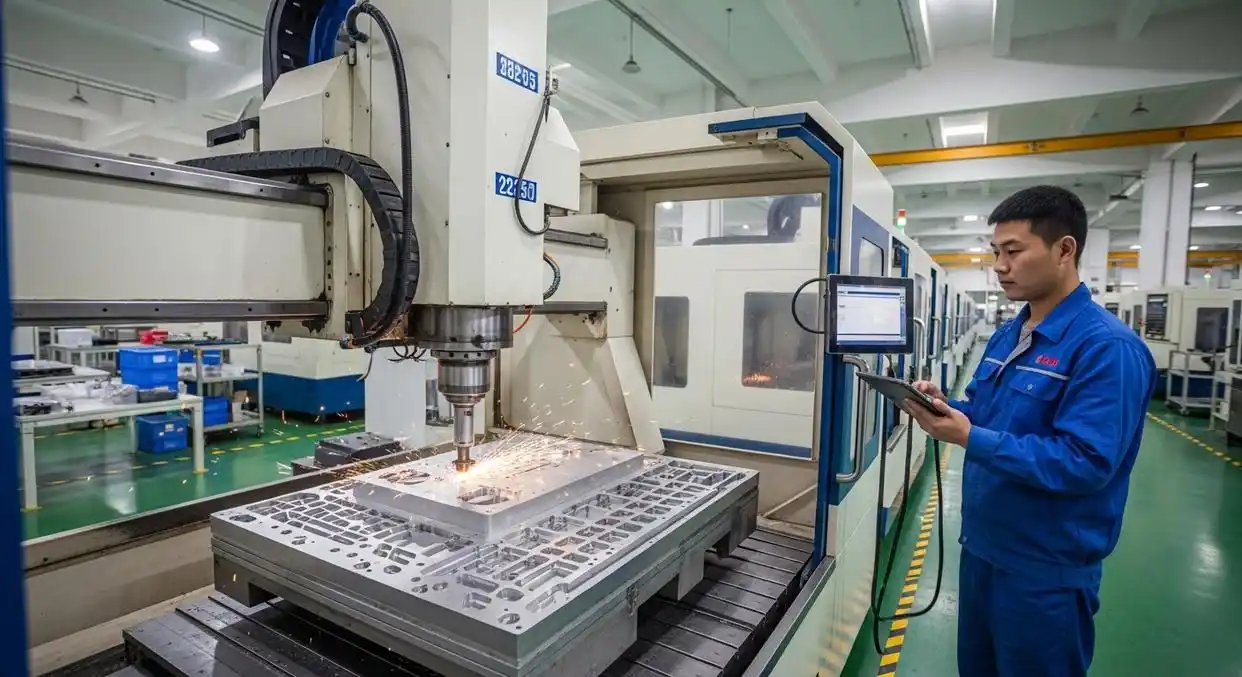
Manufacturing and machine tools. CNC machine tools, linear guides, ball screws and spindle assemblies rely on suitable lubrication to maintain smooth movement and dimensional stability. Incorrect lubrication can increase friction, vibration, heat and component wear, potentially affecting machining accuracy.
Industrial pumps and compressors. Rotating shafts, bearings and internal moving elements require suitable lubrication to reduce wear and maintain operating efficiency. Lubrication requirements vary according to equipment design and the type of fluid being handled.
In every application, lubricant selection should be based on the actual working conditions, equipment design and maintenance requirements. A lubrication system that performs well in a low-speed conveyor may not be suitable for a high-speed spindle or a heavily loaded gearbox.
Why Precision Machining Matters for Friction Reduction
Oil is essential for reducing friction, but the quality of the mechanical components also plays a major role. A lubricant cannot compensate for every problem caused by poor geometry, excessive clearance, surface damage or incorrect alignment.
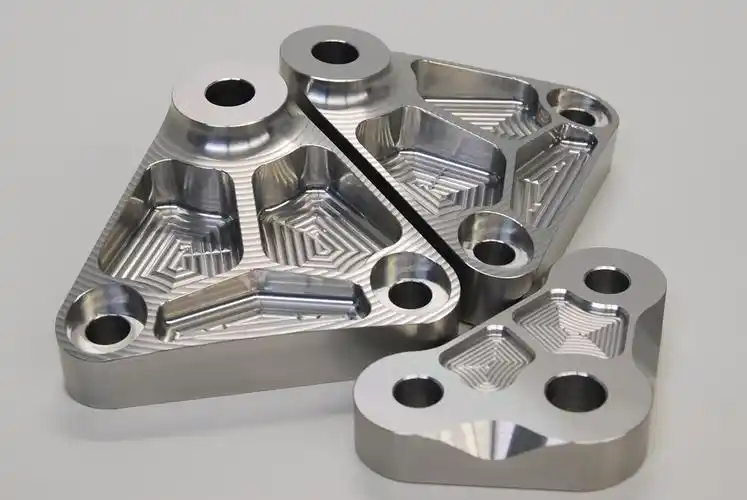
Surface roughness. Machined surfaces contain microscopic irregularities. Excessively rough surfaces may increase asperity interaction, disrupt lubricant films and accelerate wear under certain operating conditions. Appropriate finishing processes help create surfaces suitable for the intended sliding or rolling contact.
Dimensional accuracy. Bearing bores, shafts and mating components must maintain suitable dimensions and clearances. If the clearance is too large or too small, the lubrication mechanism may not work as intended. Precision CNC machining helps manufacture these features according to engineering drawings and specified tolerances.
Geometric accuracy. Roundness, cylindricity, flatness, concentricity and alignment can influence how loads are distributed across contacting surfaces. Poor geometric accuracy may create localized stress, uneven wear and unstable lubrication conditions.
Material selection. Different materials have different hardness, wear resistance, thermal expansion and compatibility characteristics. Stainless steel, alloy steel, aluminum alloys, copper alloys and engineering plastics may all be used in mechanical systems, depending on their structural and operating requirements.
Surface treatments. Depending on the application, processes such as hard anodizing, plating, polishing, passivation and other engineered surface treatments can improve corrosion resistance, wear performance or surface characteristics. The treatment must be selected with the lubricant, base material and contact conditions in mind.
For example, a rotating shaft and its bearing housing must be designed as a compatible system. The shaft diameter, bearing bore, clearance, material, surface finish and lubricant viscosity all influence the final operating result. Improving only one parameter may not solve a lubrication problem caused by another.
This is why precision manufacturing and mechanical engineering should be considered together. A well-designed lubrication system needs components manufactured with suitable dimensions, geometry and surface quality.
How to Maintain an Effective Lubrication System
Even a correctly selected lubricant can lose its effectiveness if the lubrication system is poorly maintained. Oil degradation, contamination, leakage and insufficient supply can all reduce protection and increase the risk of equipment failure.
Step 1: Follow the equipment manufacturer's lubrication specifications. Check the recommended oil type, viscosity grade, lubricant quantity and replacement interval. Do not assume that two machines with similar appearances require the same oil.
Step 2: Maintain the correct oil level. Too little oil can cause insufficient lubrication, overheating and accelerated wear. Excessive oil can also create problems, including churning losses, increased temperature and foaming in certain systems.
Step 3: Monitor operating temperature. Unusual temperature increases may indicate excessive friction, incorrect viscosity, overloading, inadequate oil supply or cooling problems. Temperature trends can provide an early warning before severe mechanical damage occurs.
Step 4: Keep the lubricant clean. Dust, metal particles, water and other contaminants can damage bearings, gears and precision surfaces. Use suitable filtration, clean filling equipment and properly sealed lubrication systems.
Step 5: Inspect oil condition regularly. Changes in viscosity, color, odor and contamination levels can indicate lubricant degradation. For critical machinery, oil analysis can help identify oxidation, water contamination, particle levels and abnormal wear metals.
Step 6: Check lubrication delivery. Verify that pumps, oil lines, filters and distribution points are functioning correctly. A machine may have sufficient oil in its reservoir but still suffer from poor lubrication if oil cannot reach the required contact area.
Step 7: Investigate abnormal wear and noise. Unusual vibration, noise, temperature changes and metal debris should not be ignored. These symptoms may indicate misalignment, damaged surfaces, insufficient lubrication or an incorrect operating condition.
Preventive maintenance is generally more economical than waiting for a bearing, gearbox or rotating assembly to fail. A documented lubrication schedule, combined with regular inspection, helps improve equipment reliability and reduce unplanned downtime.
FAQ: Oil, Friction and Machine Lubrication
These answers explain the basic engineering principles behind lubrication and the factors that influence friction in industrial machinery.
Q1: How does oil between machine parts reduce friction?
A1: Oil forms a lubricating film between moving surfaces, reducing direct contact between microscopic surface irregularities. This lowers damaging friction, helps prevent wear and carries heat away from the contact area. Depending on the operating conditions, the oil film may completely or partially separate the surfaces.
Q2: Does oil completely eliminate friction between machine parts?
A2: No. Oil reduces friction but does not eliminate it. Even when a full fluid film separates two surfaces, the lubricant itself experiences internal shear resistance. In boundary and mixed lubrication, some surface contact may also remain. The goal is to reduce friction and wear to acceptable levels.
Q3: Why is viscosity important in machine lubrication?
A3: Viscosity determines how easily oil flows and influences the thickness of the lubricant film. If viscosity is too low for the operating conditions, the film may become insufficient. If it is too high, fluid resistance and energy losses may increase. The correct grade depends on equipment design, speed, load and temperature.
Q4: What happens if machine parts run without oil?
A4: Without adequate lubrication, moving surfaces may experience increased direct contact, friction, heat and wear. Depending on the application, this can cause scoring, surface fatigue, bearing damage, seizure and eventual equipment failure.
Q5: What is the difference between oil lubrication and grease lubrication?
A5: Oil is a flowing lubricant that can circulate through a system and carry heat and contaminants away. Grease is a semi-solid lubricant consisting of base oil, a thickener and additives. It stays in place more easily and is often used in bearings and components where continuous oil circulation is not practical. The correct choice depends on the machine design.
Q6: Can too much lubricating oil cause problems?
A6: Yes. Excessive oil can cause churning, higher operating temperatures, foaming, leakage and additional energy losses in some systems. Oil quantity should follow the equipment manufacturer's recommendations rather than the assumption that more lubricant always means better protection.
Q7: How often should machine lubricating oil be changed?
A7: There is no universal replacement interval. It depends on the lubricant type, operating temperature, contamination, machine design and duty cycle. Follow the manufacturer's maintenance schedule and consider oil analysis for critical equipment operating under demanding conditions.
Q8: How does surface finish affect lubrication performance?
A8: Surface finish affects the interaction between microscopic surface irregularities and the lubricant film. Excessively rough surfaces may increase asperity contact and wear, while the appropriate surface texture can help support the intended lubrication mechanism. The optimum finish depends on the application and contact conditions.
Q9: Which machine components require lubrication?
A9: Common examples include bearings, gears, shafts, sliding guides, ball screws, hydraulic pumps and other moving assemblies. However, not every component uses oil. Some are grease-lubricated, self-lubricating or designed to operate without additional lubrication. Always follow the equipment specification.
Q10: Can precision CNC machining help reduce mechanical friction?
A10: Yes. Precision machining helps control dimensions, clearances, surface roughness and geometric accuracy. These factors influence contact conditions, load distribution and lubrication film performance. However, machining accuracy must be combined with suitable material selection, lubrication and assembly practices.
Conclusion and Custom Mechanical Parts Inquiry
The answer to how does oil between machine parts reduce friction goes beyond simply making two surfaces slippery. Lubricating oil creates a protective film, reduces direct metal-to-metal contact, helps control operating temperature, protects against corrosion and supports the long-term reliability of industrial equipment.
However, effective lubrication depends on more than the oil itself. Component geometry, dimensional accuracy, surface finish, material compatibility, operating speed, load and maintenance practices all influence how well a mechanical system performs.
If your project requires custom precision mechanical components, Shenzhen Zhongzhu Technology provides manufacturing solutions including CNC machining, aluminum and zinc die casting, sheet metal stamping, plastic injection molding and various surface finishing processes.
Send us your 2D drawings and 3D models, together with the required materials, quantities, tolerances and surface treatments. Our team can review your component requirements and evaluate a suitable manufacturing approach for your application.
Get In Touch
Looking for a reliable manufacturer of precision mechanical parts?
From CNC-machined components and die-cast housings to custom sheet metal and plastic parts, we support industrial buyers with drawing-based manufacturing solutions.
📄 Request a Technical Review
Contact Our Team →⚙️ Explore Our Manufacturing Services
View Services →Shenzhen Zhongzhu Technology Co., Ltd.
Shenzhen, Guangdong Province, China
📞 +86 18688963321
✉ samuel@chnzhongzhu.com
Your Manufacturing Partner for Custom Mechanical Parts.
Is Machine Learning Part of AI?
should cost analysis for machined parts from a supplier?
Related Article