
CNC Automotive Parts: Precision, Versatility, and Industry Impact
Author: SZTC
2025-04-25
1. The Role of CNC Machining in Automotive Manufacturing
Computer Numerical Control (CNC) machining has revolutionized automotive part production by delivering unmatched precision, repeatability, and flexibility. Unlike traditional manual machining, CNC systems use coded instructions to control milling, turning, and drilling operations, ensuring components meet tight tolerances (±0.005mm) and complex geometries. Key advantages include:
- Rapid Prototyping: Transforming CAD designs into functional prototypes within hours, accelerating new vehicle development.
- Mass Production Efficiency: Consistent output for high-volume parts, reducing waste and minimizing human error.
- Material Versatility: Capable of machining metals (aluminum, steel, titanium) and polymers, adapting to diverse automotive applications.
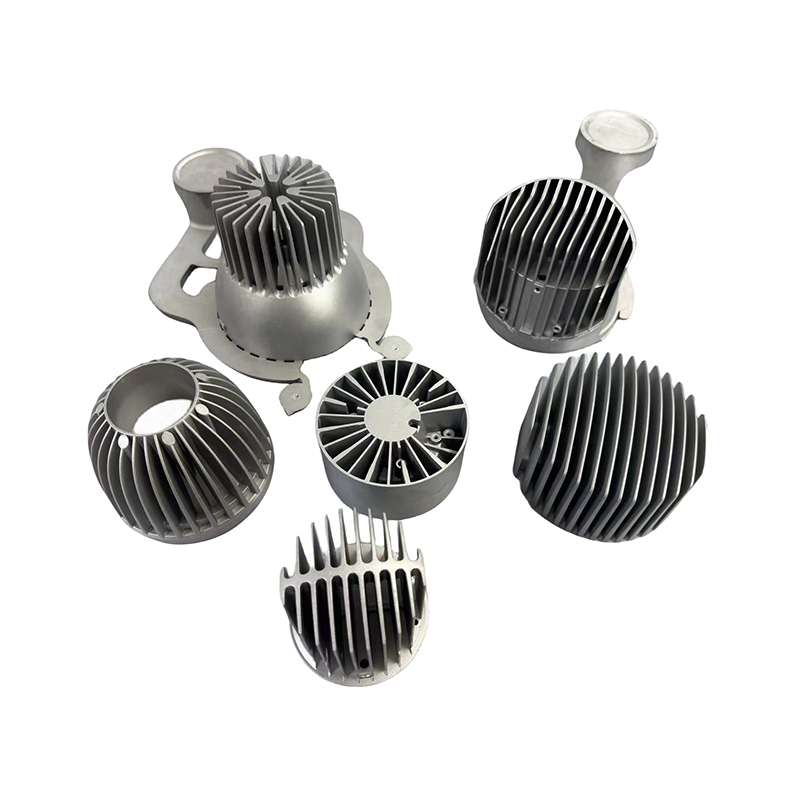
2.1 Engine and Drivetrain Parts
- Cylinder Heads: CNC milling creates intricate coolant passages and valve seats with surface finishes as low as Ra 0.8μm, optimizing heat dissipation and combustion efficiency.
- Transmission Gears: Hobbing and shaping on CNC lathes produce helical or bevel gears with precise tooth profiles, reducing noise and improving power transfer.
- Turbocharger Components: Machining compressor wheels from heat-resistant alloys (e.g., Inconel) at speeds up to 20,000 RPM, requiring strict balance tolerances (<0.01g·mm/kg).
2.2 Chassis and Suspension Parts
- Steering Knuckles: CNC turning and milling of ductile iron or aluminum alloys form complex geometries for load-bearing components, ensuring fatigue resistance (≥500MPa yield strength).
- Brake Calipers: High-pressure die-cast aluminum calipers are finished with CNC machining to create smooth piston bores (diameter tolerance ±0.01mm) and mounting surfaces.
- Control Arms: Hollow aluminum designs machined via 5-axis CNC reduce weight by 30% while maintaining stiffness (bending modulus ≥70GPa).
2.3 Interior and Exterior Components
- Dashboard Inserts: 3-axis CNC routing of ABS or PC/ABS blends produces decorative trim with high-gloss finishes or texturized surfaces, meeting OEM aesthetic standards.
- Wheel Rims: 5-axis CNC machining of forged aluminum alloy (e.g., 6061-T6) creates lightweight, multi-spoke designs with aerodynamic profiles (drag coefficient ≤0.28).
- Mirror Housings: Machining from polycarbonate (PC) or glass-filled nylon ensures dimensional stability (-40°C to 120°C) and impact resistance (Izod ≥80J/m).

3. CNC Machining Techniques and Industry Trends
3.1 Advanced Machining Strategies
- High-Speed Machining (HSM): Cutting speeds up to 4,000 RPM for aluminum parts reduce cycle times by 40% while maintaining surface quality (Ra ≤1.6μm).
- Multi-Axis Machining: 5-axis CNC machines enable simultaneous milling on five sides, eliminating setup errors for complex parts like engine blocks.
- Automated Workholding: Pallet changers and robotic loaders increase machine utilization to 90%+ in mass production lines.
3.2 Material and Process Innovations
- Hybrid Materials: Machining metal-matrix composites (MMCs), such as aluminum reinforced with silicon carbide, for brake rotors with improved thermal conductivity (≥150W/m·K).
- Near-Net Shape Machining: Combining casting/forging with CNC finishing reduces material removal by 60%, lowering costs for high-volume parts like crankshafts.
- Sustainability Practices: Minimum quantity lubrication (MQL) and dry machining reduce coolant usage by 80%, aligning with automotive industry eco-goals.
3.3 Impact on Future Mobility
- Electric Vehicles (EVs): CNC-machined battery brackets (stiffness ≥200N/mm) and motor housings (thermal conductivity ≥180W/m·K) support EV lightweighting and thermal management.
- Autonomous Vehicles: Precision-machined LiDAR sensor mounts (positioning accuracy ≤0.05mm) and ADAS components ensure reliable sensor alignment for self-driving systems.
- Customization Trends: Low-volume, high-mix production via CNC allows OEMs to offer personalized parts (e.g., engraved trim pieces) without retooling costs.

CNC machining has become indispensable in automotive manufacturing, driving innovation in precision, efficiency, and design flexibility. As the industry shifts toward electrification and (intelligentization), CNC technology will continue to evolve—incorporating AI-driven process optimization and hybrid manufacturing techniques—to meet the demands of next-generation vehicles. Whether producing high-performance engine components or intricate interior details, CNC machining remains the backbone of automotive precision.
Which Statement About Industrial Robots Is True?
How to Remove a Plastic Engine Cover: Step-by-Step Guide and Tips
Related Article

Fast sampling is the fastest way to win business in the hardware machining and plastic mold industries. Customers want a working sample in days, and a 3D printer delivers it, but only when you know how to print in 3d correctly.
how to print in 3d

Fast sampling is the fastest way to win business in the hardware machining and plastic mold industries. Customers often send an STL file and expect a working sample in days.
how to print an stl file

