Analysis And Optimization Solution Of Die casting Technology Of Automatic Transmission Housing For New Energy Vehicles
New energy vehicles refer to the use of unconventional vehicle fuels as the power source (or the use of conventional vehicle fuels, the use of new vehicle power units), and the integration of advanced technologies in vehicle power control and drive. New technology, new structure of the car. Mainly include: hybrid electric vehicles (HEV), pure electric vehicles (BEV, including solar vehicles), fuel cell electric vehicles (FCEV), hydrogen engine vehicles, other new energy (such as high-efficiency energy storage, dimethyl ether) vehicles, etc. category product.
At present, under the dual pressures of energy and environmental protection, new energy vehicles will undoubtedly become the development direction of future vehicles in the whole world. For my country, during the "Twelfth Five-Year Plan" period, my country's new energy vehicles will officially enter the stage of industrialization: from 2011 to 2015, it will enter the stage of industrialization, and promote new energy city buses, hybrid cars, and small electric vehicles in the whole society. vehicle. During the "13th Five-Year Plan" period from 2016 to 2020, my country will further popularize new energy vehicles and multi-energy hybrid vehicles, and plug-in electric cars and hydrogen fuel cell cars will gradually enter ordinary families. Therefore, according to relevant plans, new energy vehicles will surely become the mainstream of the development of the automobile industry.
1. Structural form of automatic transmission for new energy vehicles
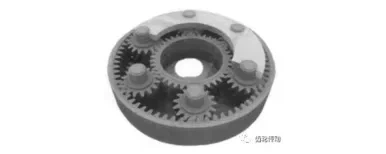
The transmission is an important part of the powertrain of conventional and hybrid electric vehicles. The performance of the transmission has an important influence on the power, economy and comfort of the vehicle. Since new energy vehicles are directly or mainly driven by electric motors, the transmission structure, a key component of its power transmission system, will undergo significant changes compared with traditional fuel engine vehicles. Due to the large low-speed torque and wide operating speed range of the electric motor, 5-speed and 6-speed transmissions were originally required on ordinary cars, but only 2-speed and 1-speed on electric vehicles. The motor needs to be reversed. Functional simplification often leads to structural complexity. In new energy vehicles, the power distribution device used to realize energy distribution and integration is a set of planetary gear mechanisms, in which the planet carrier is connected to the output shaft of the engine, the ring gear is connected to the shaft of the motor, and is also connected to the output gear. The power from the gear shaft drives the generator to generate electricity, and the middle is connected to the clutch. When the power is switched, the sun gear is locked, so that the planetary gear mechanism works with a certain transmission ratio. The transmission planetary gear structure of the new energy vehicle is shown in Figure 1.
As far as the development trend is concerned, the transmission of new energy vehicles has the characteristics of simple overall structure and complex partial structure. The overall structure is simple means that the transmission has been simplified as a transmission or there is a gear transmission part in the powertrain. The partial structure is complicated, and the planetary structure must be arranged in the clutch housing to realize the stepless speed change. If such a partially complex structure is realized, the problem of integral molding of the transmission housing with the internal gear must be solved. As far as its manufacturing technology is concerned, there are currently three problems.
1) As the core mechanism of automobile power transmission, the gear structure requires extremely high precision, so as to satisfy the smooth operation and smooth acceleration of the automobile. Gears are subject to high-intensity cyclic stress during operation, and the frequency is often as high as several thousand r/min. When there are common defects such as pores, shrinkage holes, and micro-cracks inside the gear, the gear will fail due to fatigue fracture, making power transmission. Unsteady, and even a safety accident. But how to improve accuracy, avoid deformation and reduce die casting defects is a primary problem.
2) In the process of power transmission, the gear structure needs to bear a lot of force for the meshing of the teeth and the teeth, which requires the surface of the gear to have good wear resistance, and the wear resistance depends on the hardness. The hardness of the material is mainly determined by the alloy composition. But as we all know, ADC12 and Al-Si9Cu3 used in conventional die casting are far from meeting the requirements of wear resistance. Therefore, the problem of die casting materials must be solved.
3) Since the gear structure is subjected to high alternating stress, the gear teeth are under great pressure when meshing. It is difficult to greatly improve the surface hardness by simply optimizing the die-casting aluminum alloy. Which technology to use to locally strengthen the surface of the internal gear has also become an urgent problem to be solved.
2 Urgent problems to be solved in the die-casting of new energy vehicle transmission casings
At present, the molding technology of advanced gearbox housings for new energy vehicles is monopolized by foreign companies in the global market, such as Germany's Bosch, ZF, US Eaton, Japan's Fuji, and UK's Torotrak. Although my country has paid more and more attention to the research and development of the molding technology of the gearbox housing for new energy vehicles in recent years, the achievements in this regard are still lagging behind. The key points that need to be paid attention to and solved mainly focus on the key process of die casting, the research and development of new aluminum alloy materials for die casting, and the local strengthening technology of the internal gear surface.
2.1 The key process of die casting
1) Mold structure and process optimization technology
Due to the characteristics of high temperature and high pressure in die casting of aluminum alloys, the filling form of molten metal during die casting is closely related to quality factors such as casting density, porosity, and surface roughness. And the filling process is carried out in a closed cavity, which is difficult to visualize. It is difficult to obtain process data such as whether the filling process can be carried out smoothly, whether the pouring and discharging system is reasonable, and whether the die-casting process is covered with air. Based on the actual die-casting process, after obtaining the thermal and physical properties of the material, a die-casting model is established by the finite element method to analyze the flow field, temperature field and alloy solidification of the die-casting part, study its filling law, and optimize the casting system. According to the calculation results, defects such as pores, cold insulation and shrinkage holes of die castings should be predicted. In addition, the finite element method can also dynamically display the filling process of the mold and the change of the mold temperature field. Using the temperature field simulation results, the temperature field change curve of the important nodes on the surface of the mold cavity is extracted, the node temperature is analyzed, the thermal stress of the node is calculated, the thermal shock of the mold is judged, and the thermal crack on the surface of the die-casting mold cavity is finally judged. . Therefore, it is necessary to simulate and optimize the die-casting process of the transmission housing for new energy vehicles through finite element software, and to determine the optimal opening of the gate and the final forming part of the transmission housing die-casting mold with the internal gear structure. A large exhaust is set up at the molding place to solve the problem of cold insulation and air holes. In addition, mold flow analysis is performed on the die casting process to determine liquid metal flow, solidification, and thermal stress in the mold.
2) Temperature control technology
The temperature control of the die-casting process of the aluminum alloy transmission housing for new energy is mainly the control of the casting temperature and the mold temperature. During the die-casting process of aluminum alloy transmission casing, temperature control has an important influence on the thermal state and processing efficiency of the filling process, and is an important factor for obtaining high-quality castings. Generally speaking, the casting temperature should not be too high or too low. If the casting temperature is too high, the liquid alloy will be prone to turbulent flow, eddy current, vadose and other phenomena under the action of high speed, thus affecting the filling quality. However, if the casting temperature is too low, the composition will be uneven and the fluidity will be poor, which will affect the filling conditions and cause defects in the casting.
The temperature of the mold is another important factor in the die casting process. If the mold temperature is too high, the cooling temperature of the alloy decreases, the thickness of the fine-grained layer is reduced, and the grains are coarser, so the strength decreases. In addition, shrinkage depressions are prone to occur. When the mold temperature is too low, the surface layer is condensed and then broken by high-speed liquid flow, resulting in surface layer defects and even failure to form. The mold temperature has a great influence on the life of the mold. The severe temperature change forms a complex stress state, and the frequent stress alternation causes the mold to crack. The influence of mold temperature on the dimensional tolerance of castings, if the mold temperature is stable, the dimensional shrinkage rate of the castings is also stable. Generally, the mold temperature can be controlled by controlling the following factors: control the alloy casting temperature, casting volume, heat capacity and thermal conductivity; control the design of the gating system and overflow tank to adjust the thermal equilibrium state; control the injection pressure and injection speed; control the mold Material: The better the thermal conductivity of the mold material, the more uniform the temperature distribution is to improve the thermal balance.
1) Time control technology
Time control mainly refers to the control of filling time, pressure build-up time, pressure holding time and mold retention time. The determination of these times is mainly the result of a combination of factors such as pressure, speed, temperature, physical properties of molten metal, casting structure, and mold structure. Therefore, time is of the essence in the die casting process. However, due to the many factors involved, its control is very difficult. The time required for the molten metal to enter the cavity under pressure until it is filled is called the filling time, which is a comprehensive reflection of the coordination degree of various factors in the filling process. The filling time is determined based on the following factors: when the alloy casting temperature is high, the filling time can be longer; when the mold temperature is high, the filling time can be longer; when the thick-walled part of the casting is far away from the inner gate, the filling time can be longer ; For alloys with high latent heat and specific heat of fusion, the filling time can be longer. The boost pressure build-up time refers to the boosting stage of the molten metal during the filling process, starting from the moment the cavity is filled, until the boost pressure reaches a predetermined value, that is, the injection specific pressure rises to increase. The time it takes for the pressure to build up. After the molten metal fills the cavity, the period of time during which the molten metal solidifies under the action of the booster specific pressure is called the holding time. The function of holding pressure is to make the injection punch transfer the pressure to the cavity through the unsolidified material and the metal in the gate part, so that the solidifying metal is crystallized under high pressure, so as to obtain a dense casting.
2.2 Research and development of new aluminum alloys for die casting
There are many types of traditional die-casting aluminum alloys. In terms of their systems, they mainly include Al-Si series, Al-Si-Cu series, Al-Si-Mg series, and Al-Mg series. The physical properties, mechanical properties and process properties of each system are significantly different. Al-Si series die-casting aluminum alloys are generally eutectic aluminum alloys, which have good thermal crack resistance and flow properties, but cannot be strengthened by heat treatment and have low tensile strength; Al-Si-Mg series die-casting aluminum alloys are generally hypoeutectic Aluminum alloy has good corrosion resistance, high impact toughness and yield strength, but the casting performance of the material is poor. The Al-Mg system is similar to the Al-Si-Mg system, and the corrosion resistance and impact toughness are relatively good, but the castability is poor. Due to the complex local structure of the transmission housing with internal gear structure for new energy vehicles concerned in this paper, the aluminum alloy used is required to have good fluidity in the die-casting process; for the gears to be wear-resistant, the hardness of the aluminum alloy is required to be high. All of the above-mentioned Al-Si-based, Al-Si-Mg-based, and Al-Mg-based systems are difficult to satisfy product requirements at the same time. For the Al-Si-Cu system, whether it is the hypoeutectic YL112 or the hypereutectic YL113 and YL117, the flow properties are very good, which can meet the needs of forming complex die castings, and can be compared to the complex parts of the mold cavity. Well filled. In addition, Al-Si-Cu-based aluminum alloys have better air tightness and hot crack resistance. In addition, the thermal expansion coefficient is low, and the die casting is not easily deformed after molding. The most prominent advantage of Al-Si-Cu system is better wear resistance.
Therefore, from the transmission case for new energy vehicles, which is concerned with local complex structure, dimensional accuracy and high wear resistance, only the Al-Si-Cu system can meet the comprehensive requirements of several aspects at the same time.
The typical grade of Al-Si-Cu series that is more prominent in hardness is YL117 (YZAlSi17Cu5Mg), and its Brinell hardness value is about HB100-110; for Al-Zn series die-casting aluminum alloy, the hardness value is relatively large. ZL401 , its hardness value is about HB80 - 90. ZL401 has excellent casting properties, low linear shrinkage and good room temperature mechanical properties, machinability and weldability. The main disadvantage is that the thermal strength of the alloy is not high, the density is high, and the corrosion resistance is also poor. Therefore, from the requirements of corrosion resistance and weight reduction, ZL401 is difficult to meet the product requirements.
But the hardness of YL117 is not enough to solve the problem of wear resistance of internal gears. Therefore, in order to solve the problem of wear resistance of die-casting aluminum alloy, it is necessary to optimize the design of its composition on the basis of Al-Si-Cu system. First of all, based on the requirements of wear resistance and improving flow properties, the silicon content in the alloy must be increased. When the silicon content exceeds 12%, a hypereutectic Al-Si binary alloy system is formed, which has excellent flow properties and can meet complex requirements. Filling requirements of die castings; secondly, increasing the silicon content can greatly improve the wear resistance of the alloy. In addition, increasing the content of silicon can also reduce the tendency of thermal cracking and shrinkage, and improve the density of die castings. Purely from the point of view of improving wear resistance, the content of silicon can even be as high as 25-28%. However, excessive silicon content will cause many problems. Polygonal primary silicon and elongated eutectic silicon often appear in hypereutectic high-silicon Al-Si alloys. However, eutectic silicon is easy to be needle-shaped or elongated, which seriously weakens the mechanical properties of the alloy, and because the local eutectic silicon hardness value is too high, it will cause serious damage to the subsequent cutting performance. Nevertheless, the worldwide trend of developing high-silicon die-casting aluminum alloys is irreversible. Both Chongqing Nonferrous Metals Research Institute and Beijing Aeronautical Materials Research Institute have developed new wear-resistant aluminum alloys with high silicon content. The highest Si element content is 28%, and its wear resistance has been greatly improved compared to traditional die-casting aluminum alloys. German BENZ company has also developed high-silicon die-casting aluminum alloy, which is mainly used in V6 engine cylinder liner, and its wear resistance is equivalent to that of cast iron cylinder liner.
Adding Cu element to hypereutectic high-silicon aluminum alloy, in addition to considering the effect of solid solution strengthening of Cu element, it is also considered that Cu element is easy to produce intermetallic compound phase and eutectic structure of other alloying elements, which is used as the strengthening effect in the alloy. Phase and wear-resistant phase can effectively improve the hardness and strength of die-casting aluminum alloy. After Mg is added to the hypereutectic Al-Si alloy, except for a small amount to form a solid solution with aluminum, it mainly forms a Mg2Si precipitation phase with Si, which improves the comprehensive properties of die-casting aluminum alloys through the mechanism of dispersion strengthening. In addition, Mg also inhibits the detrimental effects of the Fe phase. When the Fe content increases, Al-Fe-Si-Mg compounds can be formed, thereby reducing the harm of Fe. However, the addition of excessive Cu and Mg elements can easily cause component segregation and make the alloy properties uneven. In addition, the addition of excess Cu element will seriously reduce the corrosion resistance of the alloy.
Rare earth elements are widely valued in the application of metal materials due to their unique properties. The addition of an appropriate amount of rare earth elements can improve the stability of the structure and improve the comprehensive properties of the alloy. The strengthening effect of rare earth elements in aluminum alloys is mainly manifested in solid solution strengthening, grain refinement strengthening and dispersion strengthening during the precipitation of the second phase. Studies have shown that the addition of an appropriate amount of Ce can refine the alloy grains on the one hand; on the other hand, it can form acicular precipitates and improve the wear resistance of the alloy. However, when the alloy with excessive rare earth elements is subjected to wear conditions, there are a large number of spalling pits on the surface, which is directly related to a large number of precipitates. Rare earth oxides have the characteristics of high melting point and large specific gravity. The addition of an appropriate amount of rare earth oxides can improve the wear resistance of aluminum alloys by more than 20%.
By adding Cu, Mg elements, rare earth elements and rare earth oxides to the high-silicon hypereutectic Al-Si aluminum alloy system, the wear resistance and comprehensive mechanical properties of die-casting aluminum alloys can be significantly improved, and it will inevitably become the choice of wear-resistant die-casting parts. Or the inevitable trend of alloy design.
2.3 Local strengthening technology of internal gear surface
There are three important methods for local surface strengthening of the internal gear of the die-casting aluminum alloy transmission casing for new energy vehicles.
a) In-situ oxidation method
In-situ oxidation methods mainly include chemical oxidation, anodic oxidation, micro-arc oxidation and other methods. The chemical oxidation method is to form a thin oxide film on the surface of the aluminum alloy through chemical reaction at a certain temperature. This kind of film is very thin, the film layer is soft, and the wear resistance is very low, so it cannot be used alone. Conventional anodizing uses aluminum alloy as the anode and lead, carbon or stainless steel as the cathode, and oxidizes it in an electrolyte such as oxalic acid, sulfuric acid, and chromic acid to obtain a porous anodic aluminum oxide film with highly ordered nanopores. The membrane is a double-layered structure composed of a dense barrier layer and a porous layer with a columnar structure. Micro-arc oxidation, also known as plasma oxidation, is a surface treatment technology for in-situ growth of ceramic layers on metal surfaces based on anodic oxidation. The principle is that in the alkaline solution, under the action of the external electric field provided by the special power supply for micro-arc oxidation, the surface of the anode workpiece will generate micro-arc discharge in the micro-arc area higher than the Faraday discharge area, and at the same time, instantaneous high temperature and high pressure will be generated. Under the action of electricity, heat, plasma and other factors, a thin layer of alumina ceramic is formed by the reaction, the thickness can be from 1 μm to 200 μm or even larger, and has high hardness, wear resistance and high temperature resistance.
b) Surface Milling (SMAT) method
Through the action of high frequency and multi-directional load, a nanocrystalline layer without pores, no pollution and no bonding interface with the matrix is obtained on the surface of the metal material through strong plastic deformation, that is, the nanocrystalline layer of the material surface is realized. Due to surface nanometerization, the surface and overall comprehensive properties of the material can be significantly improved through the optimization of the surface organization, and it is easy to realize in industry and is expected to achieve practical application. However, because the research on surface nanocrystallization has just started, in recent years, there have been literatures that have successfully prepared nanocrystalline structure layers on different metal surfaces by surface mechanical grinding technology, including aluminum alloys, low carbon steels, stainless steels, industrial pure titanium and other cubic structures. Material. At present, the deformation mechanism of surface milling has not been fully grasped. In addition, for complex shapes Surface grinding of parts, technology and technology are still difficult to really apply.
c) External introduction of hard coating method
A method of introducing a hard or superhard coating onto the surface of an aluminum alloy from the outside using techniques such as physical vapor deposition, chemical vapor deposition, and spraying. However, the existing methods are generally difficult to achieve local coating preparation on the surface of complex die castings.
3. Conclusion
1) It is necessary to use the finite element method to simulate and calculate the die-casting of the transmission housing for new energy vehicles. The cavity structure, gating and draining system, melt filling, solidification and thermal stress of the die-casting mold can be optimized and calculated. In addition, key process parameters such as temperature and time during die casting must be strictly controlled;
2) In order to meet the wear resistance requirements of the inner gear of the transmission case for new energy vehicles, a hypereutectic high-silicon aluminum alloy should be used. On the basis of controlling the content of Cu and Mg elements, rare earth elements or rare earth oxides should be added to reduce the wear resistance. Improve the comprehensive properties of die-casting aluminum alloys;
3) The use of micro-arc oxidation technology can locally strengthen the internal gear of the aluminum alloy transmission case for new energy vehicles to form a hard and thick alumina layer, which can meet the product requirements of the internal gear and is easy to achieve industrial production.
Learn About 21 Surface Treatment Processes in One Article
Research Status And Prospect Of Numerical Simulation Of Semi-solid Rheological Deformation
Related Article