
What is Metal Stamping: A Comprehensive Guide
Author: SZTC
2025-04-01
Introduction
In the world of manufacturing, metal stamping plays a pivotal role. It's a process that has been around for decades and is widely used across various industries. But what exactly is metal stamping? In this blog post, we'll explore the ins and outs of this fascinating manufacturing technique.

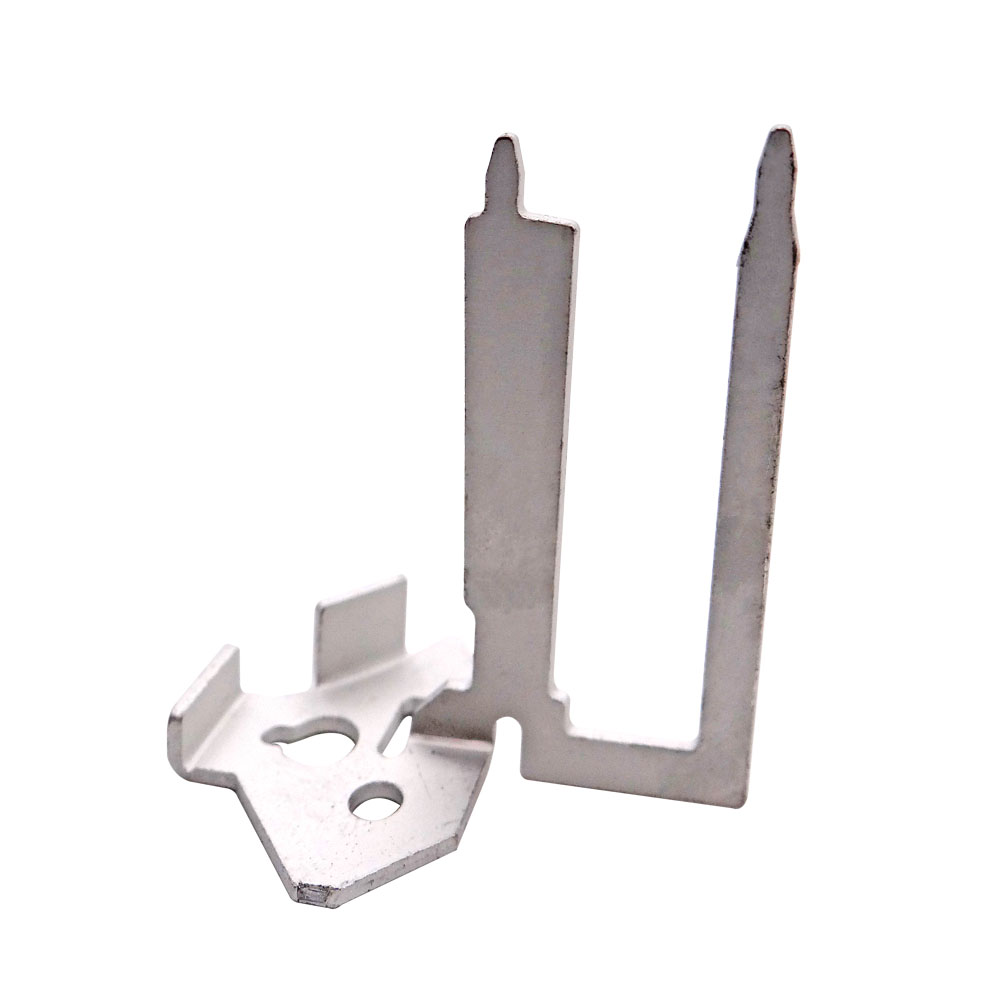
Aluminum alloy stamping antenna radiation unit electroplated tin fittings
What is Metal Stamping?
Definition
Metal stamping is a sheet metal forming process. It involves using a machine press to force a sheet of metal against a die. The die is a tool with a specific shape, and as the metal is pressed against it, the metal takes on the shape of the die. This process can create a wide variety of parts, from simple flat shapes to complex three - dimensional components.
How It Works
The process begins with a coil or sheet of metal, which is fed into the stamping press. The press consists of an upper and a lower die. When the press is activated, the upper die descends with great force onto the metal sheet placed on the lower die. The pressure applied is typically very high, often in the range of several tons. This high - pressure impact causes the metal to deform plastically, conforming to the shape of the die cavities.
There are different types of stamping operations. For example, blanking is a process where the desired shape is cut out from the metal sheet, and the remaining material is scrap. Punching, on the other hand, creates holes in the metal sheet. Bending operations are used to create angled or curved parts, and drawing is employed to form cups or other hollow shapes.

Applications of Metal Stamping
Automotive Industry
The automotive industry is one of the major users of metal stamping. Car bodies are made up of numerous stamped parts. For instance, the car doors, hoods, and fenders are all produced through metal stamping. The process allows for the mass production of these parts with high precision, ensuring that each part fits perfectly during the car assembly process. Stamped metal parts are also used in the engine compartment, such as brackets and heat shields.
Electronics Industry
In the electronics sector, metal stamping is used to create components like connectors, enclosures, and heat sinks. Connectors need to be precisely shaped to ensure a proper electrical connection, and metal stamping can achieve the required accuracy. Metal enclosures for electronic devices, such as smartphones and laptops, are also stamped. These enclosures provide protection to the delicate internal components while being lightweight and cost - effective. Heat sinks, which are crucial for dissipating heat from electronic components, are often made through metal stamping due to the ability to create fins and other complex shapes that enhance heat transfer.
Appliance Manufacturing
Appliance manufacturers rely on metal stamping for making parts of refrigerators, washing machines, and ovens. The outer shells of these appliances are typically stamped from metal sheets. The process enables the production of large, flat panels with consistent quality. Inside the appliances, parts like brackets, handles, and even some internal components are made through metal stamping.
Advantages of Metal Stamping
High - Volume Production
Metal stamping is highly efficient for high - volume production. Once the dies are created, the stamping press can produce parts at a very fast rate. This makes it ideal for industries that require large quantities of identical parts, such as the automotive and electronics industries. The speed of production helps to keep costs down per unit, as the fixed costs associated with die - making are spread over a large number of parts.
Cost - Effectiveness
In addition to the benefits of high - volume production, metal stamping is cost - effective in other ways. The raw material, which is usually metal sheets, is relatively inexpensive compared to some other manufacturing starting materials. Also, the process requires less material waste compared to some machining processes. Once the dies are set up, the operation of the stamping press consumes relatively little energy, further reducing costs.
Precision and Consistency
Metal stamping can achieve a high level of precision. The dies are carefully engineered and manufactured to exact specifications. This ensures that each part produced is identical to the next. The tolerance levels that can be achieved in metal stamping are often very tight, making it suitable for applications where precision is crucial, such as in the aerospace industry for making parts for aircraft engines and airframes.

Metal stamping is a versatile and essential manufacturing process. From its basic definition of using a press and die to shape metal sheets, to its wide - ranging applications in industries like automotive, electronics, and appliance manufacturing, it has proven to be a reliable and cost - effective method. The advantages of high - volume production, cost - effectiveness, and precision make it a go - to choice for many manufacturers. Whether you're driving a car, using a smartphone, or doing laundry, chances are that metal - stamped parts are playing a significant role in the products you use every day.
How Do You Stamp Metal
How to Stamp Metal: A Comprehensive Guide
Related Article

Fast sampling is the fastest way to win business in the hardware machining and plastic mold industries. Customers want a working sample in days, and a 3D printer delivers it, but only when you know how to print in 3d correctly.
how to print in 3d

Fast sampling is the fastest way to win business in the hardware machining and plastic mold industries. Customers often send an STL file and expect a working sample in days.
how to print an stl file

