
What is CNC Turning? A Comprehensive Guide
Author: SZTC
2025-04-17
In the world of modern manufacturing, CNC turning stands as a fundamental and widely used process. But what exactly is CNC turning, and why is it so crucial? Let's delve into this topic.
1. Introduction to CNC Turning
1.1 Definition
CNC turning is a subtractive manufacturing process. It involves using a computer numerical control (CNC) lathe to rotate a workpiece while cutting tools remove material from the workpiece to create a desired shape. This process is highly precise and can produce a wide variety of parts, from simple cylindrical components to complex, intricate shapes.
1.2 Historical Background
The roots of turning can be traced back to ancient times when manual lathes were used. However, with the advent of computer technology in the 20th century, CNC turning emerged. It revolutionized the manufacturing industry by replacing manual operations with automated, computer - controlled ones. This led to increased precision, higher production rates, and the ability to create more complex parts.

2.1 Workpiece Setup
The first step in CNC turning is mounting the workpiece onto the lathe chuck. The chuck holds the workpiece firmly in place and rotates it at a controlled speed. The type of chuck used depends on the shape and size of the workpiece. For example, a three - jaw chuck is suitable for round workpieces, while a four - jaw chuck can be used for irregularly shaped workpieces.
2.2 Tool Selection and Setup
Cutting tools play a vital role in CNC turning. There are different types of tools, such as carbide - tipped tools for high - speed cutting of metals, and high - speed steel tools for more general - purpose applications. The tools are mounted on a tool post, which can hold multiple tools. The tool post can be moved along the X and Z axes (in a two - axis lathe) to position the cutting tool precisely relative to the rotating workpiece.
2.3 Programming the CNC Machine
A crucial aspect of CNC turning is programming the machine. The programmer creates a set of instructions, known as a G - code program. This program tells the CNC lathe the speed at which to rotate the workpiece, the depth and feed rate of the cutting tool, and the path the tool should follow. Modern CAD/CAM (Computer - Aided Design/Computer - Aided Manufacturing) software simplifies this process. Designers can create a 3D model of the part in CAD software, and then the CAM software generates the G - code program based on the design.
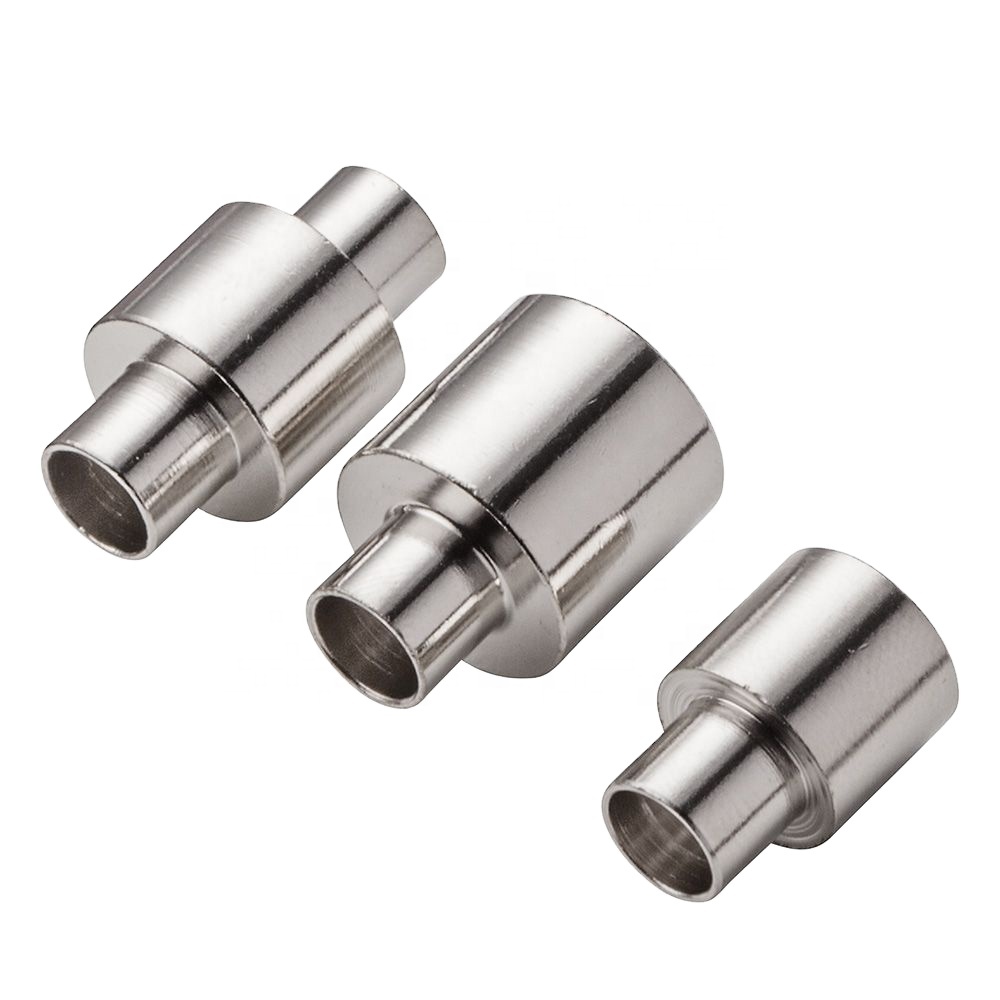
3. Key Components in CNC Turning
3.1 CNC Lathe
The CNC lathe is the heart of the CNC turning process. It consists of a bed, which provides a stable base for all other components. The headstock houses the spindle, which rotates the workpiece. The tailstock can be used to support long workpieces. The carriage, which holds the tool post, moves along the bed to perform the cutting operations.
3.2 Cutting Tools
As mentioned earlier, cutting tools are essential. Their geometry is carefully designed to optimize cutting performance. For example, a turning tool with a sharp cutting edge is used for roughing operations to remove large amounts of material quickly, while a tool with a more rounded edge is used for finishing operations to achieve a smooth surface finish.
3.3 Coolants
Coolants are used in CNC turning for several reasons. They help to dissipate heat generated during the cutting process, which can otherwise cause the tool to wear out quickly and affect the accuracy of the part. Coolants also act as lubricants, reducing friction between the tool and the workpiece, and they flush away chips, preventing them from interfering with the cutting operation.
4. Applications of CNC Turning

4.1 Automotive Industry
In the automotive industry, CNC turning is used to manufacture a wide range of components. Engine parts such as crankshafts, camshafts, and pistons are often produced using CNC turning. These parts require high precision to ensure the smooth operation of the engine. Transmission components, like gears and shafts, are also commonly made through this process.
4.2 Aerospace Industry
The aerospace industry demands parts with extremely high precision and quality. CNC turning is used to produce components for aircraft engines, such as turbine blades and shafts. These parts must withstand high temperatures, pressures, and mechanical stresses, and the precision of CNC turning ensures that they meet the strict aerospace standards.
4.3 Medical Device Manufacturing
In medical device manufacturing, CNC turning is used to create components for surgical instruments, implants, and prosthetics. For example, hip and knee implants need to be precisely shaped to fit the patient's body. The high precision of CNC turning allows for the production of these parts with tight tolerances, ensuring the safety and effectiveness of the medical devices.

5. Advantages of CNC Turning
5.1 High Precision
CNC turning can achieve extremely tight tolerances, often in the range of a few micrometers. This high precision is crucial for industries where even the slightest deviation can lead to component failure, such as aerospace and medical device manufacturing.
5.2 Repeatability
Once a program is set up for a particular part, CNC turning can produce identical parts over and over again with consistent quality. This is highly beneficial for mass production, as it ensures that every part meets the same high - quality standards.
5.3 Increased Productivity
CNC lathes can operate at high speeds, and the automated nature of the process reduces the need for constant operator intervention. This results in increased productivity compared to traditional manual turning methods. Additionally, the ability to perform multiple operations in a single setup, such as turning, drilling, and threading, further boosts productivity.

6. Conclusion
CNC turning is a versatile and essential manufacturing process. From its basic definition and working principles to its wide range of applications and numerous advantages, it has become an integral part of modern manufacturing. Whether it's in the automotive, aerospace, or medical industries, CNC turning continues to drive innovation and enable the production of high - quality, precision - engineered parts. As technology continues to advance, we can expect even more improvements in CNC turning, further enhancing its capabilities and applications.
How to Mill Small Metal Parts?
What is CNC Milling: A Comprehensive Introduction
Related Article

Fast sampling is the fastest way to win business in the hardware machining and plastic mold industries. Customers want a working sample in days, and a 3D printer delivers it, but only when you know how to print in 3d correctly.
how to print in 3d

Fast sampling is the fastest way to win business in the hardware machining and plastic mold industries. Customers often send an STL file and expect a working sample in days.
how to print an stl file

